|
|
|
|
Weekly Insights for Entrepreneurs
|
|
|
|
|
| Year: 2026-27 |
Tuesday 10th March, 2026 |
Volume/Issue: 118 |
|
|
|
|
- Green Tech for MSMEs: Govt promoting adoption through MSE-GIFT, MSE-SPICE & other schemes
|
- Integrated MSME Strategy: Digital adoption, green transition & women's empowerment push
|
- AI & Manufacturing MSMEs: PwC-ORF report projects up to $150B value creation by 2035
|
- E-Commerce Export Credit: New MSMEs now eligible for assistance under Export Promotion Mission
|
- India-US Trade Portal: Direct channel for MSMEs to reach American buyers launching soon
|
- Space & AI: IN-SPACe invites startups to develop AI solutions for satellites & launch operations
|
- Autonomous Defence Tech: Bengaluru startup tests India's first swarm interceptor
|
- Indigenous Jet Engine: Deeptech startup Green Aero fires sub-kN engine running on jet fuel & diesel
|
- Arsenic-Removal Innovation: Student startup's magnetic separation tech wins award
|
- Long-Range Attack Drone: Bengaluru startup builds Sheshnaag-150 with 1,000-km range & swarm AI
|
|
| |
|
|
- India-Finland Strategic Ties: Cooperation deepening from AI to 6G
|
- Education & Economy Linkage: PM Modi calls for aligning education with real-world needs
|
- Crude & Inflation: FM Sitharaman says oil surge unlikely to substantially impact prices
|
- Hiring Outlook: Indian employers remain optimistic despite global headwinds
|
- RBI Rate Transmission: Share of loans below 9% rises to 62.4% after policy easing
|
- Better Economic Data: MoSPI to launch new surveys & boost high-frequency indicators
|
- AI & Business Transformation: How technology is rewriting the DNA of startups to giants
|
- Export Cargo Relief: CBIC eases procedures for shipments returning amid Hormuz disruption
|
- CPSE Capex: Public sector capital spending set to exceed target for fourth straight year
|
- IIT Bombay's IPO Pipeline: How SINE is churning out listed multibaggers from deep-tech incubation
|
|
| |
|
|
- Brain Mapping: IIT Madras building a “Google Earth” for the human mind
|
- Indigenous EV Drive System: C-DAC, IIT Madras & Lucas TVS develop 30 kW integrated platform
|
- Aerodynamics Partnership: How IIT Kanpur helped shape the new Renault Duster
|
- Small Satellite Propulsion: IIT Madras develops compact thruster power system
|
- Quantum Sensors & Batteries: Mercedes-Benz signs five-year research pact with IIT Delhi
|
- Zero-Emission Trucking: IIT Madras study charts renewable energy pathway for charge parks
|
- Quantum-Safe Security: IISc unveils crypto chip powering IoT post-quantum protection
|
- Smart Agro-Tech: CSIR showcases AI & IoT tools for soil and crop health
|
- Brain Co-Processors: IISc launches moonshot project for neural rehabilitation technology
|
|
| |
|
|
|
|
|
|
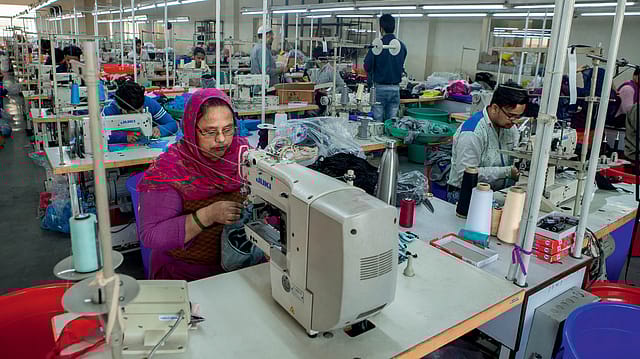
Minister of State for MSMEs Shobha Karandlaje informed Parliament that the government is implementing multiple schemes to support green technology adoption among small enterprises. Key initiatives include the MSE-GIFT Scheme, which provides interest subvention and credit guarantee support to help MSMEs adopt clean technologies, and the MSE-SPICE Scheme, India’s first government programme to promote circular economy projects among MSEs.
The MSE-GIFT Scheme carries a total outlay of Rs 478 crore over three years (2023–26), comprising Rs 350 crore for interest subvention, Rs 125 crore for a risk-sharing fund, and Rs 3 crore for information and outreach. SIDBI has been designated as the implementing agency for both sub-schemes under the RAMP Programme.These measures are part of a broader push that also includes the MSME Champions Scheme, the MSE-Cluster Development Programme, and 20 new Technology Centres being established across the country. For MSMEs, these schemes offer tangible avenues to finance green transitions and improve competitiveness through sustainable practices.
|
|
|
|
|
|
|
|
|
The Ministry of MSME outlined a comprehensive federal strategy to modernise India’s small business sector through digital adoption, green practices, and support for women entrepreneurs. The MSME TEAM Scheme has successfully onboarded thousands of MSMEs onto the ONDC Network, while the MSE-GIFT and MSE-SPICE schemes are driving green transition with interest subventions and capital subsidies for circular economy practices.
A critical pillar of this strategy is women’s empowerment, with over 3.07 crore women-led enterprises now benefiting from enhanced 90% credit guarantee coverage and a mandated 3% public procurement quota. Under PMEGP, women receive a higher 35% subsidy, while the PM Vishwakarma scheme provides skill training and digital literacy to artisans across 18 trades.
For MSMEs and startups, this integrated approach offers actionable support across digitalisation, sustainability, and inclusion. The convergence of the ADEETIE energy-efficiency partnership with the Bureau of Energy Efficiency, offering 3–5% interest subvention across 14 sectors, adds another layer of financial support for enterprises pursuing green operations.
|
|
|
|
|
|
|
|
|
A joint report by PwC India and the Observer Research Foundation (ORF) projects that artificial intelligence could contribute $135.6–$149.9 billion in value creation for manufacturing MSMEs by 2035. This scenario assumes MSMEs increase their share of India’s gross manufacturing value added to 50%. If manufacturing’s GDP share rises to 25% and MSME contribution grows from 35.4% (FY 2023–24) to 50% by 2047, MSMEs could unlock $3.13–$3.21 trillion in growth opportunities.
The report proposes a ‘3A2I framework’ — access, acceptance, assimilation, implementation, and institutionalisation — as a practical roadmap for AI adoption. It also identifies a $100–$150 billion demand-side opportunity for MSMEs to supply non-tech-intensive components such as harnesses, cooling equipment, and industrial parts for data centres and semiconductor ecosystems.
For MSME owners, the takeaway is clear: AI deployed as a co-pilot for predictive maintenance, quality control, and decision-making can help small firms escape low-productivity traps and compete on quality and innovation. The report stresses a human-centric approach where AI augments rather than displaces labour, particularly in labour-intensive manufacturing clusters.
|
|
|
|
|
|
|
|
|
The Directorate General of Foreign Trade (DGFT) has issued guidelines enabling MSME e-commerce exporters to access credit assistance under the Rs 25,060 crore Export Promotion Mission (EPM). MSMEs with at least six months of export experience through postal or courier channels, or with inventory in overseas warehouses, are eligible. Notably, new MSMEs entering international e-commerce with at least one year of domestic e-commerce operations can also qualify.
The credit support framework includes interest subvention and partial credit guarantees. The Direct E-Commerce Credit Facility offers up to Rs 50 lakh with 90% guarantee coverage, while the Overseas Inventory E-Commerce Credit Facility extends up to Rs 5 crore with 75% coverage and a 2.75% interest subsidy. The initiative is being operationalised on a pilot basis through the Export-Import Bank of India (EXIM Bank).
This is a significant opportunity for MSMEs looking to scale their cross-border digital trade. By improving access to working capital, the scheme enables small exporters to manufacture goods ahead of anticipated demand and expand their global market presence through e-commerce channels.
|
|
|
|
|
|
|
|
|
India is preparing to launch a dedicated trade portal aimed at connecting Indian exporters and MSMEs directly with American buyers. The initiative comes amid an evolving India-US trade relationship, with bilateral trade expected to touch $300 billion in 2026–27. The portal is designed to reduce dependence on intermediaries and give small businesses a direct channel to access one of the world’s largest consumer markets.
The development coincides with the broader interim India-US trade framework, under which reciprocal tariffs on several Indian products are being reduced. Many Indian goods, including textiles and gems and jewellery, are expected to benefit from reduced or zero-duty access to the US market, potentially easing cost pressures for export-oriented MSMEs.
For MSMEs and startups, this portal could be a game-changer in accessing the US market without the prohibitive costs of overseas marketing. Combined with the government’s existing export support measures under the Export Promotion Mission, the initiative strengthens the ecosystem for small businesses seeking to grow their international footprint.
|
|
|
|
|
|
|
|
|
The Indian National Space Promotion and Authorisation Centre (IN-SPACe) has invited space startups to develop artificial intelligence-based solutions for satellite operations and launch activities. The initiative is aimed at leveraging AI to enhance efficiency, automation, and decision-making across India’s space ecosystem, opening new opportunities for technology startups at the intersection of AI and space technology.
The call for proposals encourages startups to work on AI applications ranging from satellite data processing and orbit management to launch vehicle systems optimisation. By inviting private sector participation, IN-SPACe is expanding the scope of collaboration between government space agencies and the rapidly growing Indian space startup ecosystem, which has attracted significant investor interest in recent years.
For startups and MSMEs with capabilities in AI, machine learning, and data analytics, this represents a high-value entry point into the space sector. The initiative aligns with India’s broader strategy of promoting private participation in space activities and could accelerate the development of commercially viable space-tech solutions by Indian companies.
|
|
|
|
|
|
|
|
|
A Bengaluru-based AI warfare and defence startup has successfully tested what is described as India’s first autonomous swarm interceptor. The system represents a new approach to counter-drone and aerial defence, leveraging AI-driven autonomous capabilities to detect, engage, and neutralise airborne threats without requiring manual piloting or direct human intervention during critical engagement phases.
The interceptor is designed to work as part of a coordinated swarm, where multiple units communicate and operate collaboratively to intercept hostile UAVs or airborne platforms. This capability is increasingly relevant given the growing use of drones in military and asymmetric warfare scenarios globally. The successful test validates autonomous decision-making and target-engagement capabilities under controlled conditions.
For India’s defence startup ecosystem, this development adds another layer of indigenous capability in unmanned warfare and counter-drone technologies. It demonstrates that private-sector innovation is rapidly advancing in areas previously dominated by state-owned defence entities, creating opportunities for startups to contribute to national security while building commercially viable defence products.
|
|
|
|
|
|
|
|
|
Bengaluru-based deeptech startup Green Aero has announced the successful long-duration test firing of its indigenous sub-kilonewton (sub-kN) military-grade jet engine. The 400-newton thrust micro-turbine engine, designed from scratch using a clean-sheet approach, is capable of running on both jet fuel and diesel. Founded by Prithwish Kundu, the IIT Delhi-incubated startup validated its full propulsion technology stack, covering turbomachinery, fuel injection, ignition, and metallurgy.
The engine is custom-built for high-speed unmanned systems, including combat drones, collaborative combat aircraft, and stand-off strike platforms. It features multi-fuel flexibility, electric start capability, and a newly designed compressor and diffuser architecture. In 2025, the company raised $1.6 million in seed funding from pi Ventures and Antler, and secured a strategic cooperation agreement with Larsen & Toubro for developing micro-turbojet engines for tactical UAVs.
This milestone follows Green Aero’s earlier demonstration of India’s first hydrogen-powered aero engine core. Compact micro-turbine engines are critical for India’s growing unmanned systems ecosystem, and indigenous development reduces reliance on a limited number of global suppliers. For the defence startup sector, this marks a significant step towards propulsion self-reliance.
|
|
|
|
|
|
|
|
|
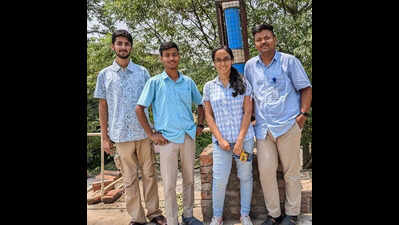
Navmarg Research & Innovation, a student-led startup incubated at Manipal Institute of Technology (MIT-MAHE), has won recognition for its arsenic-removal technology based on molecular magnetic separation. Founded by brothers Arpit Kumar and Abhijeet Kumar, with Shambhavi Sinha as technology lead, the company developed the METAL (Molecular Magnetic Technology for Arsenic Removal) method — a chemical-free, low-cost approach to purifying contaminated groundwater.
The METAL method uses neodymium magnets housed in a stainless-steel body to physically separate arsenic compounds from water through magnetic separation. The startup’s flagship product, MARU (Magnetic Arsenic Removal Unit), has purified over 300,000 litres of water and impacted more than 4,000 lives. A 5,000 litres-per-hour municipal unit has been installed in Bhojpur district, Bihar.
The startup is now developing AI-powered sensors for real-time detection of arsenic and bacteria in water. Arsenic contamination affects millions across West Bengal, Bihar, Jharkhand, Uttar Pradesh, and other states, making this innovation a significant contribution to India’s water safety. The venture demonstrates how student entrepreneurs can address critical public health challenges through scalable technology.
|
|
|
|
|
|
|
|
|
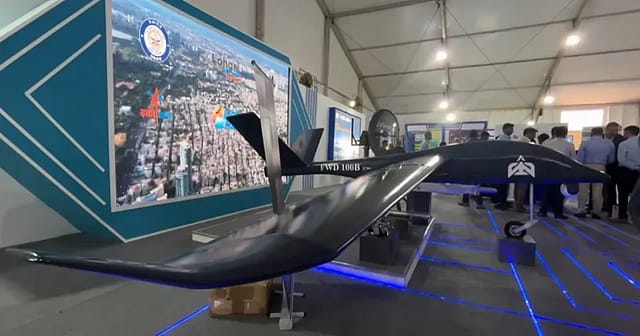
Bengaluru-based NewSpace Research & Technologies (NRT), founded by aerospace entrepreneurs Sameer Joshi and Julius Amrit, has built the Sheshnaag-150, a long-range swarming attack drone designed for coordinated precision strikes. The drone boasts an operational range exceeding 1,000 km, endurance of over five hours, and the ability to carry warheads weighing between 25 and 40 kg.
The Sheshnaag-150 operates using AI-driven swarm intelligence, enabling multiple drones to coordinate flight paths, redistribute tasks if one unit is neutralised, and overwhelm enemy air defences through simultaneous engagement. A key feature is its GPS-denied navigation capability, allowing the system to function even when satellite signals are jammed. The drone achieved a precision of approximately 5-metre CEP during its maiden flight.
The project gained renewed urgency following Operation Sindoor, when the Indian military sought to accelerate indigenous long-range swarming strike capabilities. For India’s defence startup ecosystem, the Sheshnaag-150 demonstrates how private innovation under the Atmanirbhar Bharat initiative is contributing to national security capabilities.
|
|
|
|
|
|
|
|
|
India and Finland are set to deepen strategic cooperation across emerging technologies, including artificial intelligence, quantum computing and 6G telecommunications. Prime Minister Narendra Modi highlighted the expanding partnership during bilateral talks with Finland’s President Alexander Stubb in New Delhi.
Both countries see significant potential in collaborating on innovation, digital infrastructure and clean technologies. Finland’s expertise in advanced telecom and research ecosystems complements India’s rapidly growing digital economy and large-scale technology adoption.
Strengthening technology partnerships could enhance India’s capabilities in next-generation communications and innovation-driven sectors. Such cooperation may also boost investments, research collaboration and startup ecosystems, reinforcing India’s position in the global technology value chain.
|
|
|
|
|
|
|
|
|
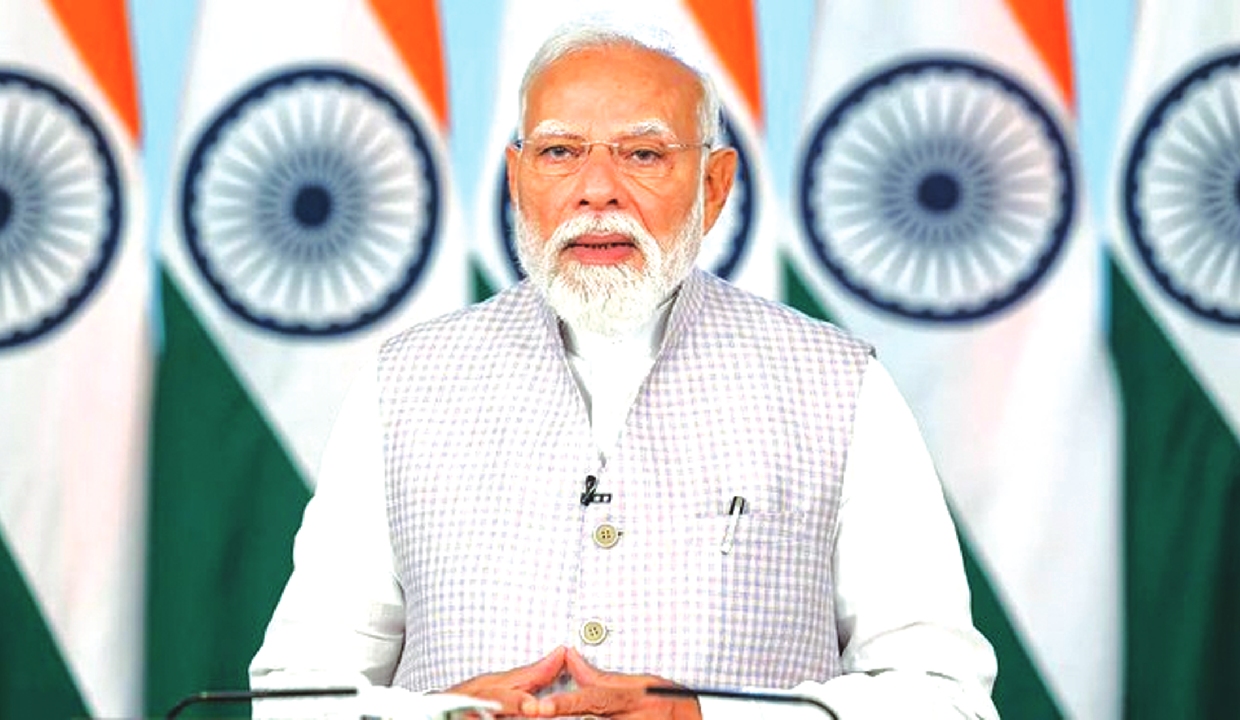
Prime Minister Narendra Modi has emphasized the need to align India’s education system more closely with the demands of the real-world economy. He stressed that academic institutions must equip students with practical skills and industry-relevant knowledge to enhance employability and productivity.
The Prime Minister highlighted that stronger collaboration between educational institutions, industry and research ecosystems can help prepare the workforce for emerging sectors. Skill development, innovation and entrepreneurship were identified as key pillars for sustaining India’s long-term economic growth.
Strengthening this linkage is seen as critical for addressing skill gaps and boosting labour market efficiency. By integrating education with economic needs, policymakers aim to support job creation, improve workforce competitiveness and accelerate India’s transition toward a knowledge-driven economy.
|
|
|
|
|
|
|
|
|
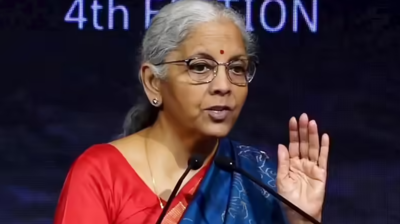
Finance Minister Nirmala Sitharaman has said that the recent surge in global crude oil prices is unlikely to have a significant impact on India’s inflation trajectory. According to the government, current macroeconomic conditions and policy buffers are strong enough to absorb short-term volatility in global energy markets.
The minister indicated that India’s inflation management framework, along with targeted fiscal and supply-side measures, has helped contain price pressures in recent years. Authorities are closely monitoring global developments but remain confident that inflation will stay within manageable levels.
Energy prices play a major role in transportation, manufacturing and household consumption costs. Therefore, the government’s assurance signals an effort to maintain investor and consumer confidence, even as global oil markets remain volatile and geopolitical risks continue to influence commodity prices.
|
|
|
|
|
|
|
|
|
Indian employers remain optimistic about hiring in the coming months despite slowing global growth and economic uncertainty. Surveys indicate that companies across sectors continue to plan workforce expansion, driven by domestic demand, digital transformation and sectoral growth opportunities.
Industries such as technology, manufacturing, financial services and healthcare are expected to lead recruitment activity. Businesses are increasingly focusing on skilled talent, particularly in areas related to digital capabilities, artificial intelligence, data analytics and advanced manufacturing.
A resilient hiring outlook reflects the relative strength of India’s domestic economy compared to many global markets. Sustained employment growth can support consumption, strengthen household incomes and reinforce economic stability, even as external challenges continue to weigh on the global business environment.
|
|
|
|
|
|
|
|
|
Recent monetary policy easing by the Reserve Bank of India (RBI) has led to a significant rise in lower-cost borrowing. RBI data shows that the share of bank loans carrying interest rates below 9% has increased to 62.4%, reflecting the transmission of earlier policy rate cuts.
Lower lending rates indicate that banks are gradually passing on the benefits of monetary easing to borrowers. This shift can support credit growth, particularly in retail, housing and small business segments that are sensitive to interest rate changes.
For the broader economy, cheaper credit can stimulate consumption and investment activity. Improved loan affordability may also strengthen demand across sectors, helping sustain economic growth while easing financial pressure on households and businesses.
|
|
|
|
|
|
|
|
|
The Ministry of Statistics and Programme Implementation (MoSPI) is preparing to launch a series of new surveys aimed at strengthening India’s high-frequency economic indicators. The initiative seeks to improve the availability of real-time data across sectors, enabling policymakers to track economic activity more accurately.
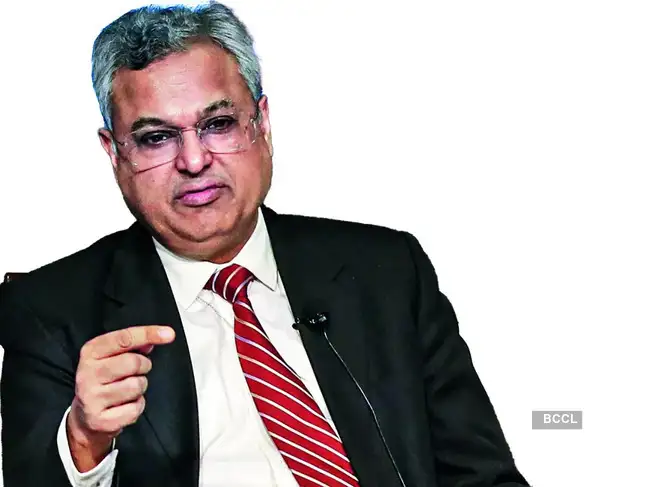
According to MoSPI secretary Saurabh Garg, the move will help fill data gaps in rapidly evolving areas of the economy. Enhanced surveys and data systems are expected to provide more granular insights into employment, consumption and services sector trends.
Better high-frequency indicators can significantly improve policy responsiveness and economic forecasting. For investors, businesses and government agencies, stronger data infrastructure will support evidence-based decisions and help monitor the economy during periods of volatility or structural change.
|
|
|
|
|
|
|
|
|
Rapid advances in technology and artificial intelligence are transforming how businesses scale from startups into global enterprises. Digital tools, automation and data-driven decision-making are enabling companies to grow faster and operate more efficiently than traditional models allowed.
AI-powered analytics, cloud computing and digital platforms are helping firms optimise operations, personalise customer experiences and unlock new revenue streams. Startups in particular are leveraging these technologies to disrupt established industries and accelerate market expansion.
For the broader economy, this transformation is reshaping productivity, employment patterns and innovation cycles. As AI adoption spreads across sectors, businesses that integrate advanced technologies effectively are likely to drive the next wave of economic growth and competitiveness.
|
|
|
|
|
|
|
|
|
The Central Board of Indirect Taxes and Customs (CBIC) has simplified procedures for handling export cargo that returns to India due to disruptions near the Strait of Hormuz. The move aims to reduce compliance burdens and ensure quicker processing for affected exporters.
Under the revised framework, customs authorities will allow easier re-import and clearance of shipments that could not reach their destination due to geopolitical or logistical disruptions. The measure seeks to minimise financial losses and delays for exporters.
The policy response highlights the government’s effort to safeguard trade flows during global supply chain disruptions. By easing procedural hurdles, authorities aim to maintain export momentum and support businesses facing uncertainty in international shipping routes.
|
|
|
|
|
|
|
|
|
Capital expenditure by Central Public Sector Enterprises (CPSEs) is expected to surpass government targets for the fourth consecutive year, reflecting strong investment momentum in infrastructure and strategic sectors. These investments play a crucial role in supporting economic growth.
Higher spending by state-owned companies is being driven by large projects in energy, transport, mining and defence. CPSE capex has become an important pillar of public investment, particularly during periods when private sector investment remains uneven.
Sustained public sector capital spending can boost demand, create jobs and strengthen infrastructure capacity. By maintaining strong investment levels, CPSEs are helping anchor economic expansion while crowding in private investment across key industries.
|
|
|
|
|
|
|
|
|
IIT Bombay’s startup incubator, the Society for Innovation and Entrepreneurship (SINE), is emerging as a repeatable pipeline for public-market outcomes, with multiple alumni-linked companies translating early institutional support into large IPO-era valuations.
SINE typically takes small equity positions during incubation, then benefits as companies mature into capital-intensive, IP-led businesses. The Economic Times highlighted ideaForge’s earlier listing and the proposed Sedemac Mechatronics IPO, where SINE’s low acquisition-cost stake enables outsized returns on partial exits while retaining residual holdings.
With additional candidates such as Atomberg Technologies and other ecosystem firms exploring listings, the model signals a maturing deep-tech venture stack at IIT Bombay—moving from lab prototypes to scaled manufacturing and public-market liquidity.
|
|
|
|
|
|
|
|
|
IIT Madras’ Sudha Gopalakrishnan Brain Centre is building a high-resolution reference atlas of the human brain—described as a “Google Earth” for neuroscience—to support research on ageing, disease, and cognition.
The programme curates nearly 400 donated brains across life stages, preserving tissue rapidly after death, chemically fixing it, and cryostoring it around −80°C. Researchers slice samples into hair-thin sections, stain and image thousands of slices, then computationally stitch them into a navigable 3D dataset. The approach bridges the gap between millimetre-scale clinical imaging and cellular-scale anatomy.
Backed by a mix of philanthropy, CSR funding, and public support, the atlas is expected to strengthen India’s role in global brain mapping and enable translational work in stroke and neurodegeneration.
|
|
|
|
|
|
|
|
|
C-DAC, IIT Madras and Lucas TVS have unveiled an indigenous 30 kW integrated drive system (IDS) aimed at localising key electric-vehicle powertrain electronics for India’s passenger and fleet segments.
The platform uses wide band gap (WBG) power devices to improve switching efficiency and thermal performance at high power density. By integrating critical drive functions—power conversion, control, and thermal management—into a single validated module, the IDS targets lower losses, reduced packaging volume, and easier manufacturability compared with imported, multi-box architectures.
Launched under MeitY’s NaMPET programme, the development is positioned to reduce import dependence and seed domestic IP, with MSME opportunities across power electronics, control hardware, and cooling subsystems as the design scales toward production.
|
|
|
|
|
|
|
|
|
Renault India says IIT Kanpur’s National Wind Tunnel Facility (NWTF) played a central role in shaping the next-generation Duster, delivering measurable gains in aerodynamics and in-cabin acoustic comfort.
Engineers combined wind-tunnel testing with computer-aided engineering to tune external flow and wind-noise sources for an SUV stance. Renault reports a 13% reduction in drag coefficient versus the prior model and claims a segment-best 73% Articulation Index, a metric linked to speech intelligibility under real-world road, engine, and wind noise.
The collaboration underscores how Indian test infrastructure can de-risk vehicle development locally, and sets a template for faster, India-specific optimisation in future programmes.
|
|
|
|
|
|
|
|
|
IIT Madras researchers have built a compact high-voltage pulse-power system to run pulsed plasma thrusters, targeting lower-mass and lower-cost propulsion for small satellites.
Pulsed plasma thrusters rapidly discharge capacitor energy as a high-voltage pulse that vaporises a solid propellant (such as Teflon) into plasma, then accelerates it magnetically for thrust. The new generator delivers pulses up to −2.5 kV at 1,000 pulses per second while operating below 150 W, and the prototype reported over 90% efficiency. A predictive variable-frequency control scheme times pulses without multiple current and voltage sensors, cutting weight and complexity.
The team validated the design in laboratory experiments and positions it for precise orbital manoeuvres, with potential spin-offs to other pulse-power systems.
|
|
|
|
|
|
|
|
|
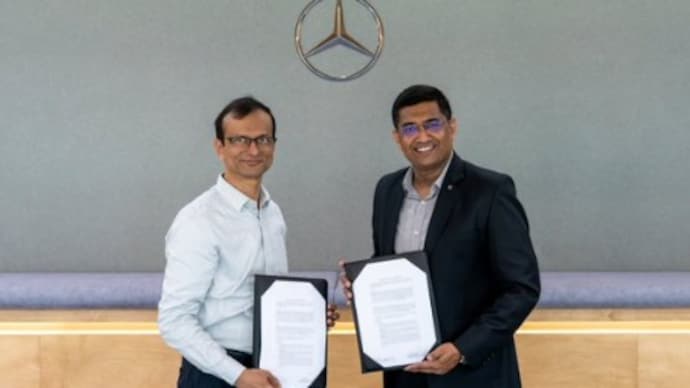
Mercedes-Benz Research and Development India (MBRDI) and IIT Delhi have signed a five-year Master Research Agreement to co-develop technologies expected to shape next-generation mobility and engineering systems.
The first phase focuses on quantum sensors and battery systems, alongside broader workstreams in quantum technologies, future materials, neuromorphic engineering, and electric mobility. The framework is designed to connect fundamental academic research with applied engineering, enabling joint projects, shared labs and talent engagement, and structured pathways to generate patents and other intellectual property.
For MBRDI, the partnership formalises long-term collaboration with academia; for IIT Delhi, it creates an industry pull for translational prototypes. The agreement positions both organisations to move early concepts into deployable components for future vehicle platforms.
|
|
|
|
|
|
|
|
|
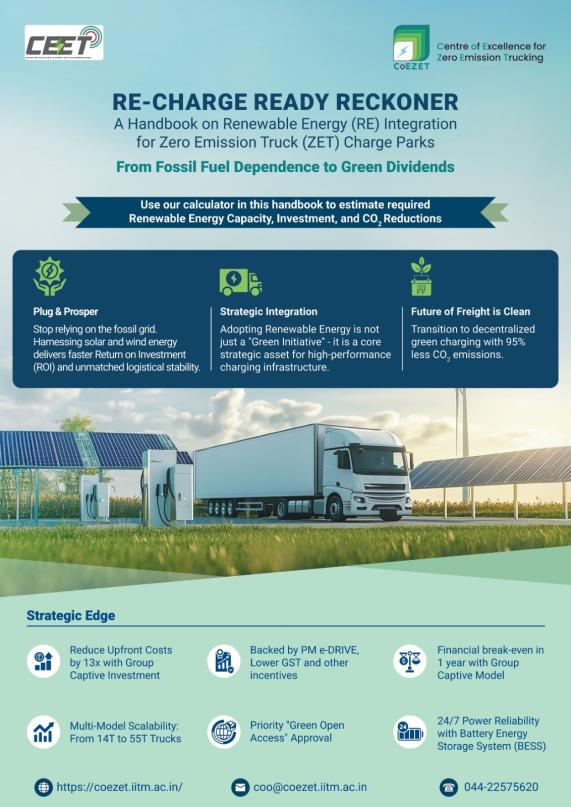
IIT Madras has released a policy-ready roadmap for powering zero-emission truck (ZET) charge parks with renewable energy, aiming to decarbonise long-haul logistics while reducing grid dependence.
The study models high-capacity charging hubs that pair dedicated solar and wind generation with battery energy storage systems, using a techno-economic framework and business mechanisms for charge-park owners. It applies a corridor-based approach, analysing the Chennai–Bengaluru and Solapur–Vijayapura freight corridors with traffic data, power-electronics considerations, and cost modelling.
The “RE-Charge Ready Reckoner” handbook is positioned as a reference for state and central charging strategies, helping investors and policymakers accelerate ZET deployment and future multi-energy hubs.
|
|
|
|
|
|
|
|
|
IISc Bengaluru has demonstrated a compact, low-power hardware accelerator that verifies quantum-safe digital signatures, aiming to make post-quantum security practical for constrained Internet of Things devices.
The custom ASIC implements SQIsign, an isogeny-based signature scheme under consideration for post-quantum cryptography standardisation. Built in 28 nm CMOS, the chip targets verification-heavy use cases such as secure boot, firmware updates, certificate validation, and server authentication. IISc reports circuit innovations and algorithm–architecture co-optimisations across modular arithmetic, elliptic-curve isogeny evaluation, and memory organisation, enabling order-of-magnitude gains in performance and energy efficiency versus assembly-optimised software.
The work was presented at ISSCC 2026, positioning SQIsign-style accelerators as a pathway to “quantum-safe by default” IoT stacks as standards and vendor integrations mature.
|
|
|
|
|
|
|
|
|
CSIR has showcased a mission-led stack of smart agro-technologies in Kerala, positioning AI, IoT and remote sensing as tools to turn “farm data to decisions” for soil and crop health.
The two-day workshop in Kumarakom was held under CSIR’s Region Specific Smart Agro-Technologies for Soil and Plant Health (RSSA) mission. Live demonstrations highlighted precision tools for fertiliser application and systems for disease identification, combining sensor data, imaging and analytics to generate field-level advisories. CSIR officials said the approach is designed to raise productivity while delivering savings.
With farmers, students and experts participating, CSIR is signalling a shift from lab pilots to regional rollout via agricultural universities and partners, targeting adoption by small and marginal farmers.
|
|
|
|
|
|
|
|
|
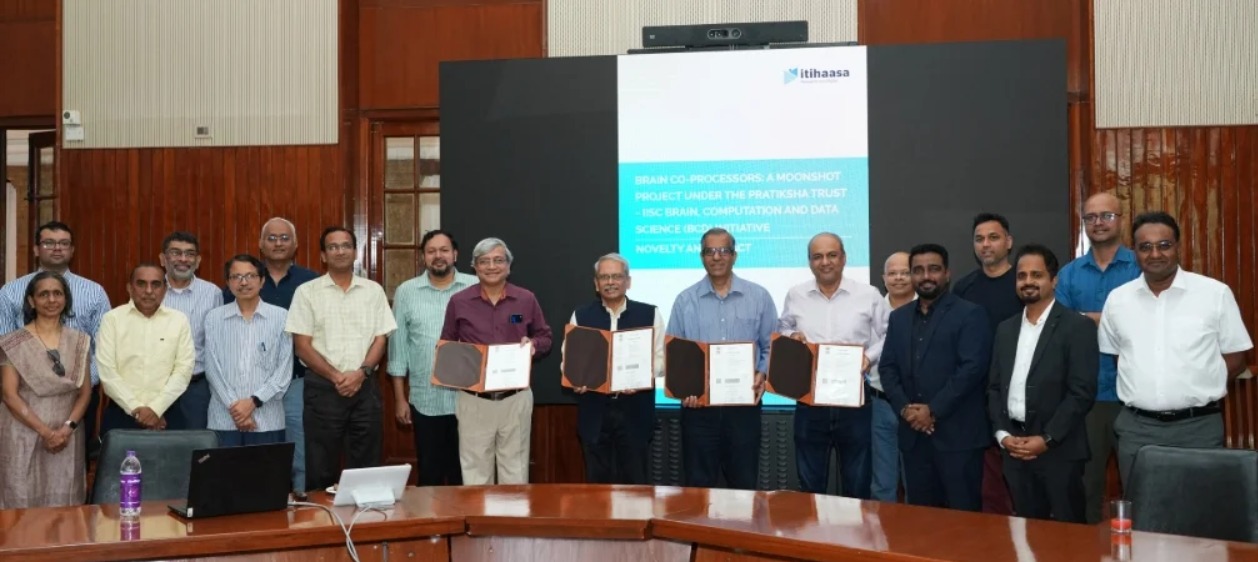
IISc Bengaluru has launched a “moonshot” programme to develop brain co-processors—closed-loop neurotechnology intended to enhance or restore brain function, with an initial focus on stroke rehabilitation.
The project targets implantable and non-invasive systems that decode neural activity from recordings, process it with AI algorithms, and re-encode outputs back to the brain via stimulation or neurofeedback. IISc plans phased development: first validating non-invasive co-processors that provide sensorimotor feedback for goal-directed reaching, while preparing a minimally invasive implant pathway. The effort also includes building India-specific stereo EEG and ECoG databases and releasing open-source tools.
Backed by the Pratiksha Trust and formalised through an MoU, the initiative aims to indigenise hardware and AI stacks for clinical validation and deployment in low-resource settings.
|
|
|
|
|
 |
|
|
|
|
|
|
|
|
|
|
- Kindly add the email address masscomm@lubindia.com to your contact list or whitelist it for the newsletter.
|
|
|
|
|
|
|
|
|
|
|
|





/startuppedia/media/media_files/2026/03/07/website-1110-x-960-px-35-2026-03-07-18-53-38.png)
/startuppedia/media/media_files/2026/03/06/website-1110-x-960-px-27-2026-03-06-17-10-51.png)
)

)

)