|
|
|
|
Weekly Insights for Entrepreneurs
|
|
|
|
|
| Year: 2026-27 |
Tuesday 17th February, 2026 |
Volume/Issue: 115 |
|
|
|
|
● Govt approves Startup India Fund of Funds 2.0 with ₹10,000 crore corpus
|
● MSME share in GVA and exports rises, signalling deeper global value-chain integration
|
● SEBI plans SME portal to boost market access for small businesses
|
● Parliamentary panel calls for innovation-driven, outcomes-based MSME framework
|
● Delhi hosts mega-scale global AI summit with 600+ startups and 2.5 lakh visitors
|
● MoFPI outlines support stack for farmer-owned food processing startups
|
● Agnikul and NeevCloud plan orbital AI data centre platform by late 2026
|
● DLI-backed chip design startups attract investor interest as funding crosses ₹430 crore
|
|
| |
|
|
● Cabinet clears ₹1 lakh crore for India’s big urban reset; aims to unlock ₹4 lakh crore investment
|
● Govt unveils new CPI series (base 2024=100); January retail inflation at 2.75%
|
● RBI lets banks fund company buyouts, opening a new era for big corporate deals
|
● Urban India may account for 70% of GDP in FY26: Dun & Bradstreet report
|
● India’s retail market set to reach ₹21.5 lakh crore by 2035
|
● UIDAI plans fund to back tech companies innovating around Aadhaar
|
● India’s January power demand hits 16-year high at 143 billion units
|
● CPSEs, Railways, NHAI, DMRC maintain capex momentum; spending nears ₹6.7 lakh crore
|
● Centre nudges states to revamp laws; pushes “Deregulation 2.0” for faster approvals
|
● NITI Aayog launches sixth edition of “Trade Watch Quarterly”
|
● Govt planning new Rail Tech policy to cut dependence on foreign suppliers
|
|
| |
|
|
● IISc reshapes GaN transistors to power next wave of EVs & data centres
|
● IIT (ISM) Dhanbad develops low-cost catalyst to boost green hydrogen production
|
● CSIR–NIIST to transfer “designer rice” to industry to tackle nutrition and lifestyle challengesv
|
● NISAR to deliver 100 m soil moisture data every 13 days across India: ISRO
|
● IIT Indore develops water-audit & pollution-control solutions under BIS pact
|
● BodhanAI: How it aims to bring AI to every classroom in India
|
● ISRO working on reusable launch vehicle (RLV) technology
|
● IIT Roorkee develops low-cost system to treat hydroponic wastewater
|
● IIT Delhi uses AI to improve streamflow predictions for India’s rivers
|
|
| |
|
|
|
|
|
|
The Union Cabinet has cleared Startup India Fund of Funds (FFS) 2.0 with a ₹10,000 crore corpus to expand early-stage capital for startups, especially in deep-tech, advanced manufacturing and other long-gestation innovation areas. India
The scheme will be operationalised through SIDBI, which will deploy capital into SEBI-registered AIFs that then invest in startups. AIFs backed under the programme are expected to crowd in additional private funding, improving leverage for founders.
For startups and MSME-linked innovators, the key takeaway is a larger pool of patient risk capital via fund managers—best accessed by building strong governance, clear use-of-funds plans, and commercial pathways that fit longer product cycles.
|
|
|
|
|
|
|
|
|
An SBI economist said MSMEs are increasing their contribution to domestic output and exports, pointing to stronger integration with global value chains. The MSME share in GVA has risen steadily since 2021, reflecting sector resilience and broad-based formalisation.
Export-linked indicators have strengthened: MSME-related products accounted for about 45.79% of total exports in 2024–25, up from 43.5% in 2022–23. MSME export value rose from ₹3.95 lakh crore in 2021 to ₹12.4 trillion in 2024–25, while the number of exporting MSMEs nearly tripled to 1,76,315.
For business owners, the message is clear: export readiness, compliance, and digitised onboarding are becoming core growth levers—not optional add-ons.
|
|
|
|
|
|
|
|
|
SEBI plans to launch a dedicated SME portal to simplify compliance and improve disclosures for small-business issuers, alongside expanding on-ground outreach through local offices in state capitals. The aim is to make capital markets more accessible beyond traditional hubs.
The regulator highlighted the scale already built: over 1,400 SMEs are listed on NSE and BSE platforms with a combined market capitalisation of around ₹4.1 trillion, and more than 350 SMEs have migrated to the main board. SME IPOs raised ₹105 billion in FY26 up to January 31, signalling sustained investor appetite.
For MSMEs, the opportunity is cheaper, longer-term growth capital—but only if governance, transparency, and disciplined fund usage meet stricter investor expectations.
|
|
|
|
|
|
|
|
|
A Parliamentary Standing Committee on Finance has urged a more holistic MSME strategy that links finance with technology adoption, capability building and infrastructure—while tracking outcomes, not just disbursements. The panel cautioned against “one-size-fits-all” regulation that could unintentionally constrain micro enterprises.
It cited recent credit measures, including a higher credit guarantee ceiling of ₹10 crore from April 1, 2025, and additional guarantees of ₹6.12 lakh crore to MSEs during 2022–25, benefiting over 56 lakh units. It also flagged the RAMP scheme’s progress and pushed wider receivables financing via mandatory onboarding on TReDS for firms above ₹250 crore turnover and CPSEs.
For MSMEs, the takeaway is policy is shifting toward measurable impact—firms that digitise, professionalise and diversify funding sources will be best placed to benefit.
|
|
|
|
|
|
|
|
|
New Delhi’s India AI Impact Summit 2026 is being positioned as a major platform for deployment-focused AI and global governance conversations, backed by a large exhibition footprint. The accompanying expo spans over 70,000 sq metres across 10 arenas and is expected to draw more than 2.5 lakh visitors.
Organisers say over 600 startups will participate alongside global tech firms, academia and public agencies, with 300+ curated exhibition pavilions and live demos. Under the IndiaAI Mission, 12 indigenous foundation models are expected to be unveiled, designed for multilingual Indian datasets across 22 official languages.
For startups and MSMEs, the near-term value is deal-flow and partnerships—especially in applied AI—provided offerings are enterprise-ready and compliant on data, safety and procurement norms.
|
|
|
|
|
|
|
|
|
MoFPI told Parliament it is using multiple schemes—PMFME, PMKSY and the PLI for food processing—to promote farmer-owned food processing ventures and raise value addition in agriculture. Support spans subsidies, incentives and credit access for eligible startups, micro enterprises, FPOs, SHGs and individual entrepreneurs.
A key enabler is incubation and handholding: NIFTEM’s incubation foundation has incubated 55 startups and disbursed nearly ₹1.19 crore in seed grants, while NIFTEM-Thanjavur has supported 40 MSME startups. Under PMFME, 80 incubation centres across 27 states/UTs provide product development, lab testing and training.
For founders, the business takeaway is to anchor proposals to ODOP clusters, formal registrations and market linkage plans to unlock grants, infrastructure and scalable branding support.
|
|
|
|
|
|
|
|
|
Chennai-based Agnikul Cosmos and Bengaluru AI cloud firm NeevCloud have announced plans to launch an AI data centre platform in low-Earth orbit, with a proof-of-concept mission targeted for late 2026 and commercial operations aimed for 2027. The initiative seeks to move certain compute workloads closer to where data is generated, with space-based power availability cited as a long-term advantage.
The project reflects growing interest globally in “orbital compute” concepts, positioning the partnership as an early Indian entrant in a nascent but capital-intensive category. Commercial viability will hinge on launch cadence, hardware reliability, and clear use cases where latency, power constraints, or security create a defensible edge.
For startups and MSMEs, the near-term opportunity is niche: space-to-ground analytics, earth observation and secure edge inferencing—best pursued via partnerships, not standalone capex.
|
|
|
|
|
|
|
|
|
Startups supported under the Design Linked Incentive (DLI) programme continue to draw investor attention, with government data showing 24 participating chip design startups, of which 14 have secured venture capital funding. Cumulative VC funding for DLI-supported startups is nearly ₹430 crore, signalling rising confidence in domestic semiconductor design.
The government has outlined focus areas including compute systems, RF, networking, power management, sensors and memory, and indicated an ambition to enable at least 50 fabless semiconductor companies in the next phase. The broader India Semiconductor Mission also reports multiple projects under construction, strengthening the downstream ecosystem.
For startups and MSME suppliers, the key takeaway is that credible tape-outs, IP ownership and go-to-market partnerships are becoming investable milestones—opening doors across design services, verification, packaging and specialised electronics manufacturing.
|
|
|
|
|
|
|
|
|
The Union cabinet has approved a ₹1 lakh crore programme for an “urban reset”, with officials aiming to unlock about ₹4 lakh crore of total investment. The initiative is framed as a financing and reform push to scale urban infrastructure beyond major metros.
For the economy, higher urban capex can lift demand in the near term and raise productivity by easing congestion and improving basic services that support firms and jobs. It also signals continued reliance on public investment to stabilise growth.
The test is execution. Mobilising private and institutional capital will require bankable project pipelines, predictable charges and stronger municipal finances. If those pieces come together, the programme could deepen the urban infrastructure market and crowd in private capex.
|
|
|
|
|
|
|
|
|
India has launched a revamped Consumer Price Index with base year 2024=100, replacing the 2012 series and updating weights using the 2023-24 Household Consumption Expenditure Survey. On the new yardstick, January 2026 retail inflation was 2.75% year-on-year (provisional), with rural inflation at 2.73% and urban at 2.77%.
The new series broadens coverage and shifts classification to COICOP 2018, aiming for a closer fit with current spending patterns. It adds items such as rural housing and streaming services, while dropping obsolete products.
A more contemporary CPI should sharpen how monetary policy and wage contracts respond to price pressures. It may also shift inflation comparisons around turning points, so investors and households will watch the transition closely.
|
|
|
|
|
|
|
|
|
The RBI has eased acquisition-finance rules, allowing banks to support corporate buyouts and stake increases under clearer prudential limits. Banks may finance up to 75% of an acquisition’s value, while aggregate acquisition-finance exposure is capped at 20% of a bank’s eligible capital base.
The shift brings Indian lenders closer to global peers and should widen funding options for domestic M&A, especially when acquirers seek to consolidate control or refinance deal debt. It also aligns with deeper capital markets and larger corporate transactions.
Macro risk shifts to leverage and valuation discipline. By insisting on borrower contribution and security, the RBI is signalling support for investment-led growth while trying to prevent speculative, highly leveraged deals from creating future balance-sheet stress.
|
|
|
|
|
|
|
|
|
Urban India could contribute about 70% of GDP in FY26, up from roughly two-thirds a decade ago, according to a Dun & Bradstreet assessment. The report links the shift to faster services growth, higher formal employment and stronger consumption in cities and large towns.
For the macroeconomy, a rising urban share changes where demand, productivity gains and tax revenues originate. It strengthens the case for scaling housing, transport and municipal finance, because urban infrastructure bottlenecks can quickly become national growth constraints.
Policy focus is likely to sharpen on urban governance, investment pipelines and labour mobility to keep urban-led growth inclusive and stable.
|
|
|
|
|
|
|
|
|
India’s retail market is projected to more than double to ₹210–215 trillion by 2035 from ₹90–95 trillion in 2025, according to a joint Boston Consulting Group and Retailers Association of India report, underscoring the depth of India’s consumption runway.
The study argues that faster digital adoption and AI-led shopping journeys—shifting from transactions to AI-guided discovery and “agentic commerce”—will reshape demand patterns, raising the premium on convenience, personalization and brand differentiation.
For the broader economy, the forecast implies sustained momentum for jobs, logistics and formalization, but also higher competitive pressure on margins and skills. Retailers that embed end-to-end AI across merchandising and supply chains could see sizable productivity gains, supporting growth without proportionate cost inflation.
|
|
|
|
|
|
|
|
|
UIDAI is exploring a direct-investment fund to back seed-stage start-ups building Aadhaar-based products, alongside a sandbox for testing new solutions. The aim is to strengthen the quality, security and trustworthiness of India’s digital ID infrastructure, which underpins payments and public-service delivery.
By supporting early innovation, the authority is trying to widen the pipeline of identity, fraud-prevention and verification tools that can reduce transaction frictions across the economy. Any corpus and timeline remain under discussion and would need regulatory clearances.
If executed well, the initiative could boost India’s fintech and regtech ecosystem, deepen digital public infrastructure usage, and raise productivity by lowering compliance and onboarding costs for firms and consumers.
|
|
|
|
|
|
|
|
|
India’s electricity consumption rose 4.5% year-on-year to 143 billion units in January, the highest for the month since 2010, as a severe cold wave lifted heating loads and industry demand stayed firm. Peak demand hit 245 GW, exceeding the previous summer peak.
The numbers point to resilient economic activity, but they also highlight stress on generation flexibility and distribution finances when demand spikes outside the usual summer pattern. Coal still provided most incremental balancing supply even as renewables expanded.
For macro policy, higher power use supports the growth narrative, while softer spot-market prices suggest adequate short-term supply. The bigger challenge is ensuring grid reliability and investment in flexible capacity as demand rises.
|
|
|
|
|
|
|
|
|
Large central public sector enterprises and four key public agencies—Railways, NHAI, DMRC and DVC—kept capital spending broadly steady this fiscal, with outlay reaching about ₹6.67 lakh crore through January, close to last year’s ₹6.79 lakh crore. Spending was roughly 85% of full-year targets
The data underlines the state’s role as the main growth stabiliser when private investment is cautious amid geopolitical uncertainty. Public capex supports demand for steel, cement and services, and improves logistics and urban mobility that lift productivity.
However, January spending fell year-on-year, suggesting earlier front-loading. Sustaining momentum into year-end will matter for near-term GDP prints and for crowding in private capex once uncertainty eases.
|
|
|
|
|
|
|
|
|
The Centre is urging states to pilot a new package of reforms to speed up business approvals, including an omnibus Ease of Doing Business Bill and a Right to Business Act using affidavit-based clearances. States are also being nudged to update Right to Public Services laws with automated, online appeal escalation.
Branded “Deregulation 2.0”, the push asks states to implement priority reforms and review sectoral rules against principles such as risk-based licensing, simpler processes and greater use of third-party inspections.
The economic payoff would be lower compliance costs and faster project execution—important for reviving private capex. The risk is uneven adoption: if rules differ across states, firms may still face fragmented markets and uncertain timelines despite central guidance.
|
|
|
|
|
|
|
|
|
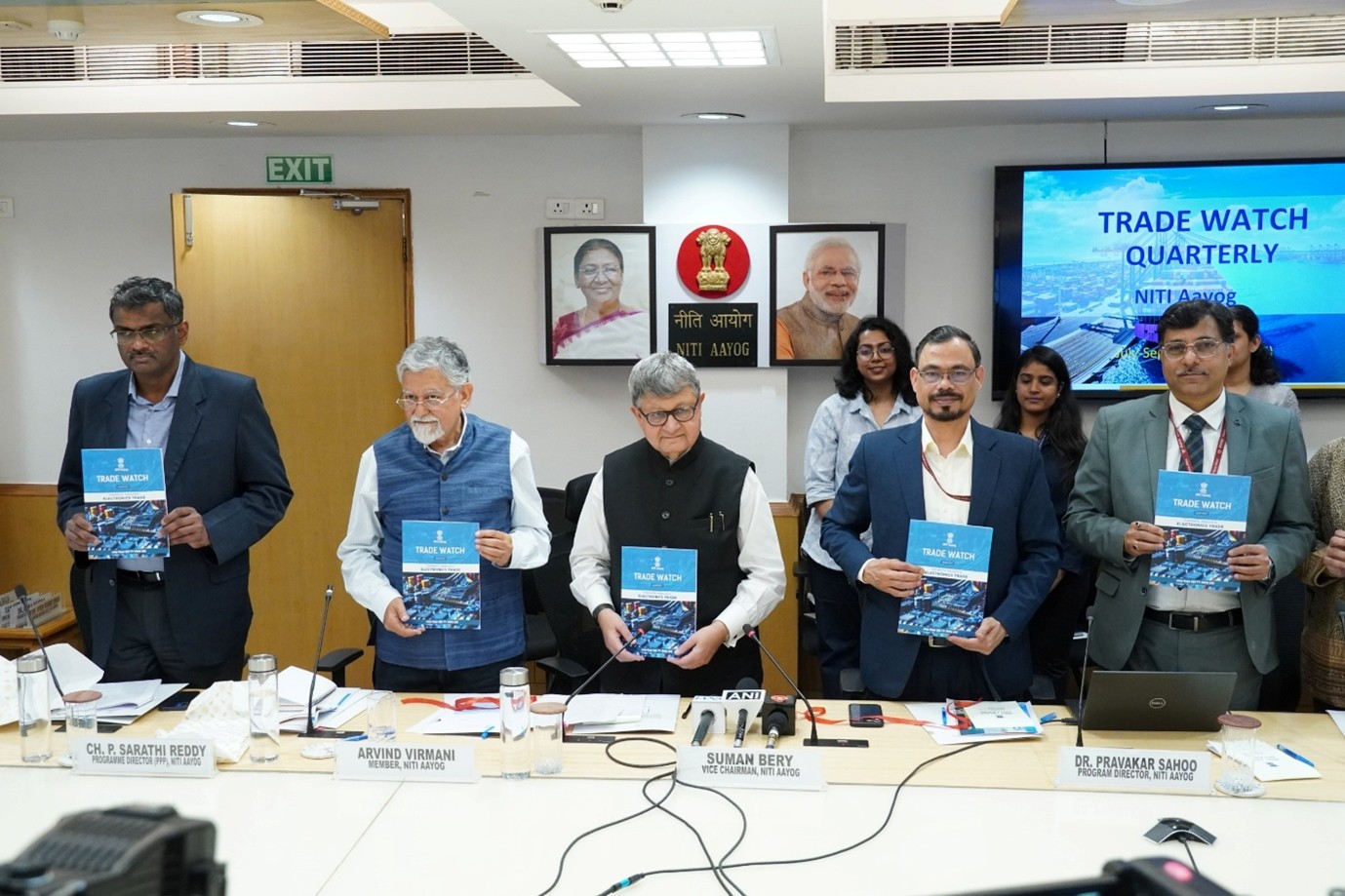
NITI Aayog has released the sixth edition of its “Trade Watch Quarterly”, a periodic note that tracks trends in India’s merchandise and services trade and the external environment. The publication is meant to help policymakers and businesses interpret shifts in demand, prices and supply chains.
Trade diagnostics matter because export and import swings feed directly into GDP growth, inflation (via input costs) and currency stability. A clearer view of sectoral momentum can also guide targeted facilitation—logistics, standards and export credit—without protectionism.
The latest edition arrives as global trade remains sensitive to geopolitics and policy uncertainty. By flagging risks and opportunities, the report can inform trade talks and domestic competitiveness reforms, particularly for smaller firms entering global value chains.
|
|
|
|
|
|
|
|
|
A forthcoming Rail Tech policy is expected to offer partial funding, technical assistance and access to testing centres to help Indian companies develop advanced railway technology and reduce reliance on imported components. The plan is reportedly due within weeks as part of the rail modernisation drive.
India still imports key subsystems even when final assembly happens domestically. In 2024-25, imports of railway and rolling-stock equipment were about ₹6,098 crore, with China a major supplier of parts.
The localisation push comes alongside higher rolling-stock capex, with ₹52,108 crore allocated in the FY27 budget. If execution links innovation to procurement, the policy could deepen domestic manufacturing, improve supply-chain resilience and support productivity through better rail capacity and logistics.
|
|
|
|
|
|
|
|
|
Indian Institute of Science (IISc) has redesigned gallium nitride (GaN) power transistors to overcome reliability limits that have slowed GaN uptake in EVs, data centres, and renewable-energy converters.
The team analysed how p-GaN gate depletion and microscopic leakage paths set threshold voltage, combining electrical tests with modelling and microscopy. They developed metal gate stacks that suppress charge build-up, cutting leakage by up to 10,000× and lifting gate breakdown to about 15.5 V. A patented aluminium–titanium oxide gate structure then enabled higher, more stable thresholds above 4 V, closer to silicon MOSFET margins.
The results could speed GaN use in power converters and fast chargers, and the researchers are now seeking industry partnerships and scale-up support.
|
|
|
|
|
|
|
|
|
IIT (ISM) Dhanbad has reported a low-cost electrode/catalyst platform aimed at making green hydrogen production far cheaper, aligning with India’s clean-energy scale-up goals.
The team engineered a conductive composite by combining molybdenum disulfide and vanadium sulphide with reduced graphene oxide, creating abundant-element active sites that lower overpotential for electrochemical water splitting. In a proof-of-concept “solar-to-hydrogen” setup, the catalyst was driven by a commercial silicon solar cell, mimicking artificial photosynthesis to generate hydrogen from sunlight and water.
The researchers claim the materials choice could reduce catalyst-related costs by 400–500× versus noble-metal systems, and have published the results while exploring scale-up pathways for industrial deployment.
|
|
|
|
|
|
|
|
|
CSIR–NIIST is preparing to transfer a “designer rice” technology to industry, aiming to upgrade polished white rice into a functional food that better supports nutrition and metabolic health.
The formulation is engineered to deliver higher protein while enriching the grain with key micronutrients, including iron, folic acid, and vitamin B12, and to lower glycaemic impact to moderate post-meal blood-sugar response. The institute plans to formalise licensing at a New Delhi technology-transfer event alongside other food-processing and biomaterials innovations.
Licences are slated for partners including Tata Consumer Products and SS Soul Foods, signalling a move from R&D to commercial production and wider consumer availability.
|
|
|
|
|
|
|
|
|
ISRO says the NASA–ISRO Synthetic Aperture Radar (NISAR) mission is producing high-resolution soil-moisture products, delivering 100 m maps with repeat coverage roughly every 12–13 days.
NISAR images the landmass in both S- and L-band radar, and a physics-based retrieval algorithm from ISRO’s Space Applications Centre converts dual-frequency backscatter into consistent soil-moisture estimates across diverse agro-climatic regions. L-band improves sensitivity under vegetation, while S-band adds surface detail for robust combined products.
Operational Level-4 outputs will be generated at NRSC (IMGEOS) and shared via the Bhoonidhi portal, supporting near-real-time irrigation planning, drought preparedness, and district-scale water management as calibration and validation continues.
|
|
|
|
|
|
|
|
|
IIT Indore is translating lab research into standards-ready tools for water accounting and pollution control under a collaboration with the Bureau of Indian Standards (BIS), aiming to strengthen civic services.
A flagship output is a tiered water-audit framework that quantifies “non-revenue water” lost through leaks or unauthorised connections, enabling utilities to prioritise fixes and curb waste. The BIS-backed portfolio also covers protocols for measuring and conserving water use in industries and townships, standard-compliant environmental quality monitoring, and improved waste management and hygiene infrastructure.
Six of 33 proposals have been sanctioned, and IIT Indore is setting up BIS student chapters and a “BIS Corner” to accelerate compliance and technology transfer to municipalities, startups, and industry partners.
|
|
|
|
|
|
|
|
|
BodhanAI, anchored at IIT Madras, has been positioned as a national Centre of Excellence for Artificial Intelligence in Education, with a mandate to bring AI-enabled teaching and learning into mainstream classrooms.
The initiative will develop a shared digital public infrastructure and common architecture, exposing APIs so startups and institutions can build interoperable education applications with consistent accuracy. It is also tasked with creating structured digital modules to accelerate teacher capacity building as curricula and pedagogies evolve, spanning pre-primary through higher education and skilling.
Backed by the Ministry of Education (India), BodhanAI is expected to start scaling from the next academic session, supporting responsible and inclusive AI adoption while improving employability-focused learning and system-wide administration workflows.
|
|
|
|
|
|
|
|
|
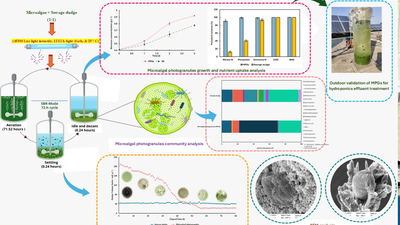
IIT Roorkee has developed a low-cost, indigenous treatment system for wastewater from hydroponic farming, addressing nutrient-rich effluents that can trigger eutrophication in natural water bodies.
The method uses microalgal photogranules—dense 4–6 mm spheres formed when microalgae, bacteria, and cyanobacteria self-aggregate under controlled mixing and illumination. In a light-driven reactor, the consortium removes nitrogen, phosphorus, and organic load via photosynthesis and microbial metabolism, then naturally settles when mixing stops, eliminating energy-intensive harvesting steps such as centrifugation or chemical flocculants.
Reported results include near-complete BOD/COD removal, ~99% phosphate and ammonia reduction, and ~90% nitrate removal within days, positioning the approach for scalable deployment as hydroponics expands.
|
|
|
|
|
|
|
|
|
IIT Madras has built a virtual-reality simulator that objectively quantifies laparoscopic skills, aiming to replace subjective assessments with reproducible, data-driven scoring for keyhole surgery training.
The platform recreates core laparoscopy constraints—limited haptic feedback, reduced depth cues, and the “fulcrum effect” that inverts instrument motion—while instrumenting tasks to capture movement time and efficiency. Using Fitts’ Law–based performance models, the team computed quantitative metrics and showed an 11.86% increase in movement time under reversed controls in trials with 24 young surgeons.
The system is positioned to standardise curricula and benchmarking across institutions, with broader validation studies planned before routine adoption in surgical training programmes.
|
|
|
|
|
|
|
|
|
IIT Delhi has demonstrated an AI-augmented hydrology framework that improves daily streamflow forecasts across river catchments, targeting better flood risk assessment and reservoir operations.
The approach couples physics-based land surface models (LSMs) with deep learning that learns residual errors from multi-decadal observations, avoiding site-by-site calibration. Trained on data from 220 catchments, it raised median Kling-Gupta Efficiency from 0.18 to 0.60 and improved accuracy in 208 catchments, while cutting peak-flow timing and peak percentage errors in many basins.
Researchers say the method can underpin river-basin “digital twins” for planning and real-time decision support, and is positioned as a scalable upgrade to existing forecasting pipelines.
|
|
|
|
|
 |
|
|
|
|
|
|
|
|
|
|
- Kindly add the email address masscomm@lubindia.com to your contact list or whitelist it for the newsletter.
|
|
|
|
|
|
|
|
|
|
|
|






)

)
)


)


)



)

