|
|
|
|
Weekly Insights for Entrepreneurs
|
|
|
|
|
| Year: 2026-27 |
Tuesday 3rd February, 2026 |
Volume/Issue: 113 |
|
|
|
|
● Budget 2026 boosts startups, MSMEs with ₹10,000 crore funds and a credit push
|
● Budget 2026’s 4-point plan for TReDS to unlock MSME liquidity and invoice-based credit
|
● ‘Corporate Mitras’ for MSMEs announced for Tier 2 & 3 towns to ease compliance
|
● What Budget 2026 means for Indian tech & startups: key operational and policy takeaways
|
● Higher defence capex: new runway for drone and aerospace startups
|
● India Semiconductor Mission 2.0: support for 50 startups, 3-nm chip target by 2032
|
● WaveX invites applications for startups to pitch at the ‘India AI Summit’ next month
|
|
| |
|
|
● India-US Trade deal done: Tariffs cut from 25% to 18%. Penal tariff of 25% gone
|
● PM Modi on Budget 2026: “Historic roadmap” for Viksit Bharat 2047
|
● Budget 2026: Sitharaman’s six-point plan to drive India’s next growth phase
|
● India–EU FTA explained: “mother of all deals” and key outcomes
|
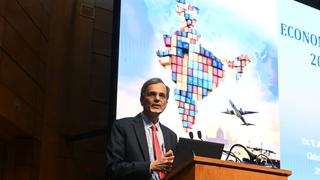
● Economic Survey 2025–26: inclusive development focus; growth outlook and priorities
|
● World Bank support: $8–10B annually for five years to back growth and jobs
|
● India’s energy investment runway: PM flags $500B opportunity in the energy sector
|
● Microfinance support: ₹8,000 crore credit guarantee boost amid funding stress
|
● Budget 2026 compliance highlights: GST & business compliance changes for enterprises
|
● Budget 2026 macro signals: lower debt target, city regions and social initiatives
|
● Budget 2026 Jobs & skilling: employment takes centre stage in Budget 2026 agenda
|
● Budget 2026 Manufacturing push: PLI support and measures to boost domestic production
|
|
| |
|
|
● DRDO’s GaN breakthrough: indigenous GaN MMICs to strengthen defence electronics
|
● IIT Tirupati plasma tech: air-to-nutrients systems for agriculture and sustainability
|
● IIT Madras e-waste recycling: green metal recovery using natural solvents
|
● IIT Roorkee text-to-fashion AI: India’s first system for sketching from prompts
|
● IIT Guwahati glacial hazard mapping: predictive framework for Eastern Himalayas
|
● Miranda House–DRDO BioFET chip: portable warning system for heart-attack risk
|
● IIT Madras ‘ThinnAI’: AI platform to improve learner-driver training and assessment
|
● ISRO LOX–methane engine test: first hot test of thrust chamber completed
|
● Martian “space bricks” study: bacteria-based bricks strengthened under perchlorate conditions
|
|
| |
|
|
|
|
|
|
Budget 2026–27 announced a ₹10,000 crore SME Growth Fund to provide equity support to MSMEs, plus a ₹2,000 crore top-up for the Self-Reliant India Fund to sustain risk capital for micro enterprises.For startups, the finance minister also proposed a new ₹10,000 crore Fund of Funds and a targeted lending programme for five lakh first-time women, SC and ST entrepreneurs, offering term loans up to ₹2 crore over five years.
The package is framed as a cushion against global uncertainty and a push for scale beyond metros. MSMEs and founders should track eligibility criteria and rollout timelines, as access will likely hinge on formal registrations, clean financials and demonstrable growth plans.
|
|
|
|
|
|
|
|
|
Budget 2026–27 laid out a four-step plan to expand TReDS and improve MSME liquidity, starting with mandating the platform for CPSE purchases from MSMEs to set a wider corporate benchmark.
The government also proposed a credit-guarantee backstop through CGTMSE for invoice discounting on TReDS, linking GeM with TReDS to share government purchase data with financiers, and treating TReDS receivables as asset-backed securities to enable a secondary market.
For MSMEs, this is a direct push toward invoice-based working-capital instead of collateral-led borrowing. Suppliers should prepare for stricter invoice discipline, faster buyer confirmations and more transparent pricing—while financiers may offer cheaper, quicker credit once guarantees and data-sharing mechanisms are operational.
|
|
|
|
|
|
|
|
|
In Budget 2026–27, the government said it will work with professional bodies such as ICAI and ICSI to create a cadre of “Corporate Mitras” in Tier-II and Tier-III towns.
These trained, accredited para-professionals are intended to help MSMEs meet compliance and filing requirements at affordable costs, reducing the need for expensive external advisors.
For small businesses outside metros, the payoff is potentially faster formalisation, fewer penalty risks and better eligibility for credit, tenders and government schemes. MSMEs should watch rollout details—who can access the service, pricing, and what work will be covered—so they can budget and plan timelines accordingly.
|
|
|
|
|
|
|
|
|
Union Budget 2026 signals a more “operational” push for India’s tech and startup ecosystem—tightening the rulebook on how services are classified, while extending long-horizon incentives for capital-heavy digital infrastructure.
A notable move is clubbing multiple IT and IT-enabled segments under a single “Information Technology Services” category with a common safe-harbour margin, aimed at reducing transfer-pricing disputes. The budget also highlights big-ticket enablers such as data-centre expansion, AI capability building and deeper funding support for startups.
For founders and MSME tech vendors, the message is to scale with compliance: clearer tax definitions can cut friction, but documentation will be scrutinised. Infrastructure-linked incentives may open new enterprise demand, especially for cloud, cybersecurity, AI tooling and domestic supply chains.
|
|
|
|
|
|
|
|
|
Budget 2026’s higher focus on defence and aerospace spending is expected to expand procurement and R&D opportunities for drone, aerospace and dual-use technology startups, especially those aligned with indigenisation priorities.
Industry voices are seeking tax and customs tweaks—such as duty relief on imported drone components, clearer treatment for technology-transfer and royalty arrangements, and a more predictable framework to lower costs and speed execution.
For startups, the takeaway is to position early for long sales cycles: secure certifications, strengthen IP ownership, and build partnerships with primes and defence PSUs. Teams that can prove manufacturability, supply-chain resilience and secure-by-design products should be best placed as capex-led tenders and trials scale across surveillance, logistics and border-tech use cases.
|
|
|
|
|
|
|
|
|
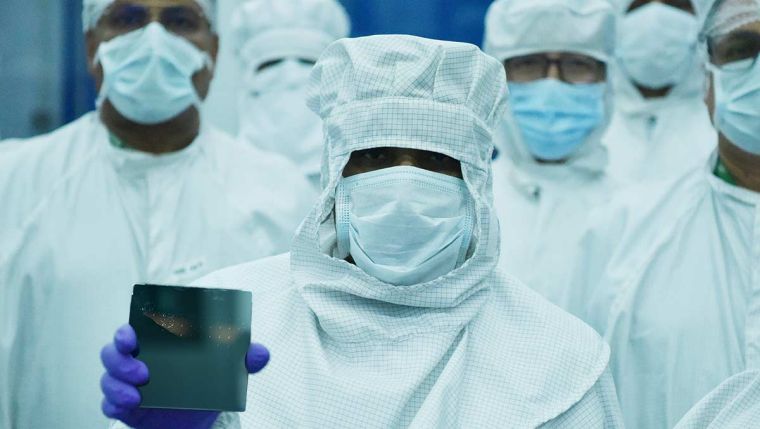
India’s India Semiconductor Mission 2.0 (ISM 2.0) plans to scale the Design Linked Incentive programme to support at least 50 fabless chip startups, signalling a longer-term shift from services to a domestic product ecosystem.
The IT minister outlined a manufacturing ladder starting with mature nodes—such as 180 nm at SCL Mohali and 28 nm via the Dholera fab—while targeting 3 nm chips by 2032, with a roadmap toward more advanced nodes thereafter.
For deeptech founders, the takeaway is ecosystem pull: more emphasis on advanced design, funding and partnerships with fabs, IP vendors and academia. Startups aligned to strategic sectors such as defence, automotive, space and industrial electronics stand to benefit as demand and talent pipelines deepen.
|
|
|
|
|
|
|
|
|
WaveX, the government-backed startup accelerator for the AVGC-XR ecosystem, has opened applications for startups to participate in the India AI Summit next month, offering selected companies a platform to demo products and meet ecosystem partners.
The programme is designed to help early-stage teams translate pilots into adoption by connecting them with enterprise buyers, investors, and public-sector stakeholders, while spotlighting applied AI use cases that can scale nationally.
For founders, the business value is speed-to-market: events like this compress months of outreach into a few days, but only if preparation is sharp. Startups should enter with a clear target customer, measurable outcomes, and a tight product story, and plan follow-up meetings and pricing proposals before the summit begins.
|
|
|
|
|
|
|
|
|
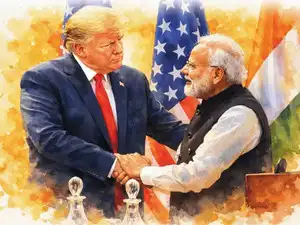
India and the United States struck a trade deal that lowers US tariffs on Indian goods to 18%, easing a key friction point and signaling a thaw in bilateral economic ties after months of uncertainty.
The reduction should improve price competitiveness for Indian exporters and support external demand, while giving firms clearer visibility for investment and supply-chain planning. It also reduces inflationary pressure on US importers that rely on Indian inputs.
For the broader economy, the agreement could lift trade volumes and confidence, but markets will watch for details on implementation, timelines, and India’s commitments on market access and energy sourcing that may reshape import bills and sectoral winners.
|
|
|
|
|
|
|
|
|
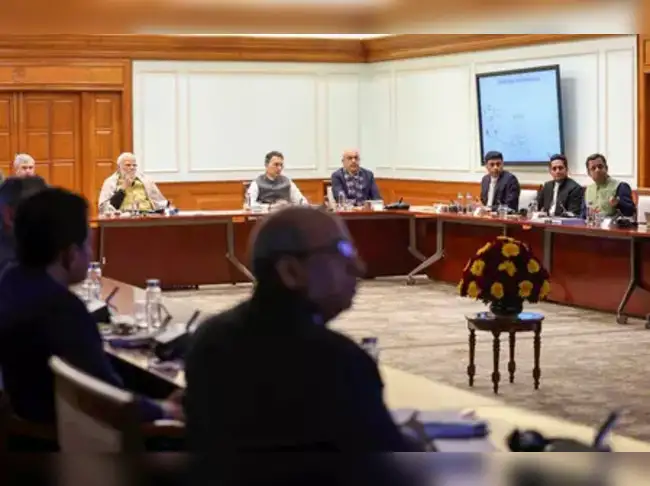
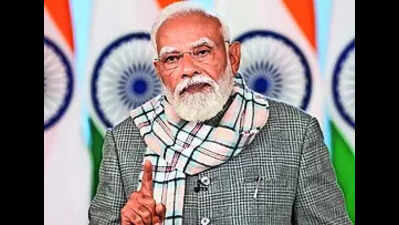
Prime Minister Narendra Modi described Budget 2026 as a “historic” roadmap toward the 2047 developed-nation goal, emphasising measures aimed at women, youth, farmers and low-income groups alongside support for emerging industries.
he messaging positions the budget as welfare-anchored and investment-led, suggesting that inclusion, infrastructure and new manufacturing capabilities are intended to reinforce each other and sustain confidence amid global uncertainty and shifting trade conditions.
For the economy, political backing can help policy continuity and faster execution, which matter for private investment decisions. Growth outcomes will depend less on rhetoric and more on whether schemes translate into higher productivity, jobs, and credible medium-term fiscal discipline.
|
|
|
|
|
|
|
|
|
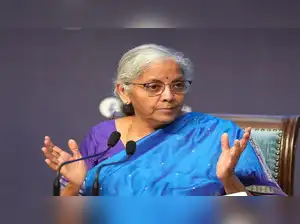
Finance minister Nirmala Sitharaman has framed Budget 2026 around a six-point roadmap that prioritises manufacturing, revival of legacy industries, stronger MSMEs and a renewed push to build infrastructure at scale.
The plan also stresses long-term security and stability and the creation of city economic regions as growth engines, signalling a shift toward cluster-based urban productivity rather than dispersed spending.
For the economy, the six-part framing is meant to align investment, jobs and resilience: stronger supply capacity and logistics can ease inflation constraints and lift competitiveness. The challenge will be rapid execution, regulatory clarity and mobilising private capital alongside public outlays.
|
|
|
|
|
|
|
|
|
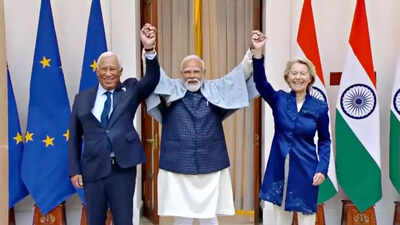
India and the European Union have concluded a long-awaited free trade agreement that aims to deepen market access, investment links and regulatory cooperation between two large economic blocs, signalling a renewed push toward rules-based trade.
The package spans goods, services and standards, while carving out protections for sensitive sectors. For Indian exporters, the value lies in improved competitiveness in a high-income market and a potential lift to manufacturing and services demand.
Macro-wise, the deal could support growth by expanding exports, attracting technology and supply-chain investment, and diversifying trade partners. Benefits will depend on implementation speed and firms’ ability to scale up quality, logistics and compliance.
|
|
|
|
|
|
|
|
|
The Economic Survey 2025-26 reiterates that India’s reform-and-investment cycle must translate into broader participation, highlighting farmers, MSMEs, youth employment and social welfare as central to sustaining demand and social stability.
It flags macroeconomic fundamentals and infrastructure-led momentum, and expects India to retain strong growth of 6.8–7.2% in FY27, while emphasising productivity gains, manufacturing strengthening and entrepreneurship to stay resilient amid global uncertainty.
For the economy, the takeaway is balance: faster growth needs inclusive job creation, easier credit and compliance for small firms, and steady public capex. Execution will determine whether productivity rises enough to lift incomes durably without reigniting inflation pressures.
|
|
|
|
|
|
|
|
|
The World Bank Group has signed a new Country Partnership Framework committing $8–10 billion a year for five years—higher than the previous programme—to support India’s growth and job-creation agenda.
The approach centres on mobilising private capital alongside public finance, with focus areas spanning infrastructure, energy security, agribusiness, healthcare, tourism, skills and value-added manufacturing, and with emphasis on youth and women’s employment.
For the economy, sustained multilateral funding can smooth investment cycles, reduce financing constraints for priority sectors and support reforms that improve the business environment. The impact will hinge on project execution and crowding-in of private investment.
|
|
|
|
|
|
|
|
|
Prime Minister Narendra Modi pitched India’s energy transition as a $500 billion investment runway, spanning refining, gas infrastructure, renewables, storage, grids and clean-tech manufacturing, as demand rises with growth and urbanisation.
He argued that deeper domestic capacity—from shipbuilding for LNG logistics to higher refining throughput—can curb import dependence, temper external-price shocks and improve the trade balance while keeping energy affordable for industry and households.
For the economy, the key signal is policy-driven capex: a clearer pipeline of projects and regulatory predictability could crowd in private capital, lift jobs and productivity, and reduce inflation risks linked to volatile fuel imports.
|
|
|
|
|
|
|
|
|
India has cleared an ₹8,000-crore credit guarantee programme to encourage banks to lend to microfinance institutions as the sector grapples with higher delinquencies, tighter liquidity and tougher funding conditions.
The guarantee is designed to lower lenders’ risk and improve liquidity, especially for smaller MFIs, supporting continued flow of small-ticket credit to low-income borrowers and micro-entrepreneurs who are highly sensitive to abrupt credit disruptions.
For the economy, stabilising microfinance can protect rural and informal-sector consumption, limit knock-on stress for banks and NBFCs, and prevent a sharper pullback in last-mile credit. The move signals targeted support rather than broad stimulus as stress pockets emerge.
|
|
|
|
|
|
|
|
|
India’s Budget 2026 prioritises compliance fixes over tax-rate changes, largely implementing September 2025 GST Council decisions. The aim is lower disputes and faster cash-cycle relief through clearer rules and quicker refunds.
GST proposals ease valuation of post-sale discounts—no prior agreement needed if credit notes are issued and the buyer reverses input tax credit. Intermediary-services place-of-supply shifts to the recipient-location rule. Refunds improve via provisional payouts for inverted duty structures and removal of minimum thresholds for export refunds, plus interim appeal arrangements until a national authority starts April 1, 2026.
Income-tax procedures also change: staggered ITR deadlines, more time for revised returns, clarified TDS and a 2% TCS rate for select goods—steps expected to trim compliance costs and support investment.
|
|
|
|
|
|
|
|
|
The Union Budget 2026 signals continued fiscal consolidation, targeting a lower central government debt-to-GDP ratio and tying the credibility of the growth strategy to disciplined public finances and predictable borrowing needs.
It also earmarks ₹5,000 crore over five years for city economic regions to catalyse urban-led growth, alongside social and tourism-linked initiatives and support for assistive-device manufacturing, reflecting an attempt to pair capex with inclusion.
For the economy, the mix aims to sustain investment momentum while anchoring macro stability. If urban cluster spending improves productivity and labour mobility, it can lift medium-term growth; delivery and coordination with states will be decisive.
|
|
|
|
|
|
|
|
|
Budget 2026 puts employment at the centre of the policy narrative, linking faster formal job creation to an expansion of manufacturing and new-age sectors rather than relying solely on consumption support.
The proposals highlight skills development, MSME scaling and sectoral pushes—from electronics and semiconductors to healthcare and tourism—intended to raise employability and crowd in private hiring as the capex cycle continues.
For the economy, the key is converting spending and incentives into durable labour demand. Faster skilling and better matching of workers to emerging industries can lift productivity and incomes, but outcomes will depend on implementation speed and industry participation.
|
|
|
|
|
|
|
|
|
Budget 2026 reinforces a manufacturing-led growth strategy, using targeted allocations and production-linked incentives to raise manufacturing’s share in GDP and build scale in strategic and “frontier” sectors.
Support spans semiconductors, electronics components, textiles, chemical parks and biopharma, alongside customs tariff simplification and corridor-led industrial infrastructure. The intent is to reassure investors despite global uncertainty and recent domestic market volatility.
Economically, the goal is import substitution where critical, plus export competitiveness and job creation. If execution delivers capacity, technology and stable rules, it can lift productivity and reduce external vulnerability over time; if not, fiscal costs may rise without commensurate gains.
|
|
|
|
|
|
|
|
|
Defence Research and Development Organisation researchers have achieved indigenous production of gallium nitride (GaN) monolithic microwave integrated circuits (MMICs), a high-value class of compound semiconductor chips used in high-frequency, high-power sensing and communications.
The work spans DRDO’s Solid State Physics Laboratory in Delhi and the Gallium Arsenide Enabling Technology Centre in Hyderabad, combining materials development with clean-room fabrication. The teams report multi-step photolithography and process-optimisation cycles of roughly 80 days, yielding compact devices that can handle high temperatures and fast switching—key for radar, electronic warfare and satellite payloads.
By removing dependence on export-controlled supply chains, the capability supports programmes from airborne surveillance to spaceborne radar imaging, including deployments with Indian Space Research Organisation, and is being positioned for technology transfer to Indian industry.
|
|
|
|
|
|
|
|
|
IIT Tirupati has demonstrated non-thermal plasma systems that turn air into crop-ready nutrients, aiming to cut dependence on conventional fertilisers and imported inputs while improving on-farm sustainability.
The approach uses electrical-discharge plasma at near-ambient temperature to generate reactive oxygen and nitrogen species, converting atmospheric nitrogen into water-soluble nitrates and related compounds. The same reactive chemistry also shows biocidal action, helping neutralise pathogens, fungi and toxins without leaving harmful residues—enabling seed treatment, crop resilience measures and wastewater purification from a single platform.
By targeting decentralised, scalable production of nutrient-rich liquid fertiliser, the institute is positioning the technology for field-oriented deployment and broader environmental and industrial processing applications.
|
|
|
|
|
|
|
|
|
Researchers at IIT Madras have developed a greener route to recover metals from electronic waste using natural, biodegradable solvents, with an added pathway to directly produce value-added copper nanomaterials.
The team uses a deep eutectic solvent made from thymol and capric acid to dissolve copper, then applies trisodium citrate to extract and convert it into copper nanoparticles. By tuning solution pH, they demonstrated control over copper chemistry, producing copper oxide nanoparticles or metallic copper, and extended the method to iron recovery from real printed circuit boards and copper sheets while avoiding acid-based effluents.
The lab-scale process is positioned as a safer, water-efficient alternative for circular-economy recycling, with the next step focused on scale-up, solvent recyclability and cost optimisation for industry.
|
|
|
|
|
|
|
|
|
IIT Roorkee has introduced a text-to-fashion sketch AI system that generates high-fidelity apparel concept drawings from written design briefs, aligning machine generation with how designers actually ideate.
The framework is built on FLORA, a new India-first dataset of 4,330 paired professional sketches and designer-style textual descriptions capturing silhouette, fabric, texture, construction and overall style. To better map nuanced fashion language to visuals, the team adds NeRA, a nonlinear low-rank adapter based on Kolmogorov–Arnold Networks, intended to improve semantic alignment and speed model convergence beyond linear fine-tuning adapters.
The capability could accelerate early-stage design, support mass personalisation and reduce trial-and-error prototyping, positioning the approach for integration into digital design workflows and sustainable fashion pipelines.
|
|
|
|
|
|
|
|
|
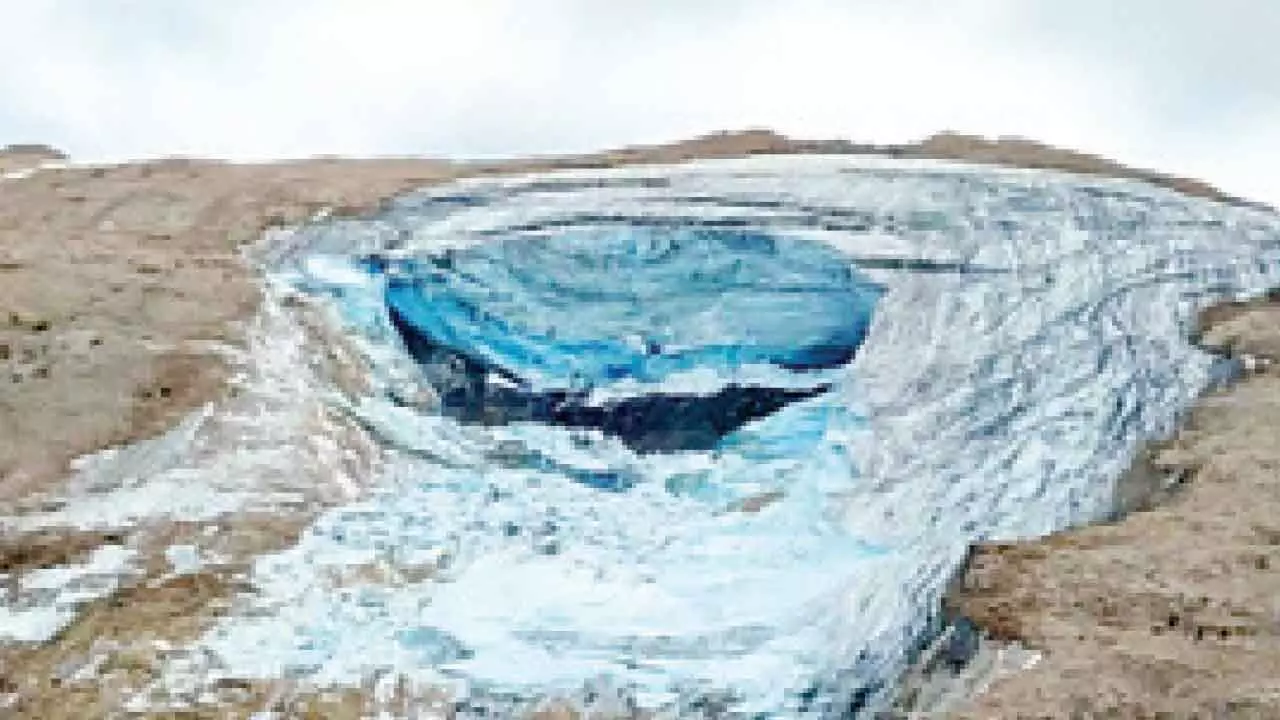
IIT Guwahati has developed a predictive framework to identify where new glacial lakes are likely to form in the Eastern Himalayas, supporting earlier detection of flood-prone sites as glaciers retreat.
Using high-resolution Google Earth imagery and digital elevation models, the team reports 492 potential sites. They compared logistic regression, artificial neural networks and Bayesian neural networks, with the Bayesian approach performing best while also estimating uncertainty to make risk maps more actionable. The strongest predictors included neighbouring lakes, cirques, gentle slopes and retreating glaciers.
The work provides a planning tool for GLOF early-warning, safer routing of roads and hydropower assets, and longer-term water-resource management, with upgrades planned via moraine-history inputs and field validation.
|
|
|
|
|
|
|
|
|
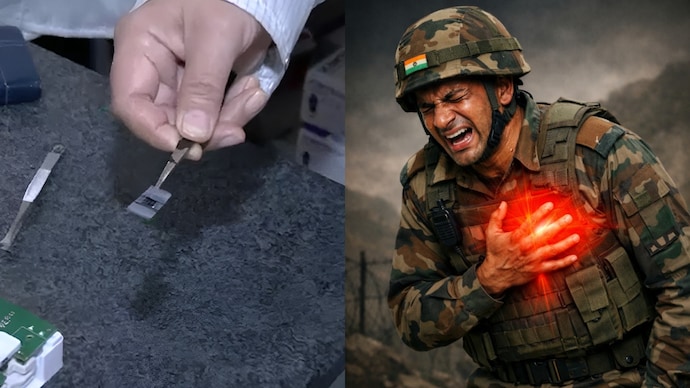
Miranda House, in collaboration with DRDO, has produced a portable “BioFET” biological chip designed to warn soldiers of elevated heart-attack risk, addressing medical emergencies in extreme, high-altitude deployments.
BioFET analyses blood serum at the point of care and simultaneously measures three cardiac-risk biomarkers, presenting the readings against calibrated safety limits on a small display. The team describes a workflow similar to a glucometer, enabling rapid screening without lab infrastructure, while noting that reliable operation still requires controlled ambient conditions for the sensor.
The prototype, developed over about five years, has been handed to DRDO for trials, with the programme framed as a made-in-India, lower-cost fabrication effort that could support faster evacuation and treatment decisions in the field.
|
|
|
|
|
|
|
|
|
IIT Madras has built an AI-enabled training and assessment platform to improve traffic-rule literacy among learner drivers, aiming to standardise pre-licence readiness and reduce crash risk through measurable competency checks.
Called “ThinnAI,” the system functions as a learning management tool with multi-level, video game-like tests that evaluate knowledge of signs, road rules and motor-vehicle basics. It also incorporates cognitive and physical evaluation components and is being used within the institute to retrain existing drivers while the product remains under evaluation for learner-licence workflows.
If adopted by licensing authorities, the platform could complement India’s data-driven road safety initiatives by raising baseline compliance before drivers reach public roads, helping translate policy into consistent, scalable training outcomes.
|
|
|
|
|
|
|
|
|
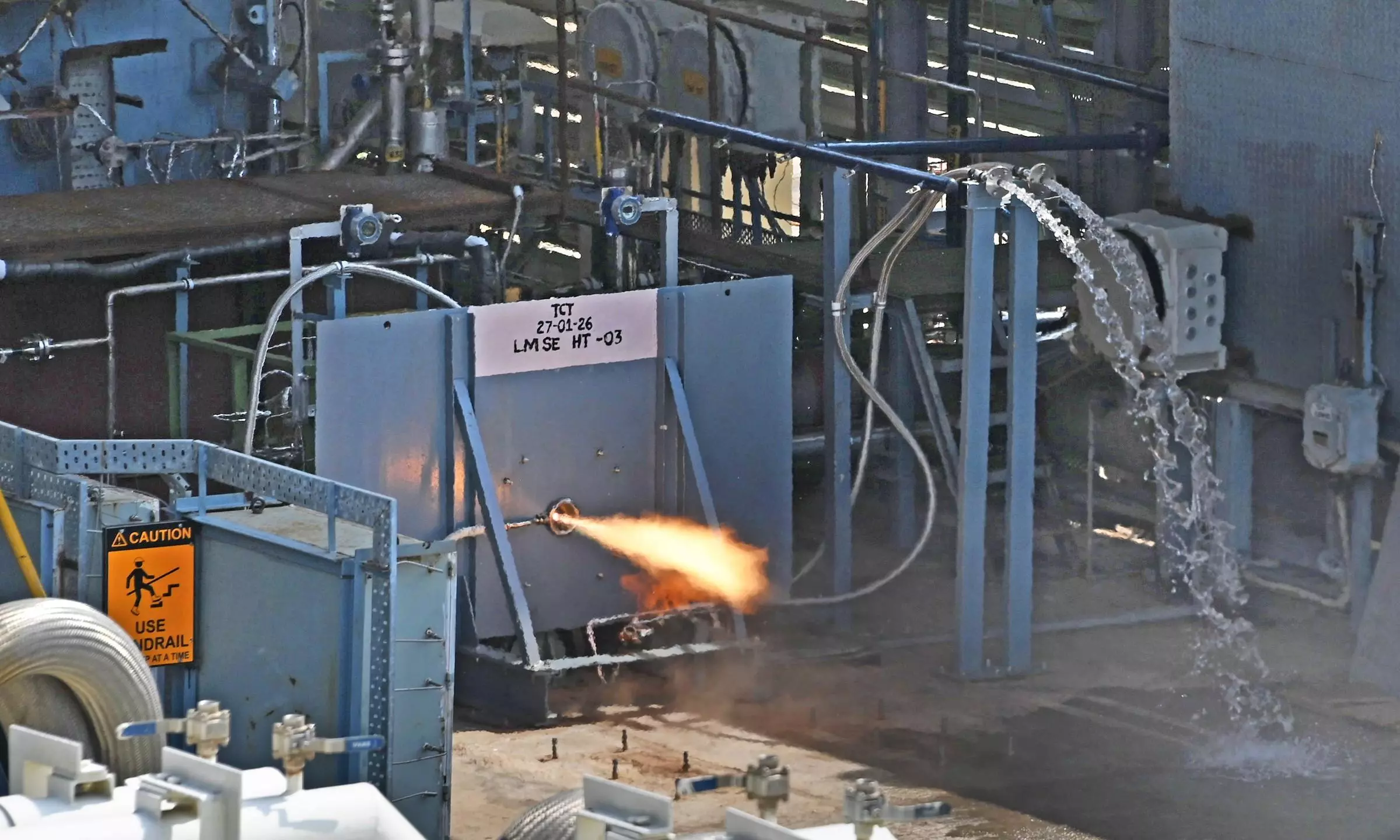
ISRO has completed its first hot test at the thrust-chamber level for a high-thrust liquid oxygen–methane (LOX–CH₄) engine, a key step toward propulsion for next-generation launch vehicles.
The sub-scale thrust chamber, paired with a single-element injector head, was fired at ISRO’s Propulsion Complex in Mahendragiri on 27 January 2026. ISRO reported stable ignition and flame sustenance and achieved a chamber pressure of 56 bar. The test article was realised via additive manufacturing, and a series of follow-on firings will be used to select an optimal injector configuration.
LOX–methane propulsion is strategically relevant for cleaner combustion and future reusability goals, and the successful subsystem test signals progressing maturation of India’s next-generation engine architecture.
|
|
|
|
|
|
|
|
|
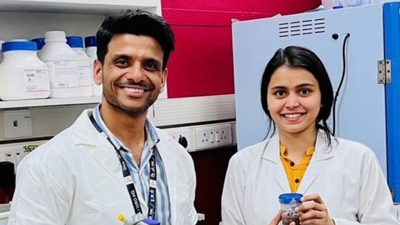
A research team spanning Indian Institute of Science, IISER Kolkata and ISRO astronaut Shubhanshu Shukla has shown that perchlorates—toxins common in Martian soil—can, under specific recipes, increase the strength of bacteria-made “space bricks.”
The study tests biocementation, where soil bacteria precipitate calcium carbonate to bind regolith simulants into solid blocks. At perchlorate levels comparable to Mars (up to about 1%), the microbes showed stress responses—slower growth, shape changes and extracellular matrix formation—yet, in mixes including guar gum and a small amount of nickel chloride, the bricks formed more mineral precipitates and microscopic “microbridges,” boosting strength.
The results broaden options for in-situ resource utilisation by suggesting that future Mars construction may be able to work with, rather than remove, perchlorate-contaminated soils.
|
|
|
|
|
 |
|
|
|
|
|
|
|
|
|
|
- Kindly add the email address masscomm@lubindia.com to your contact list or whitelist it for the newsletter.
|
|
|
|
|
|
|
|
|
|
|
|

)