|
|
|
|
Weekly Insights for Entrepreneurs
|
|
|
|
|
| Year: 2026-27 |
Tuesday 27th January, 2026 |
Volume/Issue: 112 |
|
|
|
|
● MSME Credit Boost: Union Cabinet approves ₹5,000 crore equity infusion in SIDBI
|
● Export Compliance Relief: RBI simplifies documentation for small-value cross-border trade
|
● Digital Factory Push: India’s MSMEs to get a digital makeover to meet global supplier standards
|
● MSME Champions Scheme: Centre considers raising outlay to ₹8,000–₹10,000 crore
|
● Green MSME Roadmap: NITI Aayog unveils transition plan ahead of India’s net-zero push
|
● Startup Innovation: ISM demos instant pothole filler; advances multi-layer plastic upcycling
|
● Port Logistics Tech: IIT Madras-incubated startup tests electromagnetic cargo system at Kandla port
|
● AI in Action: “Problem-first” AI startups move from pilots to production deployments
|
● Startup Tax Watch: Founders seek clarity after SC ruling on Tiger Global structures
|
|
| |
|
|
● Big Trade Deal: India–EU conclude Free Trade Agreement negotiations
|
● India at Davos: “Democratising technology” draws global interest, says Ashwini Vaishnaw
|
● Liquidity Support: RBI to inject over ₹2 lakh crore into the banking system
|
● RBI’s 6 Measures: Updates spanning UPI limits, gold loans, co-lending & stressed-asset securitisation
|
● Power Policy 2026 Draft: Tariff reform, clean energy push and long-term capacity planning proposals
|
● Discom Reforms: Two changes improving electricity distribution finances and collections
|
● State Debt Alert: RBI urges states to adopt a clear “glide path” to reduce debt
|
● GDP Data Upgrade: MOSPI overhauls GDP calculation with new indicators
|
● Manufacturing Shift: India’s luggage brands increase domestic production, reduce China dependence
|
|
| |
|
|
● Biotech Research Platform: IIT Roorkee builds indigenous system to speed up antibody screening
|
● Medical Waste Tech: CSIR–startup collaboration to deploy biomedical waste processing solution
|
● Space Weather Forecasting: IIT Kanpur maps Sun’s magnetic field to improve predictions
|
● Brain Disease Research: IIT Bombay launches smart platform to decode complex neurological data
|
● Ramjet Rocket Upgrade: IIT Madras to work on boosting Army rocket range using ramjet tech
|
● Shark Antibody Platform: IIT Roorkee develops vNAR-based discovery library for cancer & infections
|
● Skin Cancer Breakthrough: IIT Hyderabad’s gold-coated nanoparticles enable dual anti-tumour action
|
● Hypersonic Capability: India showcases Mach 10 hypersonic anti-ship missile concept
|
● Field Desalination: DRDO portable unit lets soldiers convert seawater into drinking water
|
● TB Research Discovery: IISc identifies protein helping TB bacteria silence foreign DNA
|
|
| |
|
|
|
|
|
|
The Union Cabinet has approved a ₹5,000 crore equity infusion into the Small Industries Development Bank of India (SIDBI) to expand credit flow to micro, small and medium enterprises.The capital will be released in three tranches, strengthening SIDBI’s balance sheet and enabling higher lending and refinancing support across banks, NBFCs and fintech channels that serve MSMEs.
For business owners, the decision signals more available and potentially quicker access to term loans and working capital, especially for growth investments and formalisation. MSMEs should track new SIDBI-linked schemes and partner-lender offerings, as the additional equity is expected to translate into larger ticket sizes and wider coverage for underserved districts.
|
|
|
|
|
|
|
|
|
The Reserve Bank of India has simplified compliance for small-value cross-border trade, easing paperwork for MSME exporters, importers and e-commerce sellers.
Under the relaxation, export and import transactions up to ₹10 lakh (or equivalent) can be closed through a declaration-based process instead of transaction-wise documentation, cutting repetitive submissions and bank follow-ups.
The practical takeaway is lower compliance cost and faster closure of numerous small invoices—common in B2C exports and marketplace-led shipments. MSMEs should review their trade documentation workflows with their authorised dealer bank, update internal controls for self-declarations, and use the freed-up time to focus on order fulfilment, collections and repeat exports, without compromising on accuracy and audit readiness.
|
|
|
|
|
|
|
|
|
The Centre is working on a digital factory upgrade plan to help India’s MSMEs meet stricter global supplier requirements on data, traceability and energy efficiency, a key reason behind export rejections.
The push includes tools such as machine monitoring, shop-floor software and energy management systems that can generate machine-level records and improve process control, helping small manufacturers align with buyer audits and quality benchmarks.
For MSMEs, the opportunity is two-fold: fewer shipment disputes and better productivity through real-time visibility on downtime, defects and power use. Owners should assess where digital tracking can directly cut costs—maintenance, rework, and energy bills—while preparing to share verifiable production and sustainability data with customers, especially in regulated export categories.
|
|
|
|
|
|
|
|
|
The Centre is considering a major scale-up of the MSME Champions Scheme outlay to around ₹8,000–₹10,000 crore over five years, responding to industry demands for stronger support to upgrade manufacturing competitiveness.
Officials say the proposal has reached the Expenditure Finance Committee stage and will then move to the Cabinet, signalling a wider push to accelerate technology adoption and cleaner production.
For MSMEs, a larger corpus could translate into more grants, handholding and cluster interventions in lean processes, quality improvement and sustainability compliance. Businesses planning capex should map priorities—energy-efficient machinery, digital systems, testing and certification—and keep paperwork ready to tap the expanded support once fresh guidelines are issued.
|
|
|
|
|
|
|
|
|
NITI Aayog has released a “Roadmap for Green Transition of MSMEs” as part of India’s net-zero 2070 agenda, positioning decarbonisation as a competitiveness lever for small businesses.
The roadmap highlights measures such as energy-efficient equipment, alternative fuels and resource-efficiency upgrades, and proposes institutional support including a National Project Management Agency and targeted use of credit-guarantee funding to help MSMEs adopt greener technologies.
For MSME owners, the message is clear: export markets and large buyers are tightening climate and traceability requirements, and green compliance is becoming a ticket to participate in value chains. Firms should start with quick wins—energy audits, efficient motors, waste and water recycling—then plan capex with subsidy, guarantee and cluster-level support to reduce payback periods.
|
|
|
|
|
|
|
|
|
Deep-tech startup Inventive Scientific Minds (ISM) showcased an “instant pothole filler” in a live Bengaluru demonstration, pitching a faster, on-site solution for road repairs.
The company also announced progress on upcycling multi-layer plastic waste—typically hard to recycle—aiming to convert it into useful inputs that can be deployed in urban infrastructure applications.
For MSMEs and startups, the story highlights a growing commercial market for circular-economy innovations that solve public-sector pain points with measurable outcomes. Firms in construction materials, waste management and municipal services can explore partnerships for pilots, supply contracts and licensing. The key is proving durability, cost-per-repair and scalability, as city agencies increasingly demand solutions that reduce downtime and maintenance cycles.
|
|
|
|
|
|
|
|
|
An IIT Madras–incubated startup, TuTr Hyperloop, has successfully tested an indigenous electromagnetic cargo mobility prototype at Deendayal (Kandla) Port, Gujarat, marking a step toward automation-led port logistics.
The prototype uses Linear Induction Motor (LIM) propulsion and is fully electric, with fewer moving parts, lower maintenance needs and potential for autonomous operation—positioning it as an alternative to diesel-driven internal container movement.
For MSMEs in logistics, engineering and industrial automation, the trial signals demand for local suppliers in power electronics, sensors, control software and lightweight fabrication. Ports are looking for faster, cleaner cargo flows to cut turnaround time and emissions. Smaller manufacturers can tap this shift by offering components, testing services and maintenance support, especially around safety and reliability standards.
|
|
|
|
|
|
|
|
|
A new wave of “problem-first” AI startups in India is helping enterprises move beyond experimental pilots to production deployments by focusing on narrow, high-impact use cases.
Instead of generic AI rollouts, these firms are targeting operational bottlenecks—such as quality checks, customer support, workflow automation and predictive maintenance—and building solutions that integrate with existing systems and deliver measurable outcomes.
For MSMEs, the shift matters because AI is becoming less about demos and more about efficiency gains that can be priced and scaled. Business owners should start with one process where data already exists and savings are clear, define success metrics upfront, and insist on integration and security from day one. AI startups should prioritise ROI proof and repeatable deployments.
|
|
|
|
|
|
|
|
|
Indian startups are seeking clearer tax assurances after a Supreme Court ruling held that Mauritius-based entities used by Tiger Global in its 2018 Flipkart stake sale were “conduits”, raising worries around treaty benefits.
A group representing 60 startups has written to the finance ministry asking that the decision not be used to reopen or aggressively scrutinise older investments, especially those made before the 2017 India–Mauritius treaty changes.
For founders, the near-term impact could be tougher investor due diligence and slower deal closures, as funds re-check structures and paperwork. Startups should be ready with clean cap-table history, documented share transfers and credible tax opinions, and budget for higher legal costs in fundraising and exit transactions. Clear guidance would improve predictability.
|
|
|
|
|
|
|
|
|
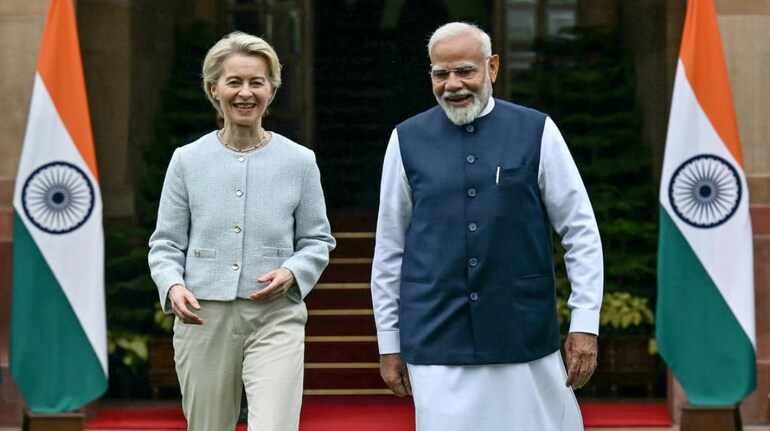
India and the European Union have concluded negotiations on a long-pending Free Trade Agreement, marking a major upgrade to their economic partnership. Commerce Secretary Rajesh Agrawal said the pact is “balanced and forward-looking” for India and is ready for formal announcement.
The deal is designed to reduce tariffs across many product lines, define rules of origin for preferential access, and set commitments on services and investment. It also aims to streamline customs, strengthen regulatory cooperation, and add procedures to address non-tariff barriers.
Once cleared through legal scrubbing and ratification, the FTA would link India with the EU’s 27-country market, expanding trade, investment, and supply-chain resilience. Officials expect rollout within about a year after the legal process is completed.
|
|
|
|
|
|
|
|
|
At Davos, Union minister Ashwini Vaishnaw said global leaders are increasingly curious about India’s “democratisation” of technology—using digital public infrastructure to make services and innovation accessible at scale. He framed the approach as a competitive advantage for inclusive growth and faster diffusion of new tools such as AI.
Vaishnaw also urged more Indian states to participate in global investor forums, citing ten states present this year. Greater state-level visibility, he argued, can accelerate investment pipelines by matching local projects with international capital and partners.
For the economy, the message is that India’s growth story is being marketed as tech-led and broad-based, with cooperative federalism used to widen the investment map beyond major metros.
|
|
|
|
|
|
|
|
|
The Reserve Bank of India announced liquidity operations to inject more than $23 billion (about ₹2 lakh crore) into the banking system, aiming to ease funding conditions and support smooth credit flow. The move follows a review of system liquidity and financial conditions.
RBI will deploy three tools: open market purchases of government bonds worth ₹1,00,000 crore in February (two tranches), a $10 billion USD/INR buy-sell swap with a three-year tenor, and a 90-day variable rate repo auction of ₹25,000 crore.
The package should help contain money-market stress, moderate bond yields and improve monetary transmission. Adequate liquidity is crucial to sustain loan growth without destabilising rates or tightening financial conditions for businesses and households.
|
|
|
|
|
|
|
|
|
The RBI has outlined six regulatory measures aimed at improving credit access, strengthening risk management and supporting digital payments. The steps span banking, fintech and the payments ecosystem, signalling a push to modernise rules without loosening supervision.
Measures include giving NPCI flexibility to review UPI transaction limits with safeguards, proposing harmonised guidelines for gold loans, and creating a market-based framework to enable securitisation of stressed assets. RBI also plans updates to co-lending rules and non-fund based facilities.
For the economy, the initiatives seek to widen formal credit channels and improve balance-sheet resolution, while keeping payment rails scalable. Clearer norms can reduce uncertainty for banks and fintechs, encourage innovation, and support consumption and small-business financing.
|
|
|
|
|
|
|
|
|
The government released the Draft National Electricity Policy 2026 for consultation, seeking to replace the 2005 framework and tackle persistent gaps in tariffs, distribution finances and capacity planning. The draft links power reforms to the Viksit Bharat 2047 roadmap and rising demand targets.
Key proposals include automatic annual tariff revisions if regulators delay orders, reduced cross-subsidies to improve industrial competitiveness, and mandatory resource-adequacy planning by discoms and system operators. It also pushes market-based renewable additions, large-scale storage and a 100 GW nuclear ambition by 2047.
For the economy, a clearer tariff and planning regime can unlock investment across generation, grids and clean-tech supply chains. Success will depend on state buy-in, faster discom loss reduction and predictable regulatory enforcement.
|
|
|
|
|
|
|
|
|
Two policy shifts have materially improved India’s electricity distribution finances, a key weak link in the power value chain. First, the December 2022 rule mandating automatic passthrough of fuel and power purchase costs made tariffs more cost-reflective and reduced delayed revisions.
Second, accelerated smart-meter rollout—supported by the Revamped Distribution Sector Scheme (RDSS)—has boosted billing accuracy and collections. Installations surged from a few thousand a day in FY23 to over 1 lakh a day by May 2025, strengthening revenue discipline.
The reforms narrowed the gap between average cost of supply and average revenue realised, helping discoms return to profitability in FY25. Healthier discoms lower fiscal risks for states, improve payment security for generators, and de-risk new investment in capacity and networks.
|
|
|
|
|
|
|
|
|
The RBI has urged state governments to adopt a “clear, transparent and time-bound” glide path to reduce debt, warning that high leverage can crowd out investment and weaken growth. The message aligns with the Centre’s plan to focus on lowering debt ratios from 2026-27.
In its review of state budgets, RBI noted state debt fell to 28.1% of GDP by March 2024 from the peak, but is projected to rise to 29.2% by the end of the fiscal. Debt-to-GSDP ratios for major states range from 17.8% to 46.3%.
RBI flagged that higher interest burdens often squeeze capital spending. A credible consolidation path can strengthen fiscal resilience, reassure ratings agencies and make room for infrastructure outlays without pushing up borrowing costs.
|
|
|
|
|
|
|
|
|
The statistics ministry (MOSPI) is revamping quarterly GDP compilation for the 2022-23 base-year series, adding new high-frequency indicators to improve accuracy. Fresh inputs include e-Vahan vehicle registrations, aggregated GST records, and natural gas consumption, helping fill data gaps across sectors.
MOSPI is also changing how quarterly estimates are aligned with annual national accounts. It plans to shift from the pro-rata approach to the Proportional Denton method, following IMF guidance, to avoid artificial “step” breaks that distort trend analysis and seasonal adjustment.
For the economy, better quarterly measurement should help policymakers calibrate fiscal and monetary responses faster and give investors clearer signals on sector momentum. More reliable data can improve forecasting, reduce surprise revisions, and strengthen confidence in India’s macro narrative.
|
|
|
|
|
|
|
|
|
India’s luggage and bagmakers are shifting production from China to domestic factories, aiming to capture more value in a supply chain still dominated by Chinese manufacturing. The pivot is being driven by the “made in India” push, investor interest and rising travel demand.
Brands such as Uppercase are expanding in-house manufacturing, while premium players like EUME are moving sourcing and assembly of hard luggage to India to improve quality control and reduce overseas dependence. Others are building partnerships to localise gradually.
A broader manufacturing reset could support jobs, supplier ecosystems and import substitution, while building export-ready capability. With industry growth forecasts remaining strong, localisation becomes economically attractive if firms can deliver scale, design and durability comparable to benchmarks.
|
|
|
|
|
|
|
|
|
An IIT Roorkee team has developed an indigenous laboratory platform to accelerate antibody screening and shorten early-stage timelines for diagnostics and therapeutic discovery. The system is positioned as a faster, lower-cost alternative to imported workflows used in many Indian research labs.
The setup integrates automated sample handling with high-throughput analysis so researchers can run many binding assays in parallel and identify promising antibody candidates quickly. By standardising the assay pipeline and data capture, it reduces manual variability and improves repeatability across experiments.
IIT Roorkee says the platform can support quicker responses to emerging pathogens and reduce dependence on overseas equipment and consumables. The institute is working toward adoption across academic and translational labs to strengthen India’s biopharma R&D capacity.
|
|
|
|
|
|
|
|
|
The CSIR–National Institute for Interdisciplinary Science and Technology (CSIR–NIST) has partnered with a Kerala-based startup to deploy an indigenous biomedical-waste processing solution aimed at safer, decentralised disposal for hospitals and clinics. The collaboration targets cleaner handling of infectious waste while reducing reliance on long-distance transport to common treatment facilities.
The technology converts segregated biomedical waste into non-hazardous output through a controlled thermal treatment step and closed emission management, limiting operator exposure and odour. Automated loading and temperature control are designed to ensure consistent sterilisation and volume reduction, helping facilities meet compliance requirements.
CSIR–NIST and the startup plan phased field deployments, with the first installations expected in healthcare clusters that generate high daily waste volumes. If scaled, the system could lower treatment costs, improve auditability, and strengthen infection-control infrastructure.
|
|
|
|
|
|
|
|
|
Researchers at IIT Kanpur have developed a method to map the Sun’s magnetic field more completely, a step aimed at improving space-weather forecasting. Magnetic-field evolution is a primary trigger for solar storms that can affect satellites, radio links and power systems.
The approach fuses solar observations with physics-based reconstruction to infer coronal magnetic structures associated with flares and coronal mass ejections. By tracking changing field topology, it estimates where energy is stored and how it might be released, converting magnetograms into predictive indicators.
IIT Kanpur says the framework can plug into monitoring pipelines to support near real-time risk alerts. The capability could extend warning windows for spacecraft controllers, strengthening resilience as India’s dependence on space-based services grows.
|
|
|
|
|
|
|
|
|
IIT Bombay has introduced a smart research platform to help scientists analyse complex datasets linked to brain disorders and accelerate biomarker discovery. The effort targets diseases such as Alzheimer’s and Parkinson’s, where early diagnosis and drug development remain difficult.
The platform integrates heterogeneous inputs—clinical information, imaging, behavioural readouts and molecular profiles—and applies AI/ML methods to detect correlations. Standardised pipelines for data curation, feature extraction and model validation are intended to improve reproducibility and shorten the cycle from hypothesis to results.
IIT Bombay plans to use the system as a shared resource for academic and hospital partners, reducing duplicated analysis work across laboratories. Strategically, it strengthens India’s neuroinformatics ecosystem and could underpin future clinical decision-support and precision-medicine studies.
|
|
|
|
|
|
|
|
|
IIT Madras is starting a programme to add ramjet propulsion to existing Army rockets, extending range without new launch platforms. The first candidates are the BM-21 Grad and the indigenous Pinaka launcher.
A ramjet uses the projectile's speed to compress air, mix it with fuel and generate thrust after launch. Officials estimate the upgrade could raise Grad range from 40 km to 80 km and Pinaka from 120 km to 250 km. Engine tests on Grad start in March, with full validation targeted by end-2028.
After trials, the institute plans to transfer the technology to a production partner. The work builds on IIT Madras' ramjet-assisted 155 mm artillery shell development and supports the Army's push for longer-range, cost-effective firepower.
|
|
|
|
|
|
|
|
|
IIT Roorkee and collaborators have built a high-diversity antibody discovery platform based on shark-derived single-domain antibodies, aimed at speeding development of diagnostics and therapeutics for cancer, infections and other conditions.
Sharks produce Variable New Antigen Receptors (vNARs), compact antibodies that are smaller than human antibodies yet stable under harsh conditions. The team created a library of 300 billion distinct vNAR variants from the white-spotted bamboo shark and screened it against nine targets, including viral proteins, cancer-associated molecules and snake-venom toxins. Top candidates were characterised for binding and stability.
IIT Roorkee has filed a patent and partnered with IMGENEX India to explore applications. Researchers say the approach can enable faster disease-response pipelines and support affordable, locally developed diagnostic and therapeutic products.
|
|
|
|
|
|
|
|
|
IIT Hyderabad and CSIR-IICT have developed a gold-coated nanoparticle system designed to strengthen photothermal therapy for melanoma while lowering infection risks in vulnerable patients. The platform is pitched as a multifunctional candidate for skin-cancer treatment.
The team engineered gold-coated calcium peroxide nanoparticles (CPAu-NPs). Gold converts laser light into heat, while the calcium peroxide core releases oxygen and hydrogen peroxide, generating reactive oxygen species and countering tumour hypoxia. In B16 melanoma-cell experiments, combining CPAu-NPs with sorafenib promoted ferroptosis and increased cancer-cell death under laser irradiation.
The study, published in Communications Chemistry, also reported antifungal activity against Candida albicans and activation of macrophages. Researchers say the combined anti-tumour and anti-infection profile could improve outcomes as the work progresses toward in vivo testing.
|
|
|
|
|
|
|
|
|
DRDO has developed a portable desalination unit that lets troops convert seawater into potable water in remote coastal and island deployments. The compact system is intended to reduce reliance on transported water during field operations.
The device uses staged filtration, starting with pre-treatment to remove suspended solids, followed by desalination such as reverse osmosis to cut salinity and microbes. Built for rugged use, it is lightweight, deployable by small teams and designed to run with limited power, supporting austere environments.
Defence users view the technology as a logistics enabler for longer endurance at dispersed outposts and during humanitarian missions. If scaled, it could also be adopted by civil agencies for rapid water support after cyclones or coastal infrastructure failures.
|
|
|
|
|
|
|
|
|
India has showcased a hypersonic anti-ship missile concept reported to reach about Mach 10, highlighting efforts to field faster maritime strike options for time-sensitive naval targets. Hypersonic speed compresses decision cycles for ship-borne defences.
Systems in this class typically pair a solid booster with a hypersonic cruise stage, using heat-resistant structures and high-precision guidance to sustain controlled flight at extreme temperatures. Manoeuvrability and lower-altitude trajectories can complicate tracking, while terminal seekers refine aim against moving warships.
The reveal reinforces India’s investment in indigenous hypersonic propulsion and navigation. Operational timelines were not provided, and such programmes normally require extensive flight testing before induction, including range qualification, seeker validation and safety reviews.
|
|
|
|
|
|
|
|
|
Researchers at the Indian Institute of Science (IISc), with collaborators at the Institute of Mathematical Sciences, have identified a protein that helps Mycobacterium tuberculosis manage foreign DNA acquired over evolution. The finding offers a new angle for weakening the pathogen.
The protein, Lsr2, “silences” foreign-origin DNA segments that could otherwise produce disruptive proteins. Using single-molecule imaging, simulations and experiments that stretched individual DNA strands on glass, the team showed Lsr2 binds adenine- and thymine-rich regions. When enough molecules accumulate, they form condensates that block transcription.
IISc suggests that preventing Lsr2 condensate formation could stop the bacterium from suppressing harmful gene expression, opening a potential intervention pathway. The work adds mechanistic insight for anti-tuberculosis strategies beyond classic enzyme-inhibitor drug targets.
|
|
|
|
|
 |
|
|
|
|
|
|
|
|
|
|
- Kindly add the email address masscomm@lubindia.com to your contact list or whitelist it for the newsletter.
|
|
|
|
|
|
|
|
|
|
|
|






)



)
)





/english-betterindia/media/media_files/2026/01/23/drdo-portable-water-system-2026-01-23-09-00-07.png)