|
|
|
|
Weekly Insights for Entrepreneurs
|
|
|
|
|
| Year: 2026-27 |
Tuesday 20th January, 2026 |
Volume/Issue: 111 |
|
|
|
|
● PM Modi on 10 Years of Startup India: Focus on manufacturing, deep tech & global leadership
|
● NITI Aayog Roadmap: Why scheme convergence could boost MSME efficiency
|
● MSME Credit Surges: Lending touches ₹40 lakh crore as NPAs decline
|
● Faster MSME Loans: PSBs to standardise a fully digital process for credit up to ₹1 crore
|
● Scaling Smart: How MSMEs can avoid bankruptcy and build sustainable growth
|
● Middle-Class Entrepreneurship: How govt policy is enabling more Indians to start up
|
● Datanomics: Why consumption—not technology—is powering India’s startup boom
|
● Purpose-Driven Startups: Growth through sustainability, responsibility & social impact
|
● Semiconductor Talent Push: 46 institutions complete 122 chip submissions via SCL Mohali
|
|
| |
|
|
● India–UAE Trade Goal: Plan to double trade to $200B by 2032; LNG, defence & space deals signed
|
● India–EU FTA Nears Completion: Potential gains amid Trump-era tariff uncertainty
|
● FDI Momentum: India attracts $51B as startup and manufacturing push continues
|
● Synthetic Biology Opportunity: India’s next big frontier in biotech and clean innovation
|
● Global Risk Watch: What Trump’s Greenland tariff threats could mean for gold, silver & Indian markets
|
● Tiger Global Case Impact: Why foreign investors may show more interest in GIFT City
|
● Chemical Sector Outlook: India’s chemical market projected at $300B by 2030 (BCG)
|
● Faster Govt Dispute Resolution: New inter-ministry mechanism planned—no courts involved
|
● Export Boost for Small Sellers: CBIC extends incentives to postal exports from Jan 15
|
|
| |
|
|
● AI Human Digital Twin: IIT Indore builds model that breathes and blinks to detect diseases
|
● Power Emergency Response: CSIR Chennai develops India’s first rapid restoration tech
|
● Smart Capsule Breakthrough: IIT Delhi & AIIMS develop swallowable device for gut sampling
|
● Road Safety Governance: IIT-M develops eDAR-based dashboard for data-driven interventions
|
● Plastic Pollutants Cleanup: IIT Roorkee nanotech removes harmful residues from water quickly
|
● Mineral Exploration Innovation: IIT Bhubaneswar develops satellite method to locate bauxite deposits
|
● Hydrogen Safety Milestone: CSIR-CIMFR conducts India’s first safety assessment of compressor-dispenser
|
● India-Made SoC for ISRO: MosChip delivers custom chip for satellite navigation programme
|
|
| |
|
|
|
|
|
|
Marking 10 years of Startup India, Prime Minister Narendra Modi urged founders to move beyond services-led scale-ups and build globally competitive companies rooted in manufacturing and deep technology.
He said the next decade should focus on creating jobs in India, strengthening participation in global value chains, and positioning Indian startups to lead new technology trends rather than follow them.
For startups and MSMEs, the message is clear: prioritise IP creation, product engineering, and export-ready capabilities. Firms may need to invest earlier in R&D, quality systems and compliance, while partnering with academia and large industry to accelerate commercialisation and global market access.
|
|
|
|
|
|
|
|
|
NITI Aayog has outlined a roadmap to improve MSME policy delivery by converging overlapping schemes and creating a more unified support system for enterprises.
The report recommends an AI-powered central portal, integration of cluster development initiatives, alignment of skill and innovation programmes, and a dedicated marketing assistance wing to help MSMEs access markets and government support more efficiently.
For MSMEs and startups, the proposal could reduce duplication, cut compliance friction and make it easier to combine benefits—such as technology upgrades, skilling, incubation and market linkages—under a single interface. The key watchpoint is execution: entrepreneurs should track how eligibility, timelines and grievance redressal are redesigned as schemes are rationalised.
|
|
|
|
|
|
|
|
|
Outstanding bank credit to MSMEs has climbed to about ₹40 lakh crore, while the sector’s asset quality is improving, with NPAs declining sharply from earlier highs.
A recent report notes MSMEs now contribute close to 30% of India’s GDP, exports have scaled up significantly, and Udyam registrations continue to rise—reflecting deeper formalisation and better access to finance.
For business owners, easier credit and healthier balance sheets can support capex, working capital and expansion, but the report also flags pressure points such as longer cash conversion cycles in some manufacturing segments and external risks from imports and global demand. Strong cash-flow controls and diversified markets remain critical.
|
|
|
|
|
|
|
|
|
Public sector banks have been asked to adopt a standardised, fully digital process to sanction MSME loans up to ₹1 crore, cutting turnaround time and ensuring uniformity across lenders. The push builds on digital footprint-based underwriting and the Jan Samarth platform, aimed at reducing paperwork and branch visits.
For micro and small firms, a common workflow can mean faster approvals, clearer documentation requirements, and fewer rejections caused by uneven bank-level interpretations. It should also help “new-to-bank” enterprises access formal credit using verified data trails.
MSME owners should strengthen GST and banking hygiene, reconcile invoices, and keep statutory filings current, as these signals increasingly drive automated credit scores and eligible limits.
|
|
|
|
|
|
|
|
|
A Hans India analysis warns that many MSMEs fall into a “startup trap” by scaling rapidly without strong cash-flow discipline, leading to debt stress and avoidable shutdowns.
It argues that AI can act as a practical financial co-pilot—automating bookkeeping, tracking receivables, forecasting revenue and flagging working-capital gaps early—if combined with clear unit economics and burn-rate monitoring.
For MSME owners, the takeaway is to use AI to build predictable systems, not just speed. Tools for demand forecasting, inventory optimisation, customer support automation and procurement planning can cut wastage, improve margins and extend runway. However, success depends on basic data literacy in teams and a shift from chasing topline growth to sustainable profitability.
|
|
|
|
|
|
|
|
|
A decade of sustained policy focus has made entrepreneurship a more mainstream career choice for India’s middle class, lowering the social and financial barriers that once kept risk-taking limited to a few. The commentary argues that visibility from initiatives like Startup India has helped normalise starting up as “respectable” work.
For founders, the biggest shift is cultural: parents and families are increasingly willing to back early-stage experiments, even when outcomes are uncertain. This support can improve persistence through the first tough years, when cash flows are volatile and pivots are common.
Startups can use this moment to professionalise quickly—validate demand early, manage personal burn, and build credible governance—so family support translates into sustainable businesses, not just enthusiasm.
|
|
|
|
|
|
|
|
|
India’s startup boom is being driven more by rising consumption than deep technology breakthroughs, with unicorn creation concentrated in consumer/retail and financial services. As Startup India marks 10 years, DPIIT data cited in the column shows only a small share of recognised startups work in frontier areas like AI.
For MSMEs and young ventures, this signals where near-term revenue is: solving everyday consumer pain points, improving distribution, and embedding payments or credit. It also explains why scalable unit economics and customer retention matter more than “tech-first” narratives in many categories.
The opportunity now is to pair demand-led growth with product and enterprise capabilities—especially B2B SaaS, manufacturing tech, and AI adoption—so the ecosystem diversifies beyond consumption cycles.
|
|
|
|
|
|
|
|
|
Purpose-driven startups are increasingly building growth strategies around responsibility, sustainability and measurable social impact, rather than treating ESG as a separate add-on.
The news report highlighted how mission-led ventures across categories such as healthcare, skincare and consumer brands are embedding cleaner sourcing, ethical operations and community outcomes into their core business models.
For founders and MSMEs, this approach can differentiate products, improve customer loyalty and unlock access to impact-focused capital. The operating trade-off is execution: purpose claims must be backed by transparent metrics, supply-chain controls and credible certifications to avoid “greenwashing” risks. Businesses that align unit economics with impact—through circular models, waste reduction and inclusive hiring—are better positioned for resilient, long-term scale.
|
|
|
|
|
|
|
|
|
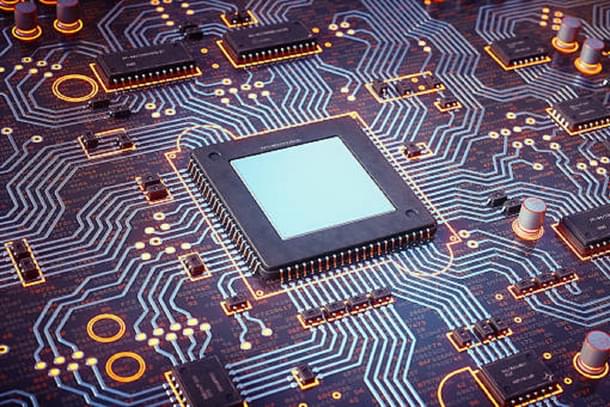
India’s semiconductor talent pipeline is gaining momentum as 46 institutions submitted 122 chip designs through six shared wafer runs at the Semi-Conductor Laboratory (SCL), Mohali.
The government-backed ChipIN Centre enabled fabrication, packaging and delivery of 56 student-designed chips, alongside 265+ industry-led training sessions across key chip design domains.
For deep-tech startups and MSME suppliers, the programme expands access to prototyping infrastructure and “learn-by-building” talent, helping firms de-risk early silicon, shorten iteration cycles and source job-ready design engineers. It also signals a growing ecosystem for EDA, testing, packaging and design services that can plug into India’s wider semiconductor ambitions.
|
|
|
|
|
|
|
|
|
India and the UAE have set a target to double bilateral trade to $200 billion by 2032, signalling a deeper pivot toward long-term economic integration beyond the current CEPA-driven expansion.
A 10-year LNG supply pact between HPCL and ADNOC Gas, starting in 2028, strengthens India’s energy security and helps smooth import-cost volatility for industry. Wider agreements in defence and space also point to higher-value manufacturing and services linkages.
Investment tie-ups around Gujarat’s Dholera Special Investment Region and new UAE presence in GIFT City could improve capital flows and logistics efficiency. A food-safety MoU to ease agri and processed-food exports adds a demand-side boost, supporting jobs and external balances.
|
|
|
|
|
|
|
|
|
India and the European Union are moving into the final stretch of negotiations for a long-pending free trade agreement, with a formal announcement expected around late January during high-level EU visits.
For India, the key macro benefit is restoring and expanding access to a wealthy, rules-based market of 27 countries, especially after the EU’s withdrawal of GSP preferences. Lower duties could lift shipments in labour-intensive sectors such as textiles, garments and leather, while services openings may support IT-led export growth.
The deal’s economic impact will hinge on managing EU demands for wide tariff cuts and resolving frictions on carbon border charges, data rules and non-tariff barriers. If balanced well, it can diversify India’s export risks amid rising US tariff uncertainty.
|
|
|
|
|
|
|
|
|
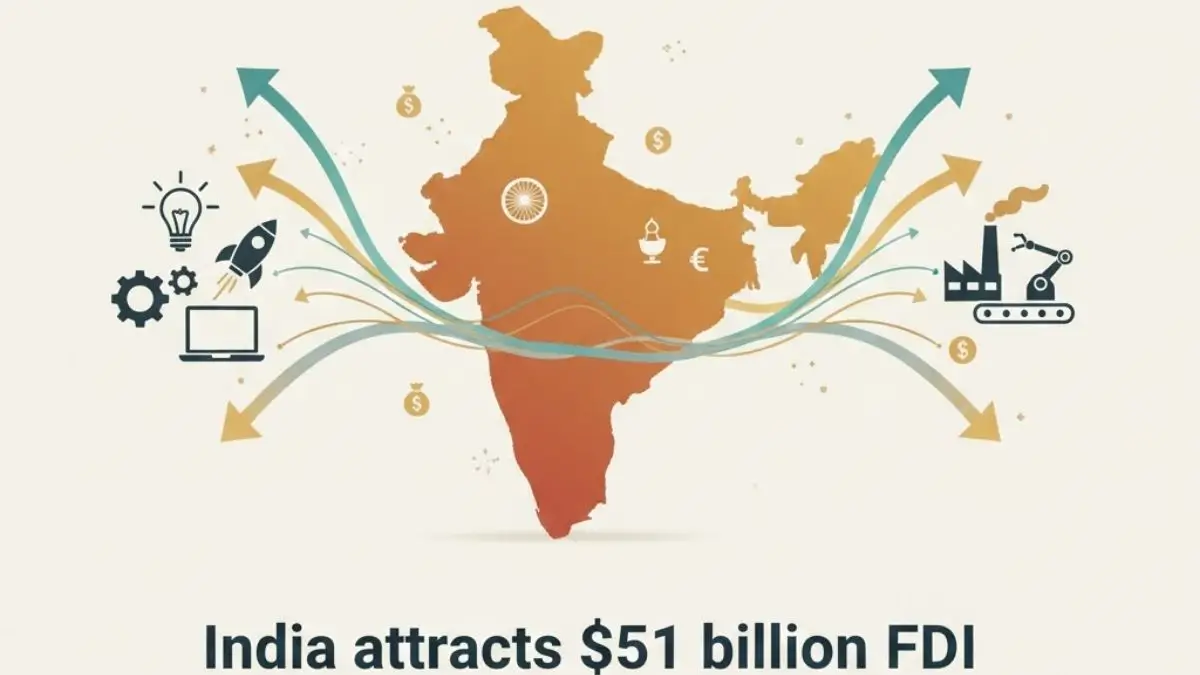
India received about $51 billion of foreign direct investment over the last six months, according to the DPIIT, signalling sustained global confidence in India’s growth prospects despite trade and rate volatility.
Officials underscored a policy push to connect manufacturing expansion with startup-led innovation, aiming to move industry up the value chain through deeper R&D commercialisation and stronger corporate–startup partnerships.
At the macro level, higher FDI supports the balance of payments, expands productive capacity and can lift medium-term productivity if it accelerates plant, equipment and technology deployment. The economic payoff will depend on project execution, stable tax and regulatory outcomes, and whether inflows broaden beyond a few sectors and large urban hubs.
|
|
|
|
|
|
|
|
|
Synthetic biology is emerging as a new industrial platform that can reshape healthcare, food systems and clean materials, and India is positioning itself to move from low-margin manufacturing toward higher-value biotech innovation.
The article argues India’s bioeconomy has expanded sharply over the last decade, but hitting long-term ambitions will require building national “plug-and-play” biofoundries and bio-AI hubs, simplifying regulation through sandboxes, and creating financing routes that bridge the lab-to-market funding gap.
A key economic payoff would be new exportable intellectual property, better productivity in agriculture, and cleaner industrial processes—from precision therapeutics to engineered microbes that cut fertilizer use. The government’s BioE3 policy is a start, but speed and coordination will determine competitiveness.
|
|
|
|
|
|
|
|
|
Fresh tariff threats linked to US President Donald Trump’s Greenland push have injected geopolitical risk into global markets, with proposed duties on NATO-linked European countries potentially escalating into a wider trade standoff.
Market participants expect a near-term bid for safe-haven assets, supporting higher gold and silver prices if uncertainty deepens and the US dollar weakens. For India, the immediate channel is risk-off volatility that can pressure equities and capital flows, especially if global growth expectations soften.
Longer term, the episode could indirectly benefit India if it accelerates India–EU free trade talks as Europe seeks to diversify trade partners. Faster progress on that pact would improve export prospects for sectors such as pharma, textiles and metals, supporting growth and sentiment.
|
|
|
|
|
|
|
|
|
A Supreme Court ruling in the Tiger Global case is forcing foreign investors to reassess treaty-based capital gains exemptions, increasing uncertainty around offshore fund structures that rely on tax residency certificates.
Tax experts say this could lift demand for GIFT City’s IFSC “specified funds”, whose exemptions and concessional withholding rates come from India’s domestic tax law rather than treaty interpretation. The regime offers clearer treatment for gains on derivatives, bonds and mutual fund units amid tighter anti-avoidance scrutiny.
Economically, more onshoring of fund vehicles could deepen India’s financial markets, raise transparency and keep more management, compliance and service activity onshore. The upside will depend on stable regulation and whether investors find the substance and governance requirements workable at scale.
|
|
|
|
|
|
|
|
|
BCG projects India’s chemical market could top $300 billion by 2030, roughly doubling from about $150 billion today, reflecting rising domestic consumption and a fresh investment cycle across multiple industries.
The report argues incremental expansion will not be enough: domestic “ChemCos” need bold, scale-led strategies, sustained R&D and global partnerships to become world-class players. Higher demand in beauty, personal care and construction—such as advanced coatings and sealants—is already widening the addressable market.
A major near-term opportunity lies in semiconductor-linked specialty chemicals, where India’s fabrication push could open about $1 billion of potential across ultra-pure inputs still largely imported. Capturing this import-substitution space would strengthen supply chains, lift exports and support higher-value manufacturing growth.
|
|
|
|
|
|
|
|
|
The Centre plans a new two-tier, time-bound mechanism to settle commercial disputes between ministries, departments and state-run entities without going to court, starting next financial year.
By shifting litigation into inter-ministerial panels and making cabinet secretary decisions final if panels fail, the move targets quicker resolutions and lower public costs. Disputes involving income tax, customs and railways are excluded, keeping high-stakes enforcement matters outside the framework.
Economically, reducing “government-versus-government” litigation can free up administrative bandwidth, improve contract certainty for public enterprises and speed project execution. With the central government involved in a large volume of pending cases, the change could also ease systemic pressure on courts and improve accountability in public procurement.
|
|
|
|
|
|
|
|
|
The government has extended key export incentives—Duty Drawback, RoDTEP and RoSCTL—to postal exports, effective January 15, expanding benefits that were earlier easier to access through other shipping modes.
The move is designed to widen India’s cross-border e-commerce base by making small-ticket exports more viable for MSMEs, especially in Tier-2 and Tier-3 towns where India Post is often the only practical channel. CBIC has amended postal export e-declaration rules to enable end-to-end electronic processing.
Economically, the policy should reduce transaction costs, improve refund predictability and help smaller firms participate in global demand without heavy logistics investments. With over 1,000 Dak Niryat Kendras supporting parcel exports, the change could modestly lift merchandise export volumes and broaden the exporter base.
|
|
|
|
|
|
|
|
|
IIT Indore has developed an AI-powered “human digital twin” that can breathe and blink, designed to model disease behaviour and enable earlier, preventive insights in clinical research.
The system pairs a human-like anatomical replica with machine-learning models trained on biomedical data. It reproduces basic physiological motions and runs virtual experiments to observe how conditions may influence different organs, helping researchers compare scenarios and flag abnormal trajectories without immediate patient intervention.
The work strengthens India’s capability in medical simulation and could reduce time and cost for diagnostic prototyping. IIT Indore plans to expand validation and position the twin for research labs and future healthcare deployments as clinical evidence and standards mature.
|
|
|
|
|
|
|
|
|
CSIR’s Structural Engineering Research Centre in Chennai has developed an indigenous Emergency Power Restoration System (EPRS) to rapidly restore electricity when high-voltage transmission towers fail during disasters.
The modular temporary-tower kit is designed for Indian terrain and can carry replacement loads of about 30 kW to 800 kW. A patented two-pin “gimbal point” joint enables secure anchoring on uneven foundations, allowing utilities to re-route power while damaged towers are rebuilt. The system was validated at a tower-testing facility in Tirusulam.
EPRS can restore supply in about three days instead of the months needed for reconstruction, protecting essential services. CSIR has transferred the technology to three Indian companies, cutting import dependence and improving emergency readiness.
|
|
|
|
|
|
|
|
|
IIT Delhi and AIIMS New Delhi have built a swallowable smart capsule that can collect microbial samples from inside the intestine, offering a less invasive route to study gut health.
The miniaturised device travels through the gastrointestinal tract and captures location-specific microbiome material from the small intestine, a region poorly represented by stool tests. In reported trials, the capsule retrieved samples without endoscopy, reducing procedural burden while producing higher-fidelity microbial snapshots relevant to digestive, metabolic and inflammatory diseases.
The approach could expand microbiome diagnostics and research in routine clinical settings, supporting earlier detection and personalised interventions. The team will likely need larger studies and manufacturing validation before broad hospital deployment.
|
|
|
|
|
|
|
|
|
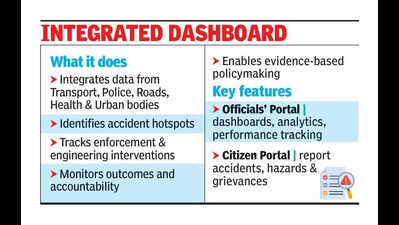
IIT Madras has launched an integrated road-safety dashboard to help governments shift from accident reporting to continuous, data-driven interventions and accountability across agencies.
Built on the Ministry of Road Transport and Highways’ eDAR (electronic detailed accident report) framework, the platform consolidates feeds from transport, police, health and urban departments. An officials’ portal provides executive summaries, hotspot mapping, location intelligence and performance metrics, while a citizen portal lets the public report accidents, hazards and grievances for faster action.
Odisha has already adopted and customised the dashboard, signalling early field deployment. By standardising analytics and monitoring outcomes, the system could support scalable governance reforms and targeted enforcement, with the potential to reduce fatalities through faster, evidence-based responses.
|
|
|
|
|
|
|
|
|
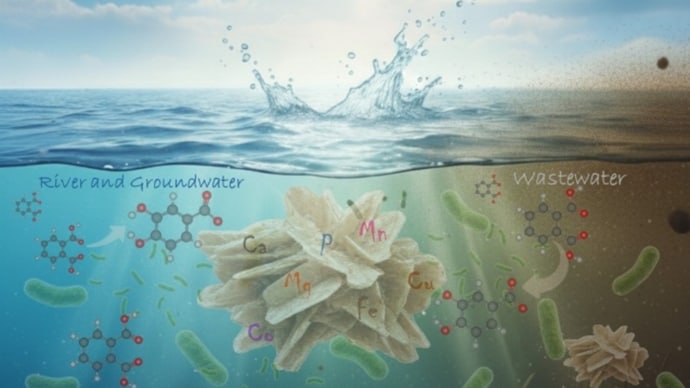
IIT Roorkee researchers have demonstrated a nano-enabled process that rapidly removes toxic plastic-derived pollutants from water, addressing contaminants that persist through conventional treatment.
The method targets phthalates—common plastic additives linked to health risks—by combining engineered nanoparticles with beneficial bacteria to accelerate biodegradation. Nutrient-loaded nanomaterials help stimulate microbial activity and improve contact with dissolved pollutants, enabling near-complete removal within hours across test samples including tap water, river water and wastewater, without heavy chemical dosing or energy-intensive steps.
The approach offers a scalable pathway for retrofitting water-treatment chains to handle emerging contaminants. With further pilot trials and durability testing, the technology could support industrial effluent cleanup and municipal water safety programmes.
|
|
|
|
|
|
|
|
|
IIT Bhubaneswar has developed a satellite-enabled technique to identify bauxite prospects faster and more cost-effectively, improving early-stage mineral exploration in Odisha.
Led by Assistant Professor Ashim Sattar, the team used hyperspectral satellite remote sensing to map zones with high likelihood of bauxite occurrence across parts of Koraput and Rayagada. The workflow integrates satellite-derived signatures with field checks, geochemical assays, petrographic analysis and lab spectral measurements to validate targets and reduce false positives before expensive ground surveys.
The method provides a first-level decision framework for exploration agencies and could help secure domestic aluminium feedstock as demand rises. The results have been peer-reviewed, and the work has received recognition from the Odisha government.
|
|
|
|
|
|
|
|
|
CSIR-CIMFR has completed India’s first safety assessment of a hydrogen compressor-dispenser system, a key step toward safer rollout of hydrogen refuelling infrastructure.
The evaluation covered on-site electrical and safety performance of a multi-stage hydrogen compressor and dispensing unit under real operating conditions for highly explosive Gas Group IIC environments. By checking protection measures, fault scenarios and operational compliance against best-practice benchmarks, the assessment provides an evidence base for risk mitigation in high-pressure hydrogen handling.
The milestone supports India’s clean-hydrogen push by improving confidence in early deployments and standards. CSIR-CIMFR’s findings are expected to inform certification, operator training and procurement decisions as hydrogen mobility pilots scale nationwide.
|
|
|
|
|
|
|
|
|
MosChip Technologies has delivered a custom system-on-chip (SoC) to ISRO’s Space Applications Centre (SAC) for India’s satellite navigation programme, demonstrating domestic ASIC delivery.
The company says it executed a 28 nm flow from netlist to packaged silicon, including tape-out, substrate design for a 10-layer FC-CBGA package, assembly, and engineering-sample validation on automated test equipment (ATE). Silicon bring-up and functional testing reportedly confirmed the chip meets specification, clearing a key hurdle for navigation payload integration.
The milestone strengthens India’s design-to-silicon capability for mission electronics and reduces reliance on external vendors. With functional parts delivered, SAC can advance to system integration and qualification for operational deployment.
|
|
|
|
|
 |
|
|
|
|
|
|
|
|
|
|
- Kindly add the email address masscomm@lubindia.com to your contact list or whitelist it for the newsletter.
|
|
|
|
|
|
|
|
|
|
|
|




)



)

)


)
/startuppedia/media/media_files/2026/01/17/copy-of-website-1110-x-960-px-45-2026-01-17-17-13-19.png)


/odishatv/media/media_files/2026/01/15/iit-bhubaneswar-team-develops-satellite-based-method-to-locate-bauxite-deposits-2026-01-15-10-10-54.jpg)