|
|
|
|
Weekly Insights for Entrepreneurs
|
|
|
|
|
| Year: 2026-27 |
Tuesday 13th January, 2026 |
Volume/Issue: 110 |
|
|
|
|
● India–EU FTA Talks: Safeguards for Farmers & MSMEs Reaffirmed
|
● MSME Credit Surge: Loan Share Doubles, PSBs Drive Growth (Crisil)
|
● MSMEs in Defence & Energy Supply Chains: Moving Up the Value Chain
|
● PM Modi Meets IndiaAI Mission Startups: “Co-Architects of India’s Future”
|
● Atal Incubation Centres: A New Playbook for Scaling Deeptech Startups
|
● Delhi Climate Startup’s “Eco-Concrete”: Cement-Free, Carbon-Negative Construction
|
● OrbitAid’s In-Orbit Refuelling Demo: Opening a New Space-Servicing Market
|
● 2026 Carbon Capture Startups: Partnership Opportunities in Carbon Removal
|
|
| |
|
|
● India–Germany Joint Statement: Trade, Investment & Green-Tech Collaboration Push
|
● FY26 First Advance Estimates: Real GDP Seen at 7.4%, Nominal Growth Softer
|
● RBI Reserve Shift: US Treasury Holdings Below $200B, Gold Share Rises
|
● NITI Paper: Farmers’ Income More Than Doubled Since 2014–15
|
● India’s Long-Term Tech Strategy: 3nm Chips by 2032, “Sovereign AI” Push
|
● Banking System: Credit–Deposit Ratio Rises to 82%
|
● CMIE: Unlisted Companies’ Debt Burden at 35-Year Low
|
● Municipal Bonds: Record Issuances in FY26 on Fiscal Support
|
● Solar Manufacturing: India’s Module Capacity More Than Doubled to 144 GW in 2025
|
|
| |
|
|
● IIT Madras Ramjet-Assisted Artillery Shells: Range Extended by ~50%
|
● IIT Guwahati CO₂-to-Methanol: Sunlight-Driven Green Fuel Route
|
● DRDO Scramjet Milestone: Long-Duration Test for Hypersonic Cruise Missile Tech
|
● CSIR Bio-Bitumen from Farm Residue: Road Binder via Pyrolysis
|
● DRDO MPATGM Flight Test: Third-Gen Fire-and-Forget Portable Anti-Tank Missile
|
● IIT Madras “Param Shakti”: 3.1 Petaflop Indigenous Supercomputer Commissioned
|
● Hyderabad Space Startups: Orbital “AI-Image Lab” Payload MOI-1 on PSLV-C62
|
|
| |
|
|
|
|
|
|
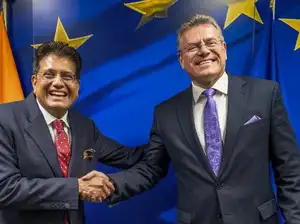
India and the European Union reiterated that any Free Trade Agreement must protect sensitive interests for farmers and MSMEs, as minister-level talks resumed in Brussels.
Commerce minister Piyush Goyal and EU Trade Commissioner Maros Sefcovic framed the deal as a “rules-based” modern economic partnership, with both sides pushing to narrow gaps and conclude negotiations at the earliest.
For business owners, the immediate watchpoints are market-access asks: India is seeking zero-duty entry for labour-intensive exports such as textiles and leather, while the EU wants steep tariff cuts in autos and other products plus stronger IP rules, ahead of the India-EU Summit on January 27.
|
|
|
|
|
|
|
|
|
Crisil Intelligence says MSME lending is taking a much larger slice of incremental bank credit, driven mainly by public sector banks stepping up disbursements.
Between January and October 2025, MSME loans accounted for 32.5% of incremental credit versus 17.7% a year earlier, while MSMEs’ share in outstanding credit rose by 1.74%, according to the report.
Crisil flags significant PSB exposure to subprime MSME borrowers and notes 12.6% of overall bank credit is exposed to US tariffs, with textiles contributing over 43% of that exposure—strengthening the case for cash-flow discipline and export-risk diversification.
|
|
|
|
|
|
|
|
|
India’s MSMEs are being positioned as strategic suppliers in defence and energy value chains as manufacturing priorities shift towards self-reliance and faster industrial capacity build-out.
Small firms are increasingly integrated into larger supply ecosystems, but scaling will depend on clearer demand visibility, quality certification, and timely payments from anchor buyers and government-linked procurement.
For MSME owners, the opportunity is to move up the value chain—from component vendors to qualified sub-systems partners—by investing in process controls, traceability, and specialised skills, while also pushing for predictable policies and technology-upgrade support to meet stricter standards and compete in global supply chains.
|
|
|
|
|
|
|
|
|
Prime Minister Narendra Modi met 12 startups shortlisted for the ‘AI for ALL: Global Impact Challenge’ ahead of the India AI Impact Summit 2026 in Delhi, calling founders “co-architects of India’s future”.
The roundtable at the PM’s residence stressed AI that delivers public impact, with Modi urging “Made in India, Made for the World” models built on ethics, transparency and data privacy.
For MSMEs and startups, the signal is that government interest is moving from pilots to products. IndiaAI Mission leaders said two participating firms could launch large language models at the summit. Founders highlighted priorities such as regional-language capability, frugal innovation and affordable rollout—areas where smaller players can differentiate through domain data, partnerships and responsible AI.
|
|
|
|
|
|
|
|
|
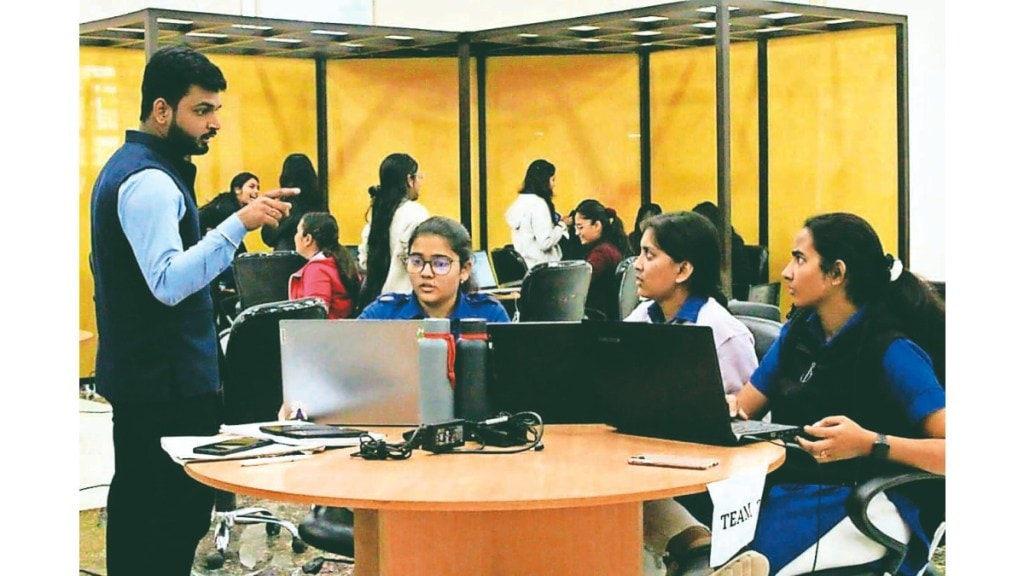
Atal Incubation Centres (AICs) under NITI Aayog’s Atal Innovation Mission are shifting focus from startup volumes to measurable scale, using university-linked hubs to commercialise deeptech research.
Around 72 AICs supporting 3,500+ startups across sectors, with examples spanning wastewater solutions and used-cooking-oil supply chains that have raised meaningful capital.
For founders, the playbook is structured: seed cheques, lab access, mentors and pathways to grants and follow-on capital. Startups such as Harvested Robotics moved from ₹18 lakh seed support to an institutional round within 15 months, while other AIC-backed ventures have secured grants and pilots with large corporates—helping MSMEs de-risk productisation and market entry.
|
|
|
|
|
|
|
|
|
Delhi-based Vishwa Hara Chakra, founded in 2024, is positioning its “Eco-Concrete” as a cement-free, carbon-negative alternative for bricks, pavers and tiles by repurposing industrial by-products such as fly ash and slag.
The startup says its proprietary binding technology replaces traditional cement, lowers production energy needs, and reduces carbon emissions versus conventional cement products. It has also built Zephyr Insulation for sub-zero environments and a waste-to-energy initiative producing compressed Bio-CNG.
For construction and infrastructure MSMEs, the key takeaway is customer validation: the company reports early traction including a ₹1.8-crore Tata project linked to Noida International Airport, and subsequent work for clients such as Adani, MES, BRO and NBCC. Scaling will hinge on consistent quality, standards compliance and execution.
|
|
|
|
|
|
|
|
|
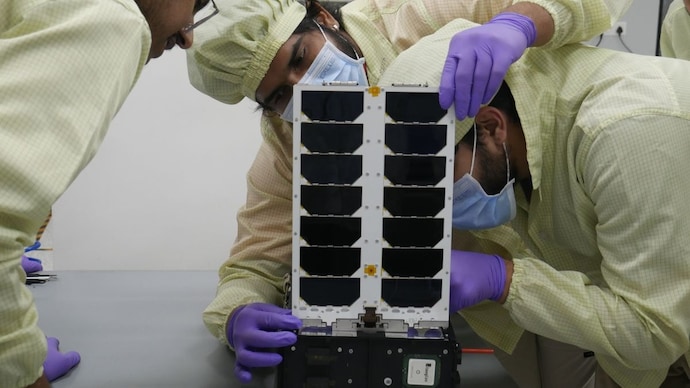
Chennai-based OrbitAid Aerospace is set to demonstrate in-orbit refuelling by launching AyulSAT, a tanker-satellite designed to test propellant, power and data transfer through its Standard Interface for Docking and Refuelling Port (SIDRP).
The mission will first validate internal fuel transfer within the satellite, before a follow-on “chaser” satellite docks with AyulSAT to demonstrate actual refuelling by end-2026. OrbitAid says the capability can extend satellite lifespans and reduce space debris.
For space-tech startups and MSMEs, the business implication is a new on-orbit servicing market: refueling and maintenance can turn satellites into longer-lived assets and open service revenue. OrbitAid positions AyulSAT as India’s first commercial docking and refuelling interface deployed in orbit, supporting the Debris-Free Space Mission 2030.
|
|
|
|
|
|
|
|
|
The carbon-capture startups list highlights how climate-tech is diversifying across direct air capture, point-source capture, mineralisation and carbon-to-products pathways.
Featured companies include Climeworks and Carbon Engineering (direct air capture), Carbfix (basalt mineralisation storage), Charm Industrial (bio-oil sequestration), LanzaTech (industrial carbon-to-chemicals), Heirloom (enhanced mineral weathering), Verdox (electrochemical capture), CarbonCure (CO₂-injected concrete), Running Tide (ocean-based sequestration) and Twelve (electrochemical CO₂ conversion).
For founders and MSMEs, the takeaway is market pull and partnership potential: these models depend on offtake contracts, verification standards and integration with heavy industry, construction and aviation. Suppliers that can provide renewable energy, monitoring tools, industrial retrofits, or compliant carbon-accounting services are well placed to plug into emerging carbon-removal supply chains.
|
|
|
|
|
|
|
|
|
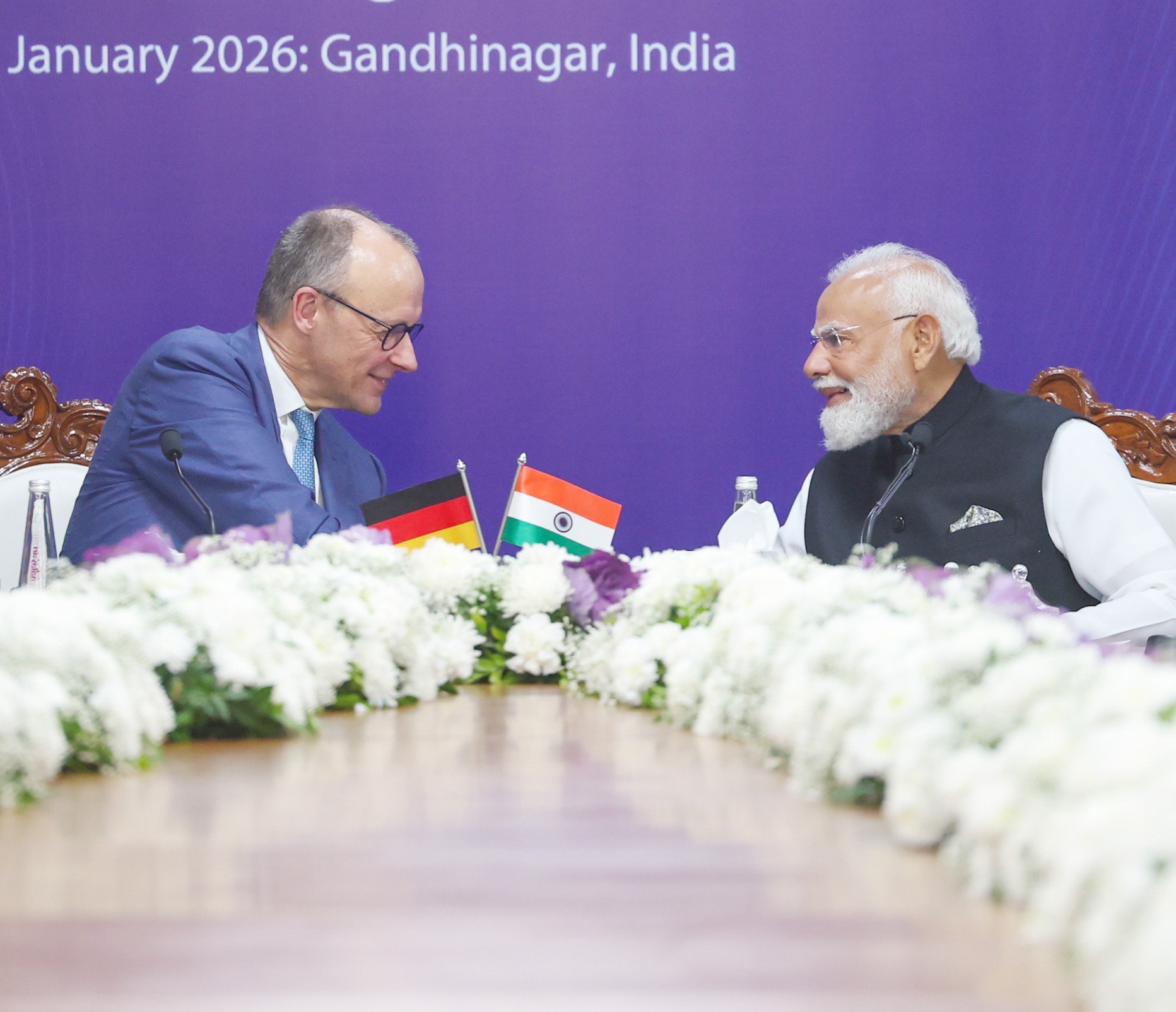
India and Germany issued a joint statement after Chancellor Friedrich Merz’s 12–13 January 2026 visit to India with a CEO delegation, signalling a push to scale commercial ties. Leaders said bilateral trade surpassed USD 50 billion in 2024 and remained on an upward track in 2025.
Both sides urged faster two-way investment and supported concluding the India–EU FTA to lift trade flows. A CEO Forum-linked declaration is meant to expand collaboration in technology, autos, defence, pharma, chemicals, industrial engineering and energy.
Priorities also include semiconductors, critical minerals and a 2026–27 digital work plan. Germany’s €10 billion green partnership commitment to 2030—around half already earmarked—will steer concessional finance into renewables, hydrogen standards, urban mobility and skills.
|
|
|
|
|
|
|
|
|
India’s first advance estimates project real GDP growth of 7.4% in FY26, driven by domestic demand and stronger manufacturing and services, even as global trade risks persist.
Nominal GDP growth is pegged at about 8%, softer than market expectations, a signal that price pressures and revenue growth may be less buoyant than last year.
For policymakers, the mix supports a pro-growth budget narrative, but the lower nominal number could tighten fiscal arithmetic and make tax collections and borrowing assumptions more sensitive to growth surprises.
|
|
|
|
|
|
|
|
|
The Reserve Bank of India has cut its holdings of US Treasury securities to below $200 billion, signalling a shift in reserve management towards diversification.
Data cited in the report show holdings fell to about $190 billion by end-October 2025, while RBI’s gold stock rose to roughly 880 metric tonnes and gold’s share of reserves increased to 13.6% from 9.3% a year earlier.
For the macro picture, the move reduces exposure to bond-price losses as global yields rise and adds a non-dollar hedge, though it also slightly changes the liquidity profile of India’s foreign exchange buffer.
|
|
|
|
|
|
|
|
|
A paper by NITI Aayog argues farm producers’ income rose 126% between 2014-15 and 2023-24, exceeding the government’s stated “doubling” target.
The study estimates producers’ income by adjusting agricultural gross value added for key cost items, implying sustained double-digit annual income growth through the period.
If borne out in broader datasets, higher rural earnings would support consumption and reduce distress migration.
|
|
|
|
|
|
|
|
|
Electronics and IT minister Ashwini Vaishnaw outlined a decade-long plan to make India a major semiconductor and AI hub, targeting 3-nanometre chip capability by 2032 and “sovereign AI” capacity. He said India has approved 10 semiconductor-related units and expects four plants—CG Semi, Kaynes, Micron and Tata Electronics in Assam—to begin commercial production in 2026, alongside expanded design and skilling programmes.
The economic payoff would be deeper electronics value chains, broader high-tech exports and reduced import dependence, though success hinges on globally competitive quality, pricing and sustained capital and energy availability.
|
|
|
|
|
|
|
|
|
India’s banking system credit-deposit ratio rose to 82% as of December 15, 2025, up from 53% in 2000-01, reflecting deeper financial intermediation, an SBI Research report said.
The report notes faster growth in advances than deposits, with banks increasingly tapping non-deposit funding to meet credit demand, alongside a post-pandemic balance-sheet revival and a gradual regain of market share by public sector banks.
Macro-wise, a higher CD ratio signals stronger loan-led activity, but it also puts a premium on deposit mobilisation, asset quality discipline and funding costs—key variables for growth momentum and monetary transmission.
|
|
|
|
|
|
|
|
|
CMIE data show leverage among large unlisted non-financial companies has fallen to a 35-year low, with debt now nearly at parity with equity.
The debt-to-equity ratio eased to 1.01 in FY25, the lowest in records going back to 1990-91, extending a multi-year decline that suggests stronger balance sheets and improved interest coverage.
For the economy, lighter leverage can cushion firms against rate shocks and improve resilience, but it may also indicate cautious capex intentions—important for assessing the durability of the private investment cycle and the pace of productivity gains.
|
|
|
|
|
|
|
|
|
India’s municipal bond market logged a record nine issuances in FY26 up to December, versus three last year, as more urban local bodies tapped capital markets.
Outstanding municipal bonds stood at about ₹3,783.9 crore as of December 31, 2025, with ₹1,000 crore issued in calendar 2025. First-time issuers included Agra, Prayagraj, Varanasi and Bhavnagar, alongside repeat issuers like Chennai and Nashik.
The surge is linked to AMRUT 2.0 incentives that lower borrowing costs and to long-duration demand from domestic institutions, strengthening urban infrastructure funding beyond bank loans.
|
|
|
|
|
|
|
|
|
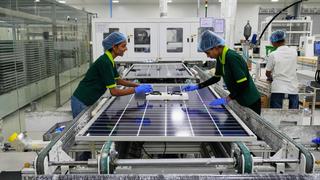
India’s solar module manufacturing capacity jumped to around 144 GW in 2025, up from 63 GW in 2024, according to government-tracked data cited by the renewables ministry.
The increase—about 81 GW added in a year—underscores the speed of policy-led industrial expansion aimed at cutting import dependence and securing supply chains for the country’s clean-energy buildout.
Economically, higher domestic capacity can lift manufacturing jobs and reduce the current account drag from equipment imports, but rapid scale-up also raises risks of overcapacity and margin pressure if demand or exports don’t keep pace.
|
|
|
|
|
|
|
|
|
IIT Madras has demonstrated ramjet-assisted artillery shells that can extend the reach of existing gun systems by around 50%, aiming to upgrade ammunition performance without modifying the launcher platform.
The concept replaces the shell’s base-bleed unit with a compact ramjet module inside a standard 155 mm projectile. After muzzle exit, the air-breathing engine ignites and provides sustained thrust, overcoming the limited combustor length and high-g launch environment while maintaining stable flight.
Development trials spanning gun and field firings have reportedly validated clean gun exit and reliable ramjet ignition, with results showing large range gains versus conventional rounds. The work, supported by the Indian Army, signals a pathway toward scalable indigenous long-range artillery munitions.
|
|
|
|
|
|
|
|
|
IIT Guwahati researchers report a sunlight-driven route to turn captured CO₂ into methanol, positioning the greenhouse gas as a feedstock for liquid fuel and industrial energy storage.
The team developed a photocatalytic composite that couples graphitic carbon nitride with few-layer graphene to improve charge separation and reduce energy losses under visible light. In tests, a formulation with 15 wt% graphene delivered the most efficient CO₂-to-methanol conversion while maintaining stability.
The study is still at laboratory scale, with further validation and scale-up planned. If engineered for flue-gas streams, the approach could support circular-carbon deployment in power, cement, steel, and petrochemical plants.
|
|
|
|
|
|
|
|
|
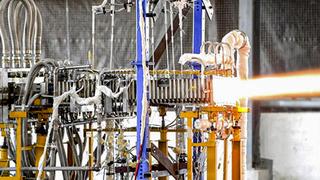
DRDO has completed a long-duration ground demonstration of an actively cooled scramjet combustor, a key step toward an operational hypersonic cruise missile that can sustain flight beyond Mach 5.
The full-scale air-breathing engine was run for over 12 minutes at DRDL’s Scramjet Connect Pipe Test facility in Hyderabad, validating supersonic combustion, thermal management, and the end-to-end test infrastructure developed with industry partners.
The result builds on a subscale campaign in April 2025 and narrows the gap to flight-worthy propulsion trials. Officials framed the test as strengthening India’s indigenous hypersonic stack and reducing dependence on imported high-speed strike technologies.
|
|
|
|
|
|
|
|
|
CSIR-CRRI and CSIR-IIP have transferred an indigenous “bio-bitumen via pyrolysis” process that converts farm residue into road binder, targeting cleaner highways and lower reliance on petroleum-derived bitumen.
Post-harvest rice straw is collected, pelletised, and pyrolysed to produce bio-oil, which is then blended with conventional bitumen. Laboratory characterisation and performance testing indicate 20–30% of conventional binder can be replaced without degrading rutting, cracking, or moisture resistance.
A 100-metre demonstration stretch has been laid on the Jorabat–Shillong Expressway (NH-40) in Meghalaya, and a patent has been filed. Officials estimate import substitution potential of ₹25,000–30,000 crore annually, with multiple industries onboarded for commercial deployment.
|
|
|
|
|
|
|
|
|
DRDO has flight-tested its third-generation Man Portable Anti-Tank Guided Missile (MPATGM) against a moving target, demonstrating a “fire-and-forget” capability intended for infantry anti-armour engagements.
The missile uses an imaging infrared seeker for autonomous terminal homing and supports a top-attack profile to strike thinner upper armour. An all-electric actuation and fire-control suite, tandem warhead, and dedicated propulsion package are designed to deliver precision in day/night battlefield conditions.
The trial at KK Ranges in Ahilya Nagar, Maharashtra, is positioned as a step toward induction, with Bharat Dynamics and Bharat Electronics cited as production partners. Successful qualification would strengthen domestic anti-tank inventories and reduce dependence on imported guided munitions.
|
|
|
|
|
|
|
|
|
IIT Madras has commissioned ‘Param Shakti’, a 3.1-petaflop indigenous supercomputer designed to accelerate high-end simulations and data-intensive research across multiple strategic science domains.
The system delivers about 3.1 quadrillion calculations per second and is built in India using C-DAC’s RUDRA server platform and open-source software. It will operate within the broader Param Rudra cluster, backed by data-centre infrastructure for continuous power, cooling, and operations.
Funded under the National Supercomputing Mission led by MeitY and DST, the deployment expands domestic high-performance computing capacity for aerospace, materials, climate modelling, and drug discovery. Officials note dozens of NSM systems are already installed nationwide, with larger nodes planned to deepen India’s research ecosystem.
|
|
|
|
|
|
|
|
|
Hyderabad startups TakeMe2Space and Eon Space Labs plan to launch MOI-1, billed as India’s first orbital “AI-image lab”, as a co-passenger payload on ISRO’s PSLV-C62 mission.
Instead of downlinking raw pictures for processing on Earth, MOI-1 aims to run AI algorithms onboard using an Nvidia GPU, sending back smaller outputs. The founders estimate nearly 40% of satellite imagery is often unusable due to cloud cover, strengthening the case for in-orbit filtering.
The payload integrates Eon’s MIRA, a monolithic, single-piece telescope. TakeMe2Space is pitching an “Orbit Lab” model where developers upload code via a web console and pay for satellite compute time—about $2 per minute—to cut space data costs.
|
|
|
|
|
 |
|
|
|
|
|
|
|
|
|
|
- Kindly add the email address masscomm@lubindia.com to your contact list or whitelist it for the newsletter.
|
|
|
|
|
|
|
|
|
|
|
|



/startuppedia/media/media_files/2026/01/02/website-2026-01-02-16-59-43.png)
)


)


)
)


)