|
|
|
|
Weekly Insights for Entrepreneurs
|
|
|
|
|
| Year: 2026-27 |
Tuesday 06th January, 2026 |
Volume/Issue: 109 |
|
|
|
|
● Government Launches Schemes to Boost Trade Finance For MSME Exporters
|
● Centre Launches Market Access Support Scheme To Help MSMEs Expand Global Footprint
|
● Cross-border Ecommerce Set to Get Easier; Focus on MSMEs
|
● Ministry of MSME Reports Key Achievements in 2025
|
● Centre Relaxes Norms for Startups to Avail Funds from DSIR
|
● Centre Plans DLI 2.0 With 1:1 Co-Funding for Semiconductor Startups
|
● 15 Technology Business Incubators Established in Universities Across India
|
● Fellowships Open a Door for Campus Entrepreneurs
|
|
| |
|
|
● PM Modi Meets Economists Ahead of Union Budget 2026–27; Mission-Mode Reforms Emphasised
|
● India Overtakes Japan to Become the World’s Fourth-Largest Economy (GDP $4.18 Trillion)
|
● Centre Plans Deregulation 2.0 with 30 New Priority Areas
|
● Electronics Component Scheme Scales Up with ₹41,863-Crore Approvals Across 8 States
|
● RBI FSR: Household Debt Rises Above 41% of GDP, But Resilience Holds
|
● BIS Overhauls Standards (Textiles to Smart Mobility) to Match Global Norms, Ease Exports
|
● Mutual Fund AUM Jumps to ₹81 Lakh Crore in 2025; What It Signals for 2026
|
● EY Report: India Poised to Emerge as the “Office of the World”
|
● Gen Z’s Experience-First Commerce Playbook: What Businesses Must Adapt To
|
|
| |
|
|
● IISc’s Molecular Tech Mimics Brain Functions; Step Toward New-Age Computing
|
● DST Develops PathGennie Software to Fast-Track Drug Discovery
|
● DRDO’s 120-km Pinaka Rocket Test: A Leap in Precision Artillery Capability
|
● IIT Hyderabad Introduces Air Taxi Prototype for Future Urban Commute
|
● IIT Bombay & NTPC Drill India’s First CO₂ Storage Test Well
|
● DRDO Develops Hand-Operated Water Purification System for Field Use
|
● IIT Madras Plans Global Network to Take Homegrown Technologies Worldwide
|
|
| |
|
|
|
|
|
|
The central government has rolled out two Export Promotion Mission interventions aimed at easing MSME exporters’ working-capital crunch and collateral gaps.
First, an interest-subvention support will lower the cost of pre- and post-shipment rupee export credit, with a base 2.75% benefit and additional incentive for exports to notified under-represented markets. Coverage is restricted to a positive list spanning about 75% of HS6 tariff lines, with an annual cap of ₹50 lakh per IEC in FY26.
Second, a CGTMSE-backed collateral guarantee for export credit offers up to 85% cover for micro and small exporters and 65% for medium firms, with up to ₹10 crore outstanding exposure per exporter, starting with a pilot rollout.
|
|
|
|
|
|
|
|
|
The Centre has launched a Market Access Support (MAS) scheme under the Export Promotion Mission to help MSMEs build overseas demand and enter new geographies.
The programme is designed to lower the cost of international market development—supporting participation in global exhibitions and buyer-seller engagements, and improving access to trade intelligence and promotion channels. By reducing “go-to-market” friction, the scheme targets firms that have exportable products but lack scale to fund sustained foreign marketing.
For MSME exporters, the immediate takeaway is to plan a structured export pipeline: shortlist priority markets, budget for compliance and certification, and use MAS support to test demand through fairs, distributor meetings and curated delegations—before committing to large inventory or long credit cycles.
|
|
|
|
|
|
|
|
|
Policy changes under discussion for the upcoming budget could make cross-border ecommerce exports smoother for MSMEs, especially on returns and payment-linked compliance.
Officials said rules for reverse logistics may be clarified to treat rejected/returned ecommerce exports as re-imports, reducing duty disputes and paperwork. The government is also considering raising the courier-mode export value limit from ₹10 lakh per consignment to align with the RBI’s ₹25 lakh cap for cross-border payment aggregators.
Dedicated ecommerce export hubs are being developed with warehousing, customs clearance, returns processing, labelling, testing and repackaging—cutting time and cost for small exporters in categories like apparel, gems, home and wellness. India’s courier/postal ecommerce exports are estimated at $1.5 billion annually.
|
|
|
|
|
|
|
|
|
The MSME Ministry’s 2025 year-end scorecard points to rapid formalisation and expanded credit tools, signalling more scheme-linked opportunities for small businesses.
Over 7.30 crore enterprises have registered on Udyam/Udyam Assist since July 2020, helping firms access priority-sector lending and benefits.
On finance, CGTMSE-backed guarantees crossed one crore since inception, and the guarantee coverage ceiling rose to ₹10 crore from April 2025. PMEGP support has aided 10.71 lakh micro enterprises since FY09, while RAMP and market-support programmes are being used to push technology upgrades and competitiveness.
|
|
|
|
|
|
|
|
|
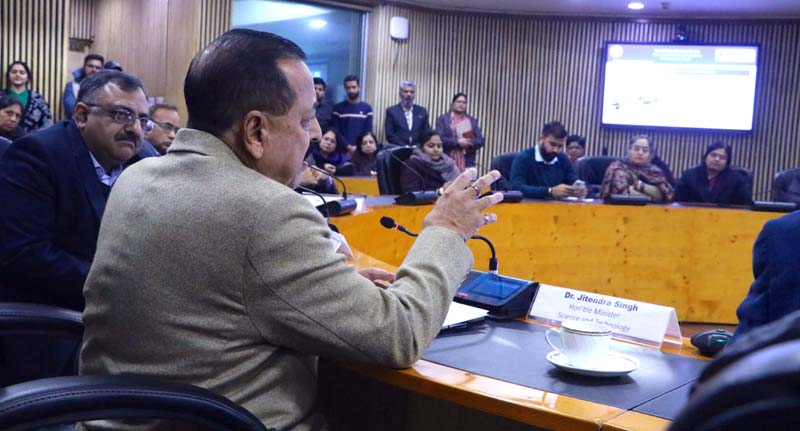
The Centre has eased eligibility for deep-tech startups seeking DSIR support by removing the earlier requirement to demonstrate three years of viability.
At DSIR’s 42nd foundation day, Science and Technology Minister Jitendra Singh said startups can now access financial assistance of up to ₹1 crore under the Industrial Research and Development Promotion Programme (IRDPP) without meeting the three-year existence threshold, while still being assessed on technology maturity and evaluation standards.
For founders, this widens the window to secure non-dilutive early capital for proof-of-concept and productisation—particularly in hardware and R&D-heavy domains where revenue comes late. Startups should prepare robust technical milestones, validation data and clear budgets to pass DSIR scrutiny and avoid delays once guidelines are operationalised.
|
|
|
|
|
|
|
|
|
The government is preparing Design-Linked Incentive (DLI) 2.0 for semiconductors, proposing a pari-passu model where public funding matches private investment 1:1.
Officials say co-funding improves market validation and prevents misuse, but startups worry the need to raise upfront capital could sideline smaller teams. The plan also removes the earlier ₹15 crore cap, allowing larger design projects and participation by big firms alongside VCs and other investors.
For founders, the message is to secure credible co-investors early and keep IP Indian-owned: the proposal asks firms to repay three times the support if IP is transferred abroad. DLI 2.0’s outlay is around ₹5,000 crore, targeting chips for consumer electronics, networking and import substitution.
|
|
|
|
|
|
|
|
|
The Department of Science & Technology has set up 15 Inclusive Technology Business Incubators (i-TBIs) across universities to spread startup support beyond metros, Union Minister Jitendra Singh said during a visit to Delhi Technological University.
At DTU’s i-TBI, he reviewed how the DST-NIDHI-backed incubator converts academic ideas into market-ready products, with a focus on inclusivity and women-led innovation. DTU’s centre has incubated 15 startups, and three teams received Startup Ignition Grants of ₹5 lakh each to move from idea to prototype and early commercialisation.
For campus entrepreneurs and MSME spinoffs, the opportunity is to use i-TBIs for mentoring, prototyping infrastructure and early grants—reducing the cost of experimentation before approaching angels, VCs or government buyers.
|
|
|
|
|
|
|
|
|
Fellowships and grant programmes are becoming a parallel on-ramp into India’s startup ecosystem, giving early-stage founders time, capital and networks before a formal funding round.
Superscout data cited by ETtech shows India makes up about 12% of 10,000 applications across VC fellowship and scout programmes over the past three years, up from 7–8% in 2020–22. New India-linked options include Shastra VC’s deeptech fellowship SDEX and the Kothari Fellowship for Indians under 25.
For campus founders, the takeaway is that fellowships don’t guarantee funding, but they can signal intent, provide structured mentorship and help validate ideas cheaply—useful when jobs, visas or academic timelines make a full-time leap risky.
|
|
|
|
|
|
|
|
|
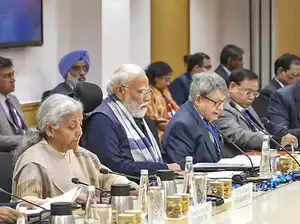
Prime Minister Narendra Modi met economists and sector experts ahead of the Union Budget 2026-27, seeking inputs on growth priorities as the fiscal plan is readied for 1 February. Finance minister Nirmala Sitharaman and NITI Aayog officials joined the consultations.
Modi urged mission-mode reforms to build global capability and deeper integration, linking the agenda to the 2047 developed-India goal. Discussions highlighted productivity gains across manufacturing and services, and the role of AI and Digital Public Infrastructure in lifting efficiency.
The framing signals a pro-reform, investment-led budget focus amid geopolitical uncertainty and tariff headwinds for exports, with policy likely to lean on infrastructure, technology adoption and higher household savings to sustain growth.
|
|
|
|
|
|
|
|
|
The government says India has overtaken Japan to become the world’s fourth-largest economy, valuing GDP at $4.18 trillion.
Officials pointed to macro stability indicators—such as inflation staying below the lower tolerance band, declining unemployment and improving export performance—to argue that growth momentum remains durable despite a challenging global backdrop.
The ranking is symbolically significant but the economic takeaway is confidence: a larger output base can attract capital, expand fiscal space and deepen domestic markets. The release also projects India could displace Germany from third place in 2.5–3 years, targeting a $7.3 trillion GDP by 2030.
|
|
|
|
|
|
|
|
|
The Centre is preparing a “Deregulation 2.0” drive that identifies 30 new priority areas for cutting compliance costs and simplifying rules across seven sectors and departments, building on a similar effort launched in 2025.
Plans cited by The Economic Times place the largest clusters of changes with education and with utilities/permissions, while land, environment, construction and health also feature. Three overarching priorities and additional optional areas are expected to be detailed in the coming days.
If executed, the push could lower transaction frictions for businesses and investors, speed up project clearances and support productivity. The near-term payoff would be better ease of doing business, while the broader macro gain would be stronger investment and faster formalisation.
|
|
|
|
|
|
|
|
|
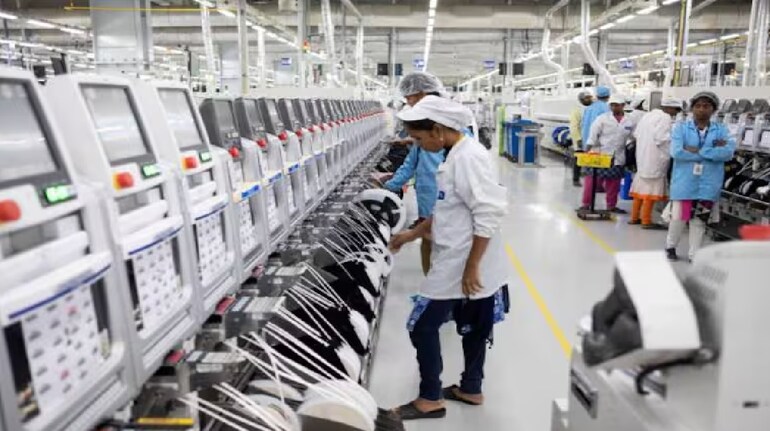
The government has approved 22 projects under the Electronics Component Manufacturing Scheme (ECMS) involving ₹41,863 crore of investment, with projected output of ₹2.58 lakh crore and 33,791 direct jobs, signalling a bigger push beyond electronics assembly.
Projects span 11 target segments—from bare components such as PCBs, capacitors, connectors, enclosures and lithium-ion cells to sub-assemblies like camera and display modules and optical transceivers, plus upstream materials including aluminium extrusion, anode material and laminates. Approvals are spread across eight states.
ECMS is positioned as a complement to PLI programmes, aiming to raise domestic value addition, secure supply chains and reduce import dependence for critical parts. Faster component localisation could improve the trade balance and strengthen India’s manufacturing growth story.
|
|
|
|
|
|
|
|
|
RBI’s Financial Stability Report shows India’s household debt rising to 41.3% of GDP by end-March 2025, above its five-year average, reflecting stronger borrowing as consumption and credit penetration expand.
The composition is shifting toward consumption-linked borrowing: non-housing retail loans formed 55.3% of household borrowings from financial institutions by September 2025. Even so, credit quality improved, with a higher share of borrowers rated prime and above.
Macro risks hinge on whether leverage feeds demand without eroding repayment capacity. RBI flags moderating loan growth and improved borrower profiles, while net household financial savings rose to 7.6% of GDP in Q4 2024-25—buffers that can help keep financial resilience intact.
|
|
|
|
|
|
|
|
|
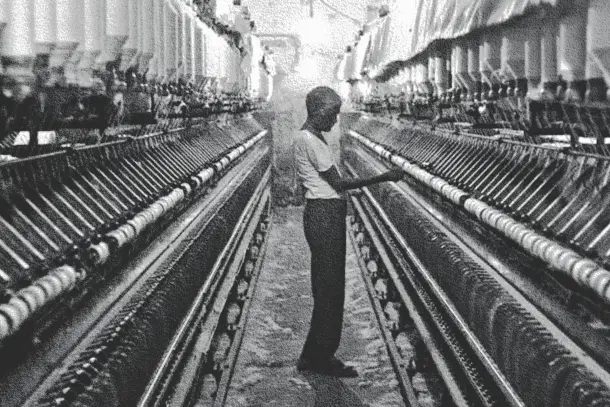
India is updating Bureau of Indian Standards (BIS) norms across textiles and other safety-critical segments to align products with global benchmarks, aiming to improve export competitiveness and reduce quality disputes overseas.
Around 30 new or revised voluntary standards were notified, with textiles a major focus—updating tests and specifications for items such as cotton fibres, handloom fabrics and khadi, some replacing rules over four decades old. New standards also touch smart mobility, mining safety and aerospace-linked materials.
Because compliance is voluntary, firms get a transition window to upgrade processes. The policy bet is that clearer, modern standards will lift consistency, support branding of “Made in India,” and ease market access—provided implementation avoids excessive bureaucracy.
|
|
|
|
|
|
|
|
|
India’s mutual fund industry extended its bull run in 2025, pushing assets under management to about ₹81 lakh crore by November as retail participation and systematic investment plans (SIPs) stayed strong.
AMFI data shows net inflows of roughly ₹7 lakh crore during the year and 3.36 crore new investors, signalling deeper household financialisation. Equity-oriented schemes drew over ₹3.5 lakh crore, while steady domestic flows helped cushion foreign portfolio outflows.
For the economy, the shift channels savings into capital markets, supporting corporate funding and broadening risk-bearing beyond banks. The 2026 outlook, however, hinges on valuations and global shocks; fund houses expect investors to tilt toward large-cap, diversified and hybrid strategies if volatility rises.
|
|
|
|
|
|
|
|
|
An EY report argues India is positioned to become an “office of the world” over the next two decades, moving from cost-arbitrage outsourcing to higher-value digital engineering, consulting and product development for global firms.
EY cites India’s scale in IT services, rapid digitalisation, entrepreneurship and favourable demographics as long-run growth drivers. It also highlights Digital Public Infrastructure as a force multiplier that lowers the cost of doing business, improves transparency and accelerates formalisation.
The macro implication is services-led expansion with spillovers into productivity and investment. If infrastructure and credit access keep improving, India could draw more global work, deepen financial inclusion and sustain high growth. The challenge will be upgrading skills and ensuring jobs growth matches the pace of automation.
|
|
|
|
|
|
|
|
|
A new commerce model is emerging as India’s digitally native Gen Z—estimated at 377 million people—pushes businesses toward faster, frictionless and trust-heavy experiences, according to an Economic Times column citing Razorpay data.
Payments are central to the shift: over 80% of Gen Z digital transactors prefer UPI or other online methods, while cash-on-delivery fades. The cohort’s demand for instant onboarding is influencing B2B sales cycles, and its comfort with embedded finance is boosting contextual credit and recurring payments such as UPI AutoPay.
Economically, the trend supports formalisation, higher digital payments penetration and new growth in D2C brands and platform-led lending. It also raises the premium on cyber security and consumer protection as “always-on” commerce scales.
|
|
|
|
|
|
|
|
|
Researchers at the Indian Institute of Science (IISc) have demonstrated molecular-scale electronic devices that can reconfigure their function, pointing to new routes for computing beyond conventional silicon hardware.
The team synthesized multiple variants of ruthenium-based molecular complexes and assembled them as thin films. By tuning chemical ligands and ionic surroundings, they could reshape charge transport under different electrical stimuli, enabling the same device to act as memory, logic, analogue processing, or synapse-like learning across many conductance states.
The result bridges molecular electronics and neuromorphic computing by embedding adaptability in material design rather than external circuitry. IISc positions the work as a platform for compact, multifunctional components that could support future AI-oriented chips.
|
|
|
|
|
|
|
|
|
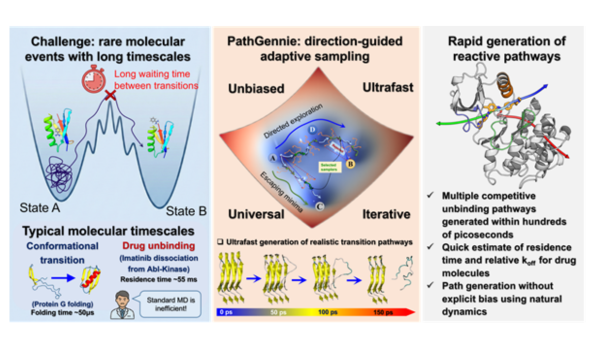
India’s Department of Science and Technology has released PathGennie, an open-source computational framework intended to shorten early drug-discovery cycles by improving how researchers evaluate candidate molecules.
PathGennie targets a hard problem in computer-aided drug design: simulating “rare events” such as a drug unbinding from a protein. Instead of forcing the system with artificial biasing distortions common in standard approaches, it predicts plausible unbinding pathways and kinetics from molecular simulations, helping teams compare stability and residence time across leads.
By making the tool open source, DST aims to broaden adoption across academia and industry, accelerating screening pipelines and lowering compute-to-insight costs for CADD workflows.
|
|
|
|
|
|
|
|
|
DRDO has completed the maiden flight test of the Pinaka Long Range Guided Rocket (LRGR-120), extending the indigenous rocket artillery family to a 120 km precision-strike class.
Fired from an in-service Pinaka launcher at the Integrated Test Range in Chandipur, the guided rocket reportedly hit its target at maximum range while validating planned in-flight manoeuvres. Unlike earlier unguided Pinaka rounds, LRGR-120 uses a guidance kit that supports mid-course correction, improving accuracy and reducing the number of rockets needed for a given effect.
The successful trial strengthens India’s long-range precision fires portfolio and could streamline induction because it uses existing launcher infrastructure. The achievement also boosts export prospects for the Pinaka ecosystem as demand grows for cost-effective guided rockets.
|
|
|
|
|
|
|
|
|
IIT Hyderabad has unveiled an air-taxi prototype aimed at demonstrating short-hop urban aerial mobility as a potential alternative to road congestion for time-critical trips.
The prototype is designed for pre-programmed navigation between fixed destinations, with no manual control required from passengers. The team reports a payload capacity of about 120 kg and a flight-speed envelope of roughly 60–120 km/h, positioning it for controlled, repeatable route trials and mission profiles such as rapid organ transport.
Regulatory clearance from the Directorate General of Civil Aviation is still pending, and the system remains in testing. If approvals and validation progress, the researchers say commercial availability could be possible in 2026–27, signalling a push toward indigenous eVTOL capabilities.
|
|
|
|
|
|
|
|
|
NTPC and IIT Bombay have completed India’s first dedicated geological CO₂ storage test drilling, a milestone for carbon capture, utilisation and storage (CCUS) readiness in the power and coal belt.
The project drilled to about 1,200 metres at Pakri Barwadih in Jharkhand’s North Karanpura coalfield to characterise coal-bearing formations for long-term containment. The partners previously produced a geological storage atlas for coalbed-methane-rich coalfields, and a second well—initiated in late December—is intended to support injection operations and “plume” monitoring to track CO₂ movement underground.
If subsequent injection trials validate sealing and monitoring performance, the work could provide a domestic template for scaling CCUS in hard-to-abate sectors. It is currently in the testing and monitoring phase.
|
|
|
|
|
|
|
|
|
DRDO has developed a portable Sea Water Desalination System (SWaDeS) to supply safe drinking water to small military detachments operating in coastal or saline inland environments.
SWaDeS is offered in a manual and an engine-operated configuration. DRDO says the hand-operated unit can be carried by one person and meet emergency needs for 10–12 personnel, purifying saline water to permissible standards. The engine-driven version is designed to treat seawater at around 35,000 mg/L total dissolved solids down to below 500 mg/L TDS, supplying drinking water for roughly 20–25 soldiers.
The system is positioned for naval operations, coastal installations and high-altitude saline locations such as Pangong Tso, and could also translate to civil use in freshwater-stressed regions.
|
|
|
|
|
|
|
|
|
IIT Madras is setting up an international network to take homegrown technologies to global customers and collaborations, anchored by the IIT-M Global Research Foundation.
The institute plans offices in five locations—US, UK, Germany, Dubai and Malaysia—to help deep-tech startups and faculty access markets, capital and research partners. The hubs are expected to support proximity-based consultancy, joint projects, cross-border skilling programmes and faster licensing for technologies that have moved beyond early prototypes, across themes such as AI, quantum computing, cybersecurity, space and advanced mobility.
After earlier outreach such as its Zanzibar campus, IIT-M says the new footprint will speed commercialisation and attract foreign investment, positioning its innovation pipeline for global scale.
|
|
|
|
|
 |
|
|
|
|
|
|
|
|
|
|
- Kindly add the email address masscomm@lubindia.com to your contact list or whitelist it for the newsletter.
|
|
|
|
|
|
|
|
|
|
|
|


/smstreet/media/media_files/DxOWt43jdcT94QDCsFEl.jpg)