|
|
|
|
Weekly Insights for Entrepreneurs
|
|
|
|
|
| Year: 2025-26 |
Tuesday 30th December, 2025 |
Volume/Issue: 108 |
|
|
|
|
● Small Business Credit Exposure Rises 16% to ₹46 Trillion (CRIF–SIDBI)
|
● SIDBI EDGE: Up to 100% Financing for MSMEs to Upgrade DG Sets
|
● Food MSMEs Back Tougher FSSAI Rules
|
● ₹2,000-Crore MSME Tech Upgradation Plan to Boost Exports & Efficiency
|
● QCI to Guide MSME Suppliers on Global Standards; New Certification Platform Launch
|
● 17 Tier-2 City Startups Receive Govt Grants & Seed Investments
|
● Top 5 AI Startups Reshaping India’s Business & Innovation Landscape
|
● Startup IPOs and ESOP Exits in 2025: From Paper Wealth to Real Money
|
|
| |
|
|
● India’s industrial production hits two-year high with 6.7% growth
|
● India–New Zealand FTA: New Opportunities for Exporters
|
● AI-Powered Clinical Decision Support System Planned Across 70,000 Hospitals
|
● RBI to Inject ₹2.90 Lakh Crore Liquidity: What It Signals for Rates & Credit
|
● Creative Goods Exports Surge: Jewellery, Rugs & Toys Lead the Way
|
● PLI Boost: Electronics Manufacturing Creates 1.33 Million Jobs; Smartphone Exports Rise
|
● Household Debt & Investment to Enter FY28 GDP Data
|
● RBI’s report: Gross NPAs down to decade low of 2.1%
|
|
| |
|
|
● Bluebird-2 / LVM3 Mission: Milestone for ISRO’s Commercial Space Push
|
● Patented Tech for Fairer Rubber Grading: From Visual Judgement to Measured Quality
|
● ICAR Transfers Eco-Friendly Pest Control Tech to Agri Startup for Commercialisation
|
● IIT Delhi’s AILA: AI Agent That Can Run Lab Experiments Autonomously
|
● DRDO Transfers Camouflage Software Sigma 4.0 and Multispectral Tank Decoy Tech
|
● Zoho-Backed VoxelGrids Unveils Indigenous 1.5T MRI Scanner
|
|
| |
|
|
|
|
|
|
India’s small business credit exposure climbed 16.2% year-on-year to ₹46 trillion as of 30 September 2025, indicating continued momentum in MSME borrowing despite a moderation from the prior quarter.
The CRIF High Mark–SIDBI data shows sole proprietors dominate the market, accounting for ~80% of credit and nearly 90% of borrowers, while private lenders lead enterprise lending and NBFCs are gaining share among proprietors.
For MSME owners, the takeaway is twofold: working-capital loans still drive most outstanding credit, and lenders are tightening risk selection even as unsecured lending expands. Strengthen cash-flow documentation, maintain digital data trails and monitor leverage to keep pricing and limits favourable.
|
|
|
|
|
|
|
|
|
SIDBI’s digital lending platform, SIDBI EDGE, is offering MSMEs up to 100% financing to replace or retrofit diesel generator (DG) sets so they meet updated emission standards, reducing compliance risk as enforcement tightens.
The product is positioned as a capex enabler for smaller units that rely on backup power, helping them spread the upgrade cost while improving fuel efficiency and lowering operational disruptions linked to older sets.
For business owners, this is a timely lever to avoid penalties and downtime: assess your current DG capacity, check local norms, and build the EMI into your power-cost plan. Pair financing with preventive maintenance and load optimisation to maximise savings from the upgrade.
|
|
|
|
|
|
|
|
|
Food MSMEs are signalling support for tighter FSSAI oversight, arguing that stronger compliance requirements can weed out unsafe operators and improve consumer trust—especially for products sold online.
Recent FSSAI pushes for e-commerce include stricter verification of seller licences, clearer display of licence numbers, improved labelling and quicker delisting of non-compliant listings, raising the compliance bar for small brands.
What MSME owners want next is clearer, practical implementation: predictable timelines, standardised checklists, and easier access to testing and compliance guidance so upgrades don’t become a cost shock. Build a compliance calendar now—licence validity, label audits, warehouse disclosures and recall processes—to protect listings and brand equity.
|
|
|
|
|
|
|
|
|
India is planning a ₹2,000-crore MSME technology upgradation scheme to help small manufacturers modernise and stay export-competitive as global buyers tighten sustainability and quality expectations.
The proposal targets productivity and energy efficiency, with support expected to flow through loans and grants for machinery upgrades, digitisation and cleaner processes—partly to prepare for carbon-linked trade measures that could raise the cost of exporting.
For MSMEs, the opportunity is to treat this as a “future-proofing” subsidy: prioritise upgrades that cut power and material waste, improve traceability and documentation, and raise defect-free output. Keep project reports, baseline energy data and export linkage ready so you can apply quickly when guidelines open.
|
|
|
|
|
|
|
|
|
QCI is moving to simplify how MSMEs and suppliers prove compliance with global standards, announcing reforms that shift certification from inspection-heavy processes to a more trust-based, digital-first model.
The package includes a QR-enabled Q Mark for verified quality information, a one-stop paperless accreditation platform to replace multiple portals, and “Quality Setu” to resolve grievances through a secure ticketing system.
For MSME exporters and vendors, QCI’s mentoring for Tier-2/3 suppliers to achieve ZED and Lean certification, plus plans to train 1 lakh MSMEs/SHGs under ODOP in 2026, can lower the cost of meeting buyer audits. Use this window to document processes, tighten traceability and shortlist certifications that unlock higher-margin supply chains.
|
|
|
|
|
|
|
|
|
Seventeen startups from tier-2 cities received fresh government-backed support, combining grants and seed investments to accelerate market-ready innovation outside metro hubs.
At the Think Salem 2025 conclave, 12 incubator-backed ventures secured ₹50 lakh grant agreements under the DST–NIDHI initiative, while the Startup India Seed Fund invested ₹60 lakh across five startups via Sona Incubations.
The cohort spans healthcare devices, mobility, sustainability, drones, food innovation and deep-tech, underscoring growing public funding pathways for regional founders. MSME owners partnering with startups should track local incubators and grant calls, as these programmes often subsidise pilots and procurement. For startups, align TRL milestones, IP plans and customer validation to qualify for the next funding tranche.
|
|
|
|
|
|
|
|
|
A Business Outreach roundup highlights five Indian AI players—Fractal Analytics, Krutrim, Sarvam AI, Observe.AI and Haptik—arguing they stand out for solving enterprise problems beyond hype, from analytics to customer support automation.
The article notes strong funding and government momentum: Sarvam AI was selected to build a sovereign language model under the IndiaAI Mission, while conversational AI firms like Haptik and Observe.AI target large-scale customer interactions and compliance.
For MSMEs, the practical takeaway is adoption, not admiration: start with use-cases that pay back fast—customer queries, sales follow-ups, invoice and ticket triage, and multilingual support. When evaluating vendors, demand data-security terms, measurable KPIs and pilot pricing, and ensure workflows can run in Indian languages where your customers actually are.
|
|
|
|
|
|
|
|
|
Startup IPOs in 2025 turned ESOPs from “paper wealth” into real cash for thousands of employees, as listing gains and secondary sales created liquidity in a year when private funding stayed selective.
IPO-linked exits were supplemented by structured buybacks and secondary transactions, helping employees monetise equity while giving startups a retention lever amid a softer hiring market.
For founders and MSME-scale startups using ESOPs, the message is to treat liquidity planning as part of compensation design: set clear vesting and buyback policies, communicate tax implications early, and budget for periodic liquidity events. Transparent ESOP governance can improve talent trust and reduce attrition—without overpaying in cash when margins are tight.
|
|
|
|
|
|
|
|
|
India’s industrial output accelerated to 6.7% year-on-year in November 2025, the fastest pace in about two years and far above economists’ expectations. The rebound follows October’s 0.4% print, when Diwali-related shutdowns distorted factory activity.
Manufacturing led the upswing, growing 8.0%, with basic metals, pharmaceuticals and motor vehicles among the biggest contributors. Mining rose 5.4% as monsoon disruptions faded, while electricity output contracted 1.5%, partially offsetting gains.
The stronger IIP reading points to firmer momentum for GDP and investment heading into year-end, especially as capital goods output rose 10.4% and infrastructure/construction goods 12.1%. Still, the uneven sector mix suggests demand is normalising rather than booming, keeping policy sensitive to inflation and energy conditions.
|
|
|
|
|
|
|
|
|
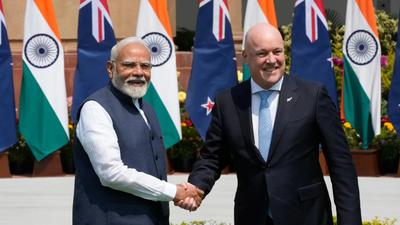
The India–New Zealand free trade agreement would widen trade links and ease mobility for students and skilled professionals, strengthening India’s economic footprint in the Indo-Pacific.
New Zealand is offering duty-free entry for India’s current exports and market access across about 118 services sectors, plus faster approval pathways for Indian pharmaceutical products and longer post-study work rights.
The macro takeaway is a potential lift to export growth and services earnings—spanning textiles, leather, engineering goods and food products—while India’s tariff concessions are largely phased and paired with quotas/safeguards to manage adjustment in sensitive farm imports and protect rural incomes.
|
|
|
|
|
|
|
|
|
India is preparing to roll out an AI-powered clinical decision support system across nearly 70,000 public and private hospitals, aiming to standardise care quality and reduce medical errors.
Developed by AIIMS New Delhi and positioned as a “smart doctor” assistant under the Ayushman Bharat Digital Mission, the tool is designed to analyse patient records and suggest evidence-based care plans, with clinicians retaining final judgement.
Economically, large-scale decision support could improve productivity by lowering adverse events and unnecessary treatment variation, supporting labour participation and household welfare; however, success depends on interoperable data pipelines, governance, and addressing privacy and cyber-risk concerns upfront.
|
|
|
|
|
|
|
|
|
The Reserve Bank of India has announced measures to inject ₹2.90 lakh crore of durable liquidity, signalling a shift toward easier money-market conditions after a period of tight cash balances and elevated short-term rates.
The package combines ₹2 trillion of government bond purchases over late-December to late-January and a $10 billion, three-year dollar-rupee buy/sell swap scheduled for mid-January 2026.
For the economy, sustained liquidity can pull overnight rates closer to the policy corridor, strengthen monetary transmission and keep bond yields contained—lowering borrowing costs and encouraging credit demand—while the FX swap also helps manage dollar liquidity and forward-premium pressures.
|
|
|
|
|
|
|
|
|
India’s creative goods exports rose in the first seven months of FY26, pointing to resilience in niche, design-led manufacturing even as global trade conditions remain uneven.
Exports increased 7.3% year-on-year to $12.5 billion in April–October FY26, led by fashion accessories, jewellery, carpets and toys, with the UAE the largest and faster-growing destination; the US share slipped over the same period.
The broader economic signal is that higher-value “crafts and design” products can diversify India’s export base and support labour-intensive clusters, but concentration in a few markets and one-off shipping bumps (tariff front-loading and festive orders) may make momentum volatile.
|
|
|
|
|
|
|
|
|
India’s electronics manufacturing push is translating into formal job creation, underscoring how targeted incentives can shift production and exports in a scale industry.
Industry estimates linked to the PLI programme show more than 1.33 million jobs created over five years—about 400,000 direct and 930,000 indirect—with women and first-time workers making up a large share.
Mobile phone output has expanded sharply, with FY25 production above ₹5.45 lakh crore and exports over ₹2 lakh crore, helping narrow import dependence and lift wage incomes. The macro takeaway is stronger manufacturing value-added and external earnings, though competitiveness will hinge on deepening components, logistics and stable trade policy.
|
|
|
|
|
|
|
|
|
India’s national accounts are set to draw more directly on household balance-sheet data, a change that can improve how policymakers read investment cycles and financial vulnerabilities.
The All-India Debt and Investment Survey (AIDIS) will be conducted from July 2026 to June 2027, and officials say its findings will be incorporated into GDP estimates for 2027–28, particularly for gross fixed capital formation in assets like housing, land and durable goods.
MoSPI is also revising the GDP base year to 2022–23, with the new series due on February 27, 2026. Better household debt and investment measurement should sharpen fiscal, monetary and macro-prudential decisions, though it may also lead to visible back-series revisions and updated benchmarks.
|
|
|
|
|
|
|
|
|
RBI’s “Trend and Progress of Banking” report says lenders ended September 2025 stronger, with gross NPAs at a decade-low 2.1%, down from 2.2% in March. Better asset quality reduces systemic risk and supports the ongoing credit cycle.
Deposit and loan growth stayed in double digits in 2024-25 but slowed from the prior year. Profit growth also cooled as interest margins narrowed. Even so, banks remain well-capitalised and liquid, preserving capacity to extend credit despite macro shocks.
Retail delinquencies eased in most segments, while consumer-durable loans remain the weakest pocket; in industry, leather-related firms still show elevated stress. NBFC asset quality also improved. The RBI is building climate-risk information and disclosure frameworks, signalling tighter risk management alongside growth finance.
|
|
|
|
|
|
|
|
|
ISRO’s LVM3-M6 lifted off from Sriharikota carrying AST SpaceMobile’s BlueBird Block-2, a next-generation communications satellite, in a dedicated commercial mission managed by NewSpace India Ltd. The 6,100 kg payload is LVM3’s heaviest insertion into low Earth orbit, underscoring a step-change in India’s launch services.
Technically, BlueBird Block-2 is designed for direct-to-smartphone cellular broadband, using a ~223 m² phased-array antenna. LVM3’s three-stage stack—S200 solid boosters, L110 liquid core, and C25 cryogenic upper stage—targets ~600 km altitude, with separation planned about 15 minutes after liftoff.
Strategically, the flight strengthens ISRO/NSIL’s credibility in high-mass LEO deployments and supports AST’s expanding constellation, positioning India for more international commercial contracts alongside national science missions.
|
|
|
|
|
|
|
|
|
CET, Thiruvananthapuram has patented a grading system for ribbed smoked sheet (RSS) rubber that replaces subjective visual inspection with repeatable measurements, aiming to improve price realisation for growers. The work targets large price differences between RSS grades.
The device evaluates two quality drivers: surface condition and transparency. Image processing extracts surface features, while a tuned illumination-and-sensor module measures transparency at a wavelength selected through spectroscopic studies. An AI classifier fuses both signals to assign the grade.
In the prototype, sheets pass over a transparent conveyor belt so surface analysis runs first, followed by transparency detection. CET plans industry tie-ups to productise the system for buyers and procurement agencies, standardising grading and reducing disputes.
|
|
|
|
|
|
|
|
|
ICAR’s National Bureau of Agricultural Insect Resources (NBAIR), Bengaluru has transferred two indigenous, eco-friendly pest-control technologies to startup HSRP Agro Tech for commercial use. ICAR frames the move as public research translating into field impact and lower dependence on chemical sprays.
The bundle includes a fruit-fly trap for managing Bactrocera spp. and a white-grub lure targeting Holotrichia consanguinea. NBAIR says both were built through rigorous lab work and multi-location field validation, delivering residue-free, cost-effective control for high-loss pest complexes.
HSRP will take the designs into production and on-farm distribution, aiming to broaden adoption across affected crop belts. The partnership accelerates deployment of the Shatpada-series portfolio and supports a wider shift toward sustainable, farmer-centric pest management.
|
|
|
|
|
|
|
|
|
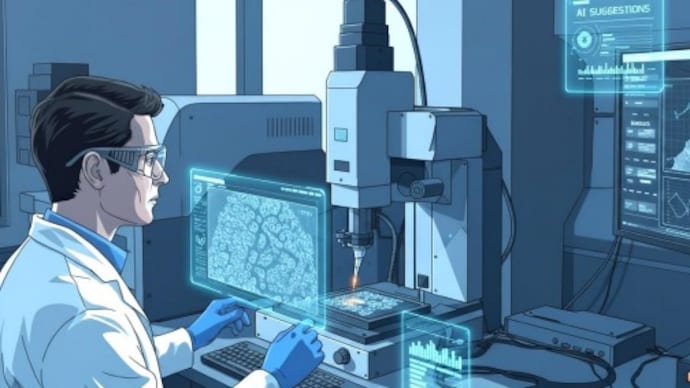
IIT Delhi, with collaborators in Denmark and Germany, has reported an AI system that can independently run lab experiments, shifting AI from “assistive” tools to autonomous execution. The study, published in Nature Communications, names the agent AILA (Artificially Intelligent Lab Assistant).
The team focused on controlling an Atomic Force Microscope (AFM), used for nanoscale materials analysis. AILA can set up scans, tune parameters, respond to instrument feedback, and interpret AFM data, completing some optimization steps in 7–10 minutes instead of hours.
The researchers flag risks when models deviate from instructions and call for safeguards to protect sensitive equipment. If scaled, AILA-like systems could speed discovery and let smaller labs access advanced experiments with less specialised staffing.
|
|
|
|
|
|
|
|
|
DRDO has strengthened the Indian Army’s concealment and deception playbook by handing over two indigenous systems designed for sensor-dominated warfare. Officials link the upgrade to lessons from recent hostilities, where drones, missiles and surveillance exposed vulnerabilities.
Camouflage Pattern Generation Software Sigma 4.0 (CPGSS 4.0) produces terrain-specific patterns that help mask equipment across visible, infrared and radar bands. DRDO also transferred a full-scale multispectral tank mock-up that mimics a tank’s visual, thermal and radar signatures for decoying and training.
The technologies moved from DRDO’s Defence Laboratory, Jodhpur to the Army’s Corps of Military Engineering in Pune, enabling training use and potential field adoption. Together, software-driven pattern design and realistic decoys aim to improve survivability against reconnaissance.
|
|
|
|
|
|
|
|
|
VoxelGrids, backed by Zoho, has announced a fully indigenous 1.5-Tesla MRI system, positioning it as a cost- and supply-chain alternative to imported scanners. The company says the first clinical unit is now operating at the Chandrapur Cancer Care Foundation near Nagpur.
Its main technical shift is a helium-free “dry magnet,” removing dependence on liquid helium and cutting manufacturing costs by nearly 40%. The design is also described as lighter (about 2–3 tonnes), more compact, and engineered to tolerate power fluctuations, supporting installation in smaller hospitals.
To accelerate adoption, VoxelGrids is offering a pay-per-use commercial model that reduces upfront capital expenditure. If scaled, the platform could widen MRI availability beyond metros and strengthen India’s domestic medical-imaging manufacturing base.
|
|
|
|
|
 |
|
|
|
|
|
|
|
|
|
|
- Kindly add the email address masscomm@lubindia.com to your contact list or whitelist it for the newsletter.
|
|
|
|
|
|
|
|
|
|
|
|
)



)