|
|
|
|
Weekly Insights for Entrepreneurs
|
|
|
|
|
| Year: 2025-26 |
Tuesday 23rd December, 2025 |
Volume/Issue: 107 |
|
|
|
|
● GeM Milestone: 11.25 Lakh MSE Sellers Secure ₹7.44 Lakh Cr in Orders
|
● BCG–FICCI Report: AI Could Add $500 Billion to India’s MSME Economy
|
● Food Delivery Sector: A Key Engine for Job Creation & MSME Growth
|
● Chakr Shield: IIT-D Startup Turns Diesel Generator Emissions into Ink
|
● Startup Begins Ground Testing for Air Taxi in Bengaluru
|
● Startup Expands from Debris Monitoring to Tracking Missiles from Space
|
|
| |
|
|
● India–Oman FTA: Zero Duty Access for 99% of Exports
|
● Viksit Bharat G RAM G Act: A Rural Jobs Step Beyond MGNREGA
|
● Govt Plans Credit Guarantee Scheme to Ease Liquidity Stress for MFIs
|
● SEBI Overhaul: New MF Regulations 2026 & Capped Trading Costs
|
● India’s Shipbuilding Push: Global Liner Interest & Cluster-led Scale-up
|
● Net Direct Tax Collections Rise 8% to ₹17.04 Trillion
|
● PMO Directives: Overhaul PhDs & Commercialise Defence Tech
|
● DBRAP Launched to Strengthen Ease of Doing Business at District Level
|
|
| |
|
|
● Gaganyaan Mission: ISRO Clears Key Drogue Parachute Tests
|
● CSIR–CBRI Unveils Low-Carbon, Climate-Resilient Building Prototype
|
● IIT Delhi & AIIMS Develop Ingestible Gut-Sampling Microdevice
|
● Wash to Shield: IIT-D Develops Mosquito-Repellent Detergent
|
● IIT Madras: Precision Nanoinjection Platform for Breast Cancer Drugs
|
● DHRUV64: India Launches First Indigenous 1.0 GHz 64-bit Microprocessor
|
● CSIR–CFTRI Advances Annatto Processing for Natural Colourants
|
|
| |
|
|
|
|
|
|
Government e-Marketplace (GeM) is widening access to public procurement, with micro and small enterprises increasingly winning sizable government contracts.
Ministry data cited by Economic Times shows over 11.25 lakh MSE sellers have secured orders worth ₹7.44 lakh crore. As of November 2025, MSEs accounted for 44.8% of GeM’s total order value—well above the 25% procurement mandate—with over two lakh women-owned MSEs winning more than ₹78,000 crore.
For MSMEs, GeM is a growth channel if you invest in compliant documentation, competitive cataloguing and reliable fulfilment. Use GeM’s MSE/Womaniya/SC-ST filters and relaxations on EMD and turnover to bid strategically and build a repeat-order track record.
|
|
|
|
|
|
|
|
|
AI adoption among India’s MSMEs could unlock over $500 billion in economic value, according to a BCGX–FICCI report, but most firms are still stuck in pilot mode.
It says AI-enabled credit assessment and cash-flow analytics can lift productivity 15–20%, cut operating costs 20–30% and reduce borrowing costs 12–16%, yet 44% of executives allocate under 10% of tech budgets to AI.
For MSME owners, the message is to move from “micro” use cases to AI-first process redesign—starting with finance, procurement and customer service—while leveraging cluster labs, frugal tools and government-backed compute and datasets.
|
|
|
|
|
|
|
|
|
India’s food-delivery ecosystem is becoming a major services-sector engine, widening demand access for small restaurants while creating large-scale gig employment.
An NCAER study with Prosus estimates platforms generated ₹1.2 lakh crore in gross output in 2023–24 and directly employed 1.37 million workers, up from 1.08 million in 2021–22. It also notes platforms are driving formalisation by offering onboarding, menu optimisation, advertising, training and basic accounting tools that many small kitchens lacked.
For MSME owners, treat platforms as a sales-and-data channel: improve packaging and service consistency, use insights to optimise menus, and bake commissions into pricing. The study also flags the need for better sector measurement and portable social protections for workers.
|
|
|
|
|
|
|
|
|
Gurugram-based cleantech startup Chakr Innovation is commercialising pollution control for diesel generators by capturing particulate emissions and converting the waste into inks and paints.
Founded by IIT Delhi alumni in 2016, Chakr says its retrofit device “Chakr Shield” received CPCB approval in 2017, positioning it for large industrial compliance spending. The company reports deploying 15,000+ units across 1,000+ sites, with customers including large PSUs and corporates, and revenue of ₹125 crore in FY24 alongside reported profitability.
The business takeaway: climate-tech can scale when it aligns with regulation and delivers measurable savings. MSMEs with generator fleets can evaluate retrofits plus monitoring to reduce compliance risk, while startups can spot adjacent opportunities in maintenance, analytics and circular by-products.
|
|
|
|
|
|
|
|
|
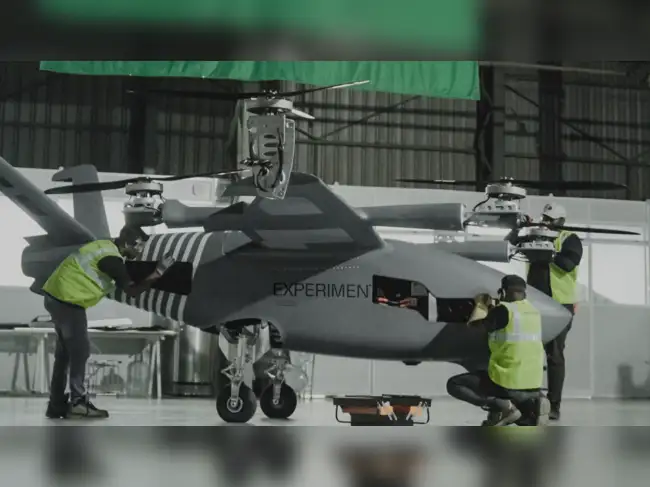
Bengaluru-based Sarla Aviation has started ground testing of its air-taxi programme, signalling a move from prototypes and simulations to aircraft-scale validation.
The startup said testing is underway at its Bengaluru manufacturing facility for a half-scale eVTOL demonstrator (SYLLA SYL-X1) as it targets an electric air-taxi rollout by 2028. Economic Times reports the company has unveiled its “Shunya” prototype at the Bharat Mobility Global Expo.
For founders and suppliers, the near-term opportunity is in componentisation: batteries, avionics, composites, charging, certification services and MRO. MSMEs that can meet aviation-quality standards early may lock in long-cycle contracts.
|
|
|
|
|
|
|
|
|
Space situational awareness startup Digantara is expanding beyond debris monitoring into missile tracking and detection from space, aiming to serve rising government demand for threat intelligence.
The Bengaluru-based company told PTI it will adapt the architecture used for tracking fast-moving space objects to missile missions. It operates ‘SCOT’, a commercial surveillance satellite launched in January 2025, and plans 15 more satellites in orbit during 2026–27. The firm has also begun US operations from Colorado Springs to pursue defence contracts and announced a $50 million funding round.
For deeptech startups and MSME vendors, this points to growing spend on space-and-ground analytics, secure hardware and data services. Export-ready compliance, defence-grade security and long procurement cycles will be key.
|
|
|
|
|
|
|
|
|
India and Oman have signed a Comprehensive Economic Partnership Agreement (CEPA) aimed at boosting bilateral trade. Oman will provide zero-duty entry on 98.08% of its tariff lines, covering 99.38% of India’s exports by value, cutting tariff-related costs for most shipments.
Benefits are expected for labour-intensive exports such as agriculture, textiles, leather, engineering goods and pharmaceuticals. At a macro level, wider Gulf market access supports export diversification, jobs and resilience amid uneven global demand.
The pact also includes mobility-related commitments for professionals and intra-corporate transferees, supporting services delivery alongside goods trade. Over time, stronger India–Oman linkages could lift external balances and crowd in investment across supply chains.
|
|
|
|
|
|
|
|
|
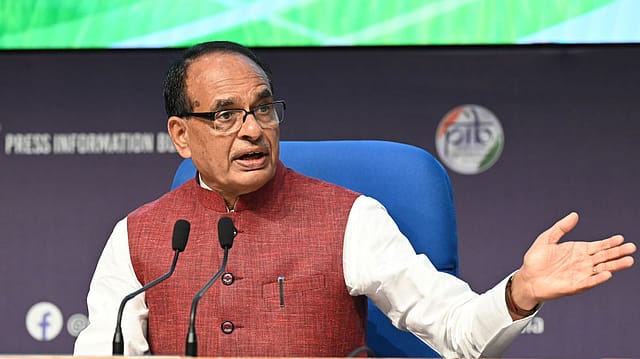
The government has pitched the Viksit Bharat G RAM G Act as an upgraded rural jobs guarantee, positioned as a step beyond MGNREGA. Rural Development Minister Shivraj Singh Chouhan says the law raises the work guarantee to 125 days from 100 and strengthens unemployment allowance and compensation for delayed wage payments.
The design aims to stabilise rural incomes, support consumption and smooth cash flows for small and marginal farmers through provisions around crucial agricultural periods.
Fiscal and execution details will shape the macro impact. The Act lifts the administrative expenditure cap to 9% from 6% to better resource frontline staff and delivery, but it raises the bar on value-for-money and verifiable asset creation.
|
|
|
|
|
|
|
|
|
The finance ministry is preparing a credit guarantee programme to revive bank funding to stressed microfinance institutions (MFIs), especially smaller lenders facing a liquidity squeeze. A possible announcement is expected in the 2026 Union Budget, though the guarantee size is not known.
The proposal mirrors the pandemic-era CGSMFI scheme, when a ₹7,500 crore fund encouraged bank lending and the National Credit Guarantee Trustee Company provided cover of up to 75% in case of default.
Policy intent is macro-relevant: restricted micro-credit can hit consumption and small-business cash flows. The sector’s gross loan portfolio fell to ₹3.46 lakh crore by end-September from ₹4.34 lakh crore at end-March last year, underscoring the need to restore funding confidence.
|
|
|
|
|
|
|
|
|
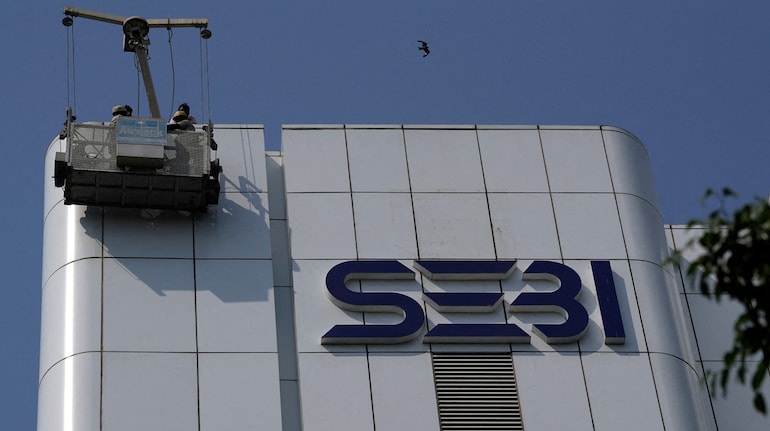
SEBI has approved a rewrite of mutual fund rules, replacing the 1996 framework with SEBI (Mutual Funds) Regulations, 2026. Statutory levies such as STT, GST and stamp duty will be charged on actuals, outside the Base Expense Ratio, making fees easier to compare.
Distribution and trading costs are being capped: brokerage for equity cash trades is limited to 6 bps (vs up to 12 bps now), and base expense ratio limits are cut for index funds, ETFs and other categories.
Lower and clearer costs can deepen household financialisation and channel more savings into market-based funding. SEBI is also moving disclosures to digital-first processes and simplifying compliance, which should reduce operating friction across the asset-management industry.
|
|
|
|
|
|
|
|
|
India’s shipbuilding push gained visibility after CMA CGM signed a letter of intent with Cochin Shipyard to build six LNG-powered feeder containerships. The six 1,700-TEU vessels are valued at about $300 million, a rare global-liner order for an Indian yard.
Maritime India Vision 2030 sets a goal to be among the world’s top ten shipbuilding nations by 2030, backed by a new incentive scheme and plans for shipbuilding and repair clusters with coastal states.
Economically, scaling domestic yards can create skilled manufacturing jobs, strengthen heavy-industry supply chains and lower dependence on imports for commercial and strategic vessels. It also opens export potential in a global shipbuilding market estimated at $220.5 billion in 2024.
|
|
|
|
|
|
|
|
|
India’s net direct tax collections rose 8% in FY26 up to December 17 to ₹17.04 trillion, based on provisional CBDT data. The pace is below the 12.6% growth assumed in the FY26 Budget, hinting at softer profit/income growth or timing effects in payments.
Refunds were 13.5% (₹46,430 crore) below last year, with the sharpest drop in non-corporate tax refunds. Net corporate tax grew 10.5% to ₹8.17 trillion, while non-corporate taxes rose 6.4% to ₹8.47 trillion.
With 67.6% of the ₹25.2 trillion target achieved, the run-rate will shape fiscal-space estimates ahead of the Budget. A near-flat STT take of ₹40,195 crore also suggests muted equity turnover, relevant for market-linked revenues and sentiment.
|
|
|
|
|
|
|
|
|
The Prime Minister’s Office has issued directives to align doctoral research more closely with national priorities after flagging a disconnect between academia and development needs. The note calls for re-examining how PhD supervisors are selected, using defined parameters, and reorienting topics toward emerging economic and technology requirements.
It also proposes collaborative “Network Project System” models involving multiple scholars to tackle complex, multidisciplinary problems, moving away from siloed research structures.
In parallel, the PMO wants faster commercialisation of defence-sector innovations for civilian manufacturing, with an explicit aim to reduce dependence on imported technologies and create revenue streams that fund further R&D. The directive even points to reverse engineering as a tool for capability building.
|
|
|
|
|
|
|
|
|
The Department for Promotion of Industry and Internal Trade (DPIIT) launched the District Business Reform Action Plan (DBRAP) to extend ease-of-doing-business reforms from states to districts, where entrepreneurs interact most with local regulators.
DBRAP is positioned as a state-led framework to “localise” the Business Reforms Action Plan (BRAP) introduced in 2015. It focuses on strengthening district institutions and digital infrastructure to improve service delivery, simplify procedures and raise transparency for approvals and compliance.
For MSMEs and startups, district-level reform is often the difference between a fast launch and a stalled one. Standardised, time-bound local processes can cut compliance costs, improve predictability and encourage formalisation—especially in Tier-2 and Tier-3 markets.
|
|
|
|
|
|
|
|
|
The Indian Space Research Organisation (ISRO) has cleared a key qualification milestone for Gaganyaan by completing drogue parachute tests for the Crew Module’s deceleration system.
Trials on December 18–19 used DRDO’s Rail Track Rocket Sled facility at TBRL, Chandigarh, to replicate high-speed deployment loads. The drogue parachutes are deployed after apex-cover separation and are designed to stabilise the re-entering module and reduce velocity before pilot and main parachutes take over.
ISRO said both runs met predefined objectives despite varied parameters, strengthening confidence in the most safety-critical stages of recovery and moving the parachute system closer to flight readiness for human missions.
|
|
|
|
|
|
|
|
|
CSIR–CBRI Roorkee has commissioned a Climate Resilient Building prototype at CSIR–CEERI’s Pilani campus, showcasing low-carbon, climate-responsive construction tailored for India’s hot–dry regions.
The two-storey, 225 m² structure was completed in about 90 days using prefabrication and optimised design for close to 50% cost savings. It integrates concrete-filled cold-formed steel sections, lightweight cellular concrete blocks, and climate-appropriate orientation to cut heat gain, while targeting nearly 30% lower construction water use and indoor temperatures 8–10°C below ambient.
CSIR positions the Pilani build as part of a national prototype series across climatic zones, with potential scale-up into large housing programmes to reduce electricity demand and operational emissions.
|
|
|
|
|
|
|
|
|
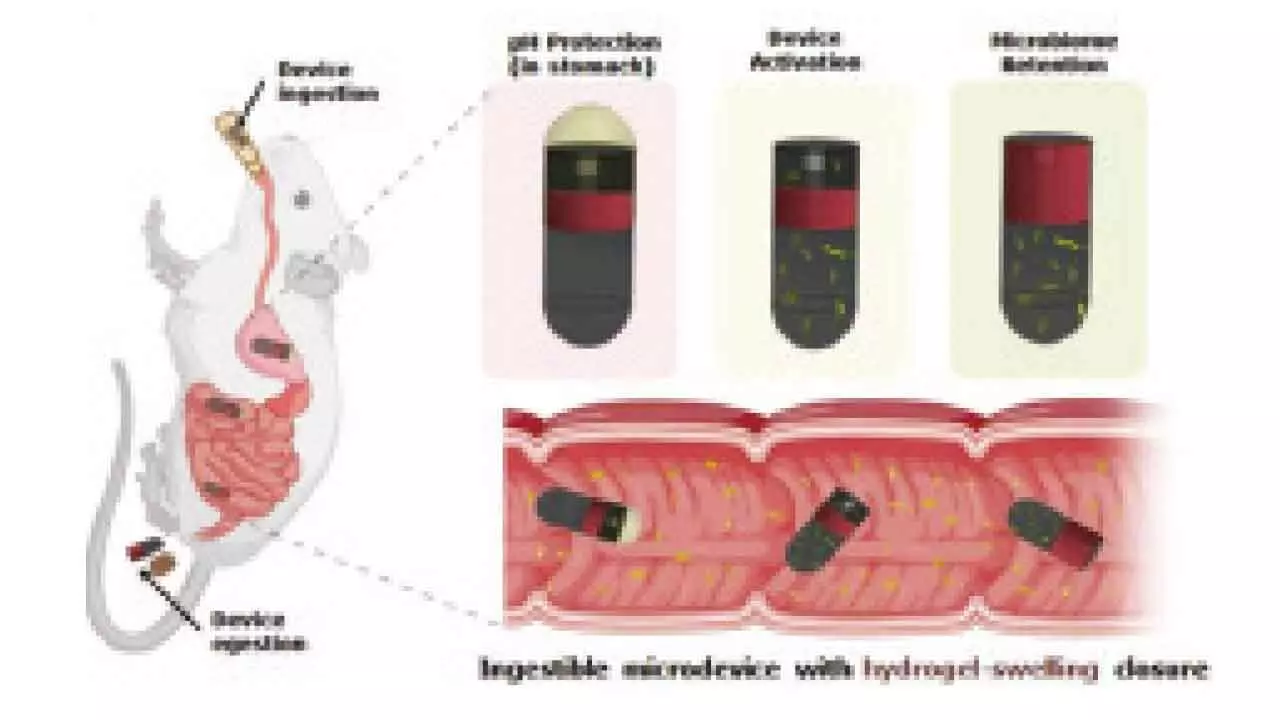
IIT Delhi and AIIMS Delhi have developed an ingestible microdevice that can collect microbial samples from the small intestine, addressing a long-standing gap in gut microbiome measurement beyond stool-based proxies.
The pill-sized system remains sealed in the stomach and activates in the intestine using an enteric-coated gelatin cap. The coating protects the device at gastric pH and disintegrates at intestinal pH, allowing luminal fluid to enter activation and sampling chambers, after which the device reseals to protect the sample during transit.
Validated in an animal model and reported in the journal Small, the approach could enable region-specific microbial and biomarker profiling with less invasive workflows for clinical research and diagnostics.
|
|
|
|
|
|
|
|
|
IIT Delhi researchers have created a mosquito-repellent laundry detergent that turns routine washing into a wearable protective layer, aiming to reduce exposure to mosquito-borne diseases such as dengue, malaria, and chikungunya.
Offered in both powder and liquid formats, the formulation leaves active ingredients bound to textile fibres after washing. In laboratory “hand-in-cage” tests with starved mosquitoes, treated fabrics showed fewer landings. The chemistry is designed to disrupt mosquitoes’ smell and taste sensing, discouraging them from settling and probing through cloth.
The repellent effect is regenerated with each wash, and a patent has been filed, positioning the technology for translation into consumer products pending further validation and scale-up.
|
|
|
|
|
|
|
|
|
An IIT Madras–led international team has reported a precision nanoinjection platform designed to improve breast cancer chemotherapy by delivering doxorubicin directly into tumour cells while limiting systemic exposure.
The system packages doxorubicin inside thermally stable nanoarchaeosomes and loads them into vertically aligned silicon nanotubes etched on a silicon wafer (NAD-SiNTs). In cell-culture and chick-embryo models, the platform showed strong killing of MCF-7 breast cancer cells while sparing healthy fibroblasts, alongside reduced angiogenesis and a reported 23× lower IC50 than free drug.
Researchers say silicon nanotubes offer biocompatibility advantages over carbon or titanium designs, with in vivo studies, toxicity profiling, and regulatory work next to support preclinical translation.
|
|
|
|
|
|
|
|
|
India has launched DHRUV64, described as the country’s first indigenously designed 1.0 GHz, 64-bit dual-core microprocessor, as part of efforts to build a self-reliant semiconductor and computing stack.
Developed by C-DAC under the Microprocessor Development Programme, DHRUV64 is positioned for both strategic and commercial workloads. The release highlights architectural upgrades for efficiency, multitasking, and reliability, plus broad peripheral integration for use cases such as 5G infrastructure, automotive electronics, consumer devices, industrial automation, and Internet-of-Things deployments.
As a DIR-V (Digital India RISC-V) milestone, the processor is intended to reduce import dependence and provide a domestic platform for startups, researchers, and future chip roadmaps.
|
|
|
|
|
|
|
|
|
CSIR–CFTRI Mysuru has reported advances in annatto value addition and post-harvest technology, strengthening India’s pipeline for natural colourants used in food and allied industries.
The institute has run multiple grant-supported projects and, under CSIR-BioCap, is targeting vitamin-E enriched annatto oil for food and cosmetic applications. Technically, CFTRI demonstrated dye production using percolation and counter-current extraction with selective solvents, followed by solvent recovery and vacuum dehydration to yield crystal-like dye that can be formulated in water-, oil-, or powder-compatible forms.
CFTRI also designed a low-cost, continuous seed separator (about 100 kg pods/hour) and standardised shade-specific formulations, enabling more scalable processing and broader industrial adoption.
|
|
|
|
|
 |
|
|
|
|
|
|
|
|
|
|
- Kindly add the email address masscomm@lubindia.com to your contact list or whitelist it for the newsletter.
|
|
|
|
|
|
|
|
|
|
|
|



/startuppedia/media/media_files/2025/12/19/chakr-web-2025-12-19-17-56-32.png)




)