|
|
|
|
Weekly Insights for Entrepreneurs
|
|
|
|
|
| Year: 2025-26 |
Tuesday 16th December, 2025 |
Volume/Issue: 106 |
|
|
|
|
● RBI Update: MSME Loans Linked to External Benchmarks
|
● Strategic QCO Exemptions: BIS Compliance Relief for Micro & Small Units
|
● Deep Tech Surge: Quantum Computing as the Next Frontier for Start-ups
|
● Milestone Alert: India Crosses 2 Lakh Recognised Start-ups
|
● Start-up Success Story: PhD Thesis Turned ₹1.5 Cr Semiconductor Venture
|
|
| |
|
|
● Rural Revival: 80% Households Report Consumption Growth
|
● GDP Revision: New Base Year to Reflect Modern Digital Economy
|
● 1st Yr of RBI Governor: A Shift Toward Consultation and Regulatory Agility
|
● Big Tech Shift: Global AI Investments Redirected to India
|
● Niti Aayog Plan: Policy Push to Scale Corporate Bond Market to ₹120 L Cr
|
● Major Reforms: Centre Clears Nuclear and Insurance Sector Overhauls
|
● 2025 Trends: The Shift Toward Premium & Health-Conscious Consumption
|
● Trade Strategy: 300 Products Identified for Export Boost to Russia
|
|
| |
|
|
● MedTech Breakthrough: India’s First Homegrown Stroke Intervention Device
|
● Global Connectivity: ISRO to Launch BlueBird-6 for Direct-to-Device Broadband
|
● Circular Economy: New Tech Turns Tannery Waste into Industrial Salt
|
● Safety Innovation Portable Kit for Detecting Adulteration in Toddy
|
● Green Tech: “Ioncaloric Cooling” as a Potential HFC Alternative
|
|
| |
|
|
|
|
|
|
To enhance monetary policy transmission, the Reserve Bank of India (RBI) has advised banks to link MSME loans to external benchmarks. The reset clause for these loans has been reduced to three months, ensuring that borrowers benefit faster from interest rate changes. Existing borrowers will also be offered a switchover option under mutually agreed terms.
Complementing this, the government introduced the Mutual Credit Guarantee Scheme (MCGS-MSME), which provides a guarantee for term loans up to ₹100 crore for purchasing machinery. This initiative is designed to facilitate easier access to credit for capital investments without the heavy burden of collateral.
Furthermore, Scheduled Commercial Banks have been mandated to waive collateral security for loans up to ₹10 lakh extended to MSE units. These measures collectively aim to improve credit flow, reduce the cost of borrowing, and support the operational and expansion needs of the MSME sector.
|
|
|
|
|
|
|
|
|
The Government of India has implemented Quality Control Orders (QCOs) with strategic exemptions to protect MSMEs from production disruptions. The Bureau of Indian Standards (BIS) announced a phase-wise implementation that grants Micro enterprises a six-month extension and Small enterprises a three-month extension to comply with new quality norms.
To further ease the burden, specific exemptions have been introduced for imports used in export-oriented products and for Research & Development purposes up to 200 units. Additionally, a provision allows for the clearance of legacy stock manufactured or imported before the order's effective date within six months.
The BIS has also rolled out financial incentives, offering an 80% concession on annual marking fees for Micro enterprises and 50% for Small enterprises. Furthermore, the requirement for maintaining in-house laboratories has been made optional, allowing MSMEs to utilize BIS-recognized or NABL-accredited external labs for conformity assessment.
|
|
|
|
|
|
|
|
|
India's deep tech sector is witnessing a surge in quantum computing startups, positioning the country as a future hub for this transformative technology. With over 3,000 deep tech firms now active, quantum computing is gaining traction for its potential to revolutionize fields like drug discovery, financial modeling, and cybersecurity through quantum-safe encryption.
The ecosystem is bolstered by the National Quantum Mission, which has allocated ₹6,000 crore to seed R&D and build domestic infrastructure. Thematic research hubs at premier IITs are collaborating with startups to develop intermediate-scale quantum computers and related hardware, bridging the gap between academic research and commercial application.
Despite challenges in hardware availability and talent, government support and rising venture capital interest are fueling growth. For MSMEs and startups, this emerging sector offers high-value opportunities to innovate in niche areas, leveraging India's vast engineering talent to create global solutions in the quantum space.
|
|
|
|
|
|
|
|
|
India's startup ecosystem has crossed a historic milestone, surpassing 2 lakh government-recognized startups, with over 44,000 added in 2025 alone. This rapid growth is characterized by increasing inclusivity, with nearly 48% of these ventures featuring at least one woman director, and a significant surge in entrepreneurship arising from Tier-2 and Tier-3 cities.
The sector has become a major engine for employment, generating over 21 lakh direct jobs across diverse industries such as fintech, healthtech, and agritech. This decentralization of economic activity helps spread development beyond traditional metropolitan hubs, fostering a more balanced national economic landscape.
Government initiatives like the Fund of Funds for Startups and the Startup India Seed Fund Scheme have played a pivotal role in this expansion. By improving access to capital and easing regulatory compliance, these policies continue to empower a new generation of entrepreneurs, reinforcing India's status as a global startup powerhouse.
|
|
|
|
|
|
|
|
|
Professors and students from Pandit Deendayal Energy University have successfully commercialized a PhD thesis into a thriving semiconductor venture, Semiconductor Analysis and Testing Solutions (SATs). Founders Dr. Pankaj Yadav and Darshan Kumar Purohit identified a critical gap in India's research infrastructure, where dependence on expensive, rigid imported equipment stifled local innovation.
SATs addresses this by manufacturing indigenous, customizable, and cost-effective semiconductor testing equipment, such as cryogenic probe stations. Their “Make in India” solutions offer high precision at a fraction of the cost of foreign alternatives, granting Indian researchers the flexibility to modify instruments for specific experimental needs without relying on overseas suppliers.
The venture has rapidly grown to generate ₹1.5 crore in annual revenue. SATs now supplies critical research tools to premier institutions like IITs, IISERs, and government labs, as well as industry players. This success story highlights the immense potential of translating academic research into commercially viable deep-tech enterprises.
|
|
|
|
|
|
|
|
|
A recent survey conducted by the National Bank for Agriculture and Rural Development (NABARD) reveals a significant uptick in rural vitality, with 80% of households reporting consistent consumption growth over the last year. This data points to a robust and widespread recovery in the agrarian economy.
The surge in spending is attributed to better crop realizations, increased non-farm income, and effective government welfare transfers reaching the beneficiaries. This shift indicates that rural distress is easing, replaced by a growing appetite for both essential and discretionary goods across the hinterland.
This trend is a positive indicator for the fast-moving consumer goods (FMCG) and automotive sectors, which rely heavily on rural demand for volume growth. Sustained rural consumption acts as a stabilizing force for the national economy, balancing urban fluctuations and driving overall domestic demand
|
|
|
|
|
|
|
|
|
The Indian government is preparing to update the base year for calculating the Gross Domestic Product (GDP), a move designed to reflect the current structure of the economy more accurately. This statistical overhaul involves replacing the outdated consumption basket with one that captures modern spending habits and digital transactions.
By incorporating newer sectors and shifting consumption patterns, the revision aims to correct data lags and present a more realistic picture of economic activity. It often results in a slight expansion of the reported economic size due to the inclusion of previously unmeasured growth areas and informal sector activities.
For economists and policymakers, this recalibration is crucial for drafting effective fiscal and monetary policies based on relevant, real-time data. It ensures that global investors have access to precise metrics regarding India's growth trajectory, potentially boosting confidence in the nation's macroeconomic stability and investment climate.
|
|
|
|
|
|
|
|
|
In his first year as RBI Governor, Sanjay Malhotra has spearheaded a quiet but effective liberalization of the central bank's regulatory framework. His tenure has been marked by a shift from rigid control to a more consultative approach, focusing on reducing friction for financial institutions and fintech players.
Key reforms include streamlining compliance norms, engaging more openly with market participants, and embracing technological integrations to modernize supervision. This “open door” policy has helped demystify central banking operations and accelerated decision-making processes regarding licenses and product approvals.
The economic implication is a more agile banking sector capable of responding faster to market needs and technological changes. By lowering regulatory hurdles without compromising financial stability, the RBI is fostering an environment conducive to credit growth and financial innovation, essential for sustaining India's economic momentum.
|
|
|
|
|
|
|
|
|
Major global technology firms are redirecting massive Artificial Intelligence (AI) investments toward India, seemingly bypassing the US amid potential policy friction with the Trump administration. Giants like Microsoft, Intel, and Google are committing billions to build AI infrastructure and talent pools within the subcontinent.
This strategic realignment highlights India's growing appeal as a neutral, stable, and talent-rich ecosystem for high-tech development. The diversion of funds suggests that corporate strategy is prioritizing India's favorable regulatory climate and cost efficiencies over the uncertainties currently associated with American tech policies.
For the Indian economy, this serves as a pivotal moment, accelerating its transition into a global AI hub. The influx of capital and technology transfer will likely spawn a robust ancillary ecosystem, creating high-value jobs and significantly enhancing the nation's digital export capabilities in the coming decade.
|
|
|
|
|
|
|
|
|
Niti Aayog is advocating for a comprehensive policy framework, including specific tax incentives, to expand India's corporate bond market to a target of Rs 120 lakh crore. The think tank emphasizes the need to deepen debt markets to finance the country’s ambitious infrastructure requirements efficiently.
The proposal suggests rationalizing stamp duties and offering tax breaks to retail investors to increase participation in the bond market. By shifting the burden of long-term project financing away from banks, the initiative aims to reduce systemic risk and asset-liability mismatches in the banking sector.
A deepened corporate bond market is critical for a maturing economy, providing companies with alternative low-cost capital avenues. If implemented, these reforms will lower the cost of borrowing for Indian industry, stimulate capital expenditure, and provide a stable investment avenue for institutional and retail savers alike.
|
|
|
|
|
|
|
|
|
The Central Government has cleared significant reform bills aimed at overhauling the nuclear energy and insurance sectors, signaling a major push for liberalization. These legislative changes are designed to remove archaic barriers to entry and facilitate greater private and foreign participation in strategic industries.
In the nuclear sector, the reforms aim to allow private partnerships for small modular reactors, while the insurance overhaul focuses on easing capital requirements and composite licensing. These moves are intended to attract high-tech expertise and substantial long-term capital into capital-intensive areas.
These reforms represent a structural supply-side boost to the nation's infrastructure. By unlocking the nuclear sector for energy security and expanding insurance penetration through deregulation, the government is laying the groundwork for sustainable growth, job creation, and enhanced financial safety nets for the population.
|
|
|
|
|
|
|
|
|
India’s consumption patterns are undergoing a structural transformation in 2025, significantly impacting the beverages, FMCG, and dairy sectors. Consumers are increasingly moving away from mass-market products toward premium, health-oriented, and functionally specific alternatives, prompting companies to innovate rapidly to retain market share.
The primary drivers behind this shift include rising disposable incomes, rapid urbanization, and a demographic tilt toward younger, more health-conscious buyers. There is a marked preference for low-sugar beverages, protein-rich dairy products, and sustainably packaged goods, forcing legacy brands to pivot their portfolios.
This trend signals the maturity of the Indian consumer market, offering higher margins for corporations that adapt successfully. It suggests that future growth in consumption will be value-led rather than volume-led, encouraging deeper investment in supply chains and product research to meet evolving aspirations.
|
|
|
|
|
|
|
|
|
The Indian government has identified a specific list of 300 products to aggressively promote for export to Russia, aimed at correcting the widening trade deficit. This targeted basket includes electronics, pharmaceuticals, machinery, and textiles, sectors where Russian demand has surged due to sanctions.
This initiative seeks to utilize the Rupee-Ruble payment mechanisms more effectively by balancing the massive oil imports from Moscow. By filling the void left by Western brands, Indian manufacturers have a unique opportunity to capture market share in a large consumption economy.
Successfully executing this strategy will not only narrow the trade gap but also provide a new growth avenue for Indian exporters facing headwinds in Western markets. It underscores a pragmatic approach to economic diplomacy, leveraging geopolitical shifts to strengthen domestic manufacturing and export volumes.
|
|
|
|
|
|
|
|
|
India has successfully tested its first indigenous stent retriever, marking a major milestone in affordable critical care. The device, developed locally, aims to provide a cost-effective alternative to expensive imported mechanical thrombectomy tools currently used for treating ischemic strokes.
The device functions as a specialized mesh-like tube designed to physically capture and extract blood clots blocking cerebral arteries. In the AIIMS-led clinical trial, the stent demonstrated high efficacy in re-establishing blood flow, yielding results comparable to global standards while maintaining a robust safety profile for patients.
This innovation is poised to democratize access to life-saving stroke interventions across India by significantly lowering equipment costs. Following these strong trial results, the device is moving toward broader manufacturing, ensuring availability in Indian hospitals to reduce stroke-related disability.
|
|
|
|
|
|
|
|
|
ISRO is set to facilitate a major leap in global connectivity by launching the BlueBird-6 satellite for AST SpaceMobile. This mission aims to establish the first space-based cellular broadband network directly accessible by standard mobile phones without the need for specialized hardware.
The BlueBird satellites utilize extremely large phased-array antennas to beam 4G and 5G signals directly to terrestrial handsets, bypassing the need for ground-based cell towers. This architecture allows for high-speed data transmission and reliable connectivity even in geographically isolated, maritime, or infrastructure-poor regions.
By leveraging India’s cost-effective launch capabilities, this collaboration underscores ISRO’s growing role in the commercial space market. The successful deployment will represent a significant step toward bridging the global digital divide and ensuring universal broadband equity for underserved populations.
|
|
|
|
|
|
|
|
|
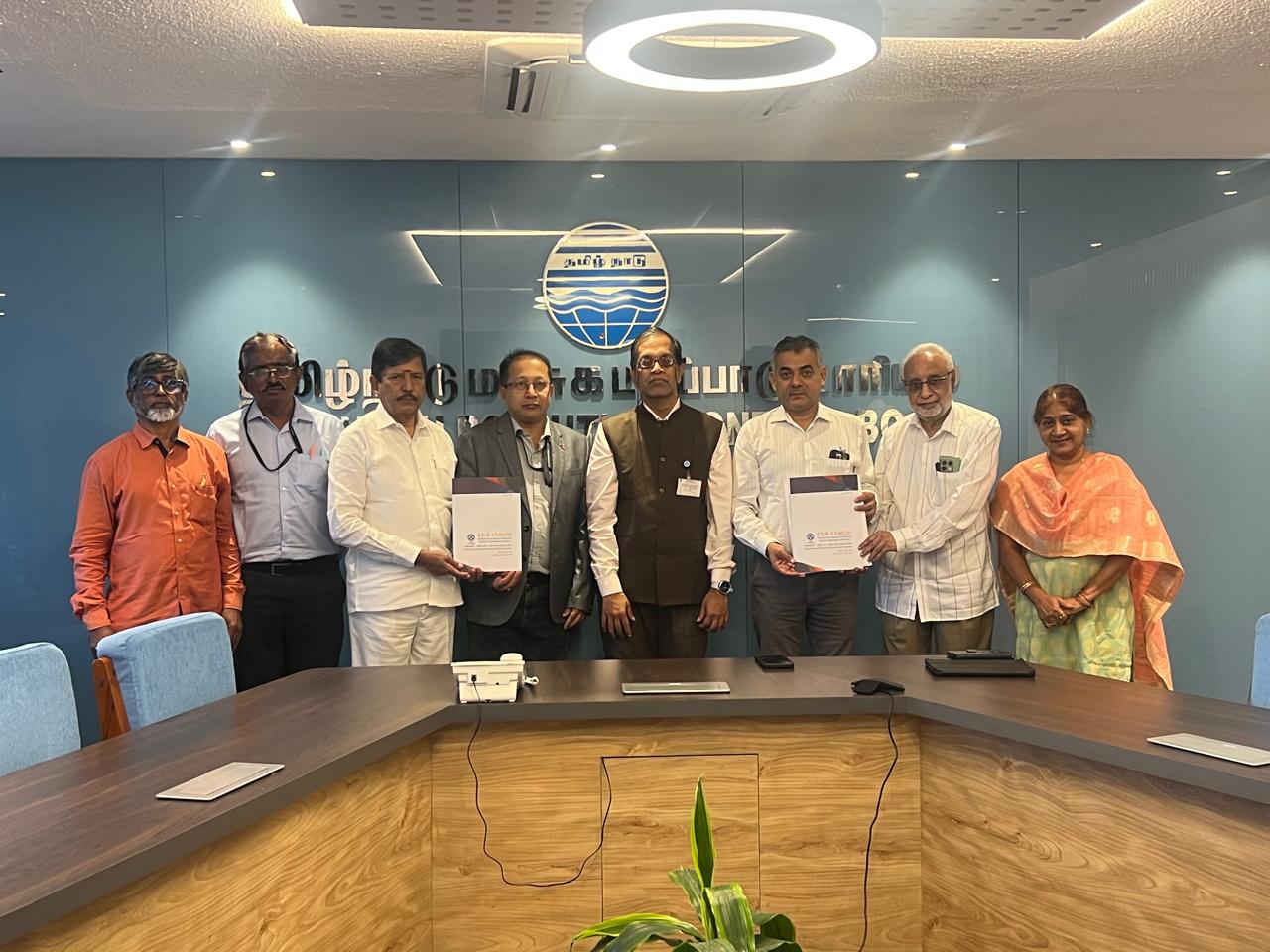
CSIR-CSMCRI has transferred a novel salt purification technology to RANITEC, addressing a critical environmental challenge in the leather industry. This collaboration focuses on sustainable effluent management, specifically targeting the difficult hazardous saline waste generated by tanneries.
The technology processes mixed salts recovered from tannery wastewater—often discarded due to high impurity levels—to extract high-quality sodium chloride. By refining the effluent through advanced separation techniques, the system enables the recovered salt to meet industrial standards for re-use in the tanning process itself.
This solution promotes a circular economy by turning hazardous waste into a valuable resource and reducing environmental dumping. Its implementation at the Common Effluent Treatment Plant supports Zero Liquid Discharge goals, ensuring regulatory compliance and enhancing sustainability for the sector.
|
|
|
|
|
|
|
|
|
Scientists at the CSIR-National Chemical Laboratory (NCL) in Pune have developed the “CHT-kit,” a portable diagnostic tool designed to detect dangerous adulteration in toddy. This innovation addresses public health risks associated with the illicit addition of chloral hydrate to the traditional beverage.
The kit utilizes a chemical reagent system that reacts specifically to the presence of chloral hydrate, a sedative often added to increase potency. The testing mechanism provides an instant visual change, allowing enforcement agencies to identify contaminated samples on-site without relying on lengthy laboratory analysis.
By enabling rapid field testing, the CHT-kit empowers excise departments to curb the sale of toxic adulterated toddy effectively. The technology is ready for deployment, promising improved food safety enforcement and the prevention of chemical intoxication incidents among consumers.
|
|
|
|
|
|
|
|
|
Researchers have unveiled a potentially revolutionary method termed “ioncaloric cooling” to replace traditional vapor-compression systems. This new approach addresses the environmental hazards of potent greenhouse gases like hydrofluorocarbons (HFCs) used in current refrigerators, offering a safer and more efficient alternative.
The technique manipulates the melting point of a material by adding and removing ions, a thermodynamic cycle similar to salting roads to prevent icing. By running an electrical current through a specialized solution containing iodine and sodium, the system induces phase changes that absorb or release heat with high efficiency.
While currently a prototype, the technology shows immense promise for delivering significant efficiency gains over current industry standards. If scaled successfully, it could drastically reduce global energy consumption and eliminate the reliance on environmentally damaging synthetic refrigerants.
|
|
|
|
|
 |
|
|
|
|
|
|
|
|
|
|
- Kindly add the email address masscomm@lubindia.com to your contact list or whitelist it for the newsletter.
|
|
|
|
|
|
|
|
|
|
|
|
/startuppedia/media/media_files/2025/12/11/website-1110-x-960-px-8-2025-12-11-14-52-52.png)