|
|
|
|
Weekly Insights for Entrepreneurs
|
|
|
|
|
| Year: 2025-26 |
Tuesday 25th November, 2025 |
Volume/Issue: 103 |
|
|
|
|
● PSB Xchange: PSB alliance to scale digital MSME lending from Jan 2026
|
● CAG Audit: To track State-level reforms for MSME ‘ease doing business’
|
● SARAL SIMS: Simplified steel import registration for MSME
|
● Quantum Push: IISER-backed startups build 64-qubit chip & large-scale QKD network
|
● B-Schools → Startups: How campuses are catalyzing venture creation
|
|
| |
|
|
● Labour Reforms: New Codes Prioritise Worker Security & Coverage
|
● TIA Portal: One-stop trade intelligence platform for exporters & MSMEs
|
● Defence Production Record: ₹1.54 lakh cr; MSMEs emerge as key contributors
|
● RDIF @ ANRF: India’s Deep Science Movement with lab-to-market focus
|
● NIC 2025: New 6-digit industry codes add digital, green & AYUSH sectors
|
|
| |
|
|
● Indigenous Gene Editing: TnpB platform for affordable, faster crop improvement
|
● Quantum Diode Laser: IIT-Delhi incubated startup unveils high-precision system
|
● Better Zinc Batteries: Activated V₂O₅ cathode promises higher density & life
|
● ISRO CE20 Milestone: World-first bootstrap start of cryogenic engine demonstrated
|
● IIT Mandi’s AI Device: Gives 3-Hour Landslide Warning
|
|
| |
|
|
|
|
|
|
Beginning Jan 2026, a PSB alliance digital platform for lending to small business will start functioning at scale opening up a new avenue for MSME financing.
The platform will allow any fintech or entity that serves MSMEs, including dealers, to plug in and provide a financing interface for small businesses. At the other end, 12 public sector banks will provide digital loans to these enterprises.
Sorabh Dhawan, CEO of PSB Xchange, said the platform aims to disburse Rs 3 lakh crore of loans by 2030.
PSB Xchange is designed as a multi-lender system connecting corporates and their channel partners with banks, NBFCs and fintechs.
|
|
|
|
|
|
|
|
|
The planned pan-India audit aims to evaluate how effectively states and Union territories have implemented reforms to improve the business environment for MSMEs.
The audit will evaluate the progress made in simplifying regulations, digitising processes and decriminalising minor offences that affect businesses.
It will also review the impact and effectiveness of major MSME schemes and the utilisation of public resources.
The nationwide audit is expected to lead to improved policy-making for the MSME sector at both central and state levels.
|
|
|
|
|
|
|
|
|
In an effort to simplify the process of compulsory registration under the Steel Import Monitoring System (SIMS) for imports of small consignments pertaining to iron and steel items classified under the Chapters 72, 73 and 86 of ITC (HS), 2022 by MSMEs and other small importers as well as imports made under Advance Authorization, SEZ and EOU route for export purposes, a new facility of registration process ‘SARAL SIMS’ has been introduced.
Importers can now access the facility of SARAL SIMS at www.sims.steel.gov.in/SARAL. While generating SARAL SIMS registration, the importers have to declare only the total intended quantity of import in the portal.
They will be issued a SARAL SIMS number, against which they can import any number of steel consignments for the year without requirement of consignment wise SIMS number.
|
|
|
|
|
|
|
|
|
Two Bengaluru-based startups backed by I-Hub Quantum Technology Foundation at the Indian Institute of Science Education and Research (IISER) Pune, have achieved these milestones — QpiAI has built a 64-qubit quantum processor named Kaveri 64, while QNu Labs has developed India's first large-scale quantum key distribution (QKD) network.
Project Director Sunil Nair added that such collaborations are crucial: “Deep technology innovations grow faster when teams from research institutions and industry work together.
The technology hub at IISER Pune supports startups through funding and incubation and helps bring scientific research to the stage of usable products.”
|
|
|
|
|
|
|
|
|
The traditional approach to management education was largely aimed at training students to work in organizations. The current scenario, however, requires even more than management skills -- innovation and entrepreneurship.
Courses related to the development of ventures, innovation, and social entrepreneurship are now being included so that students are better armed with a mindset and skill set to create ventures from scratch.
The leading institutions, including the list of top IIMs, ISB, XLRI, SPJIMR, have developed entrepreneurship centres, providing seed capital, mentors, shared workspace, as well as networking facilities with investors and entrepreneurs.
As India marches towards becoming a $5-trillion economy, fostering entrepreneurship would remain central to its growth story.
|
|
|
|
|
|
|
|
|
The earlier 29 fragmented labour laws were consolidated into four clear, coherent labour codes. On November 21, these codes came into force.
The labour codes, in letter and spirit, prioritise workers’ interests while balancing employers’ expectations. They promote preventive health care and expand social security. They provide formal recognition to audio-visual workers and gig and platform workers.
They enable pan-India ESIC coverage, mandate annual health check-ups for all workers aged 40 and above, and guarantee statutory floor wages for all workers to reduce disparities across states.
Provisions such as mandatory appointment letters, assured pay slips, and paid annual leave provide greater stability, dignity, and protection for every worker.
The codes open new avenues for women to participate across sectors, including in underground mines, with heavy machinery, and do night shifts, with consent and robust safety protocols.
|
|
|
|
|
|
|
|
|
Developed by the Department of Commerce, the Trade Intelligence and Analytics (TIA) portal brings together multiple national and international databases, macro-economic indicators and automated analytical tools into a single system.
The platform integrates global sources such as UN Comtrade along with domestic databases to offer over 270 analytics modules.
The interface provides real-time dashboards and visualisations on trade flows, commodities, markets, sectoral performance, export demand and competitor assessments. It also generates automated reports and trend tracking for key manufacturing sectors, including those covered under production-linked incentive schemes and critical minerals.
|
|
|
|
|
|
|
|
|
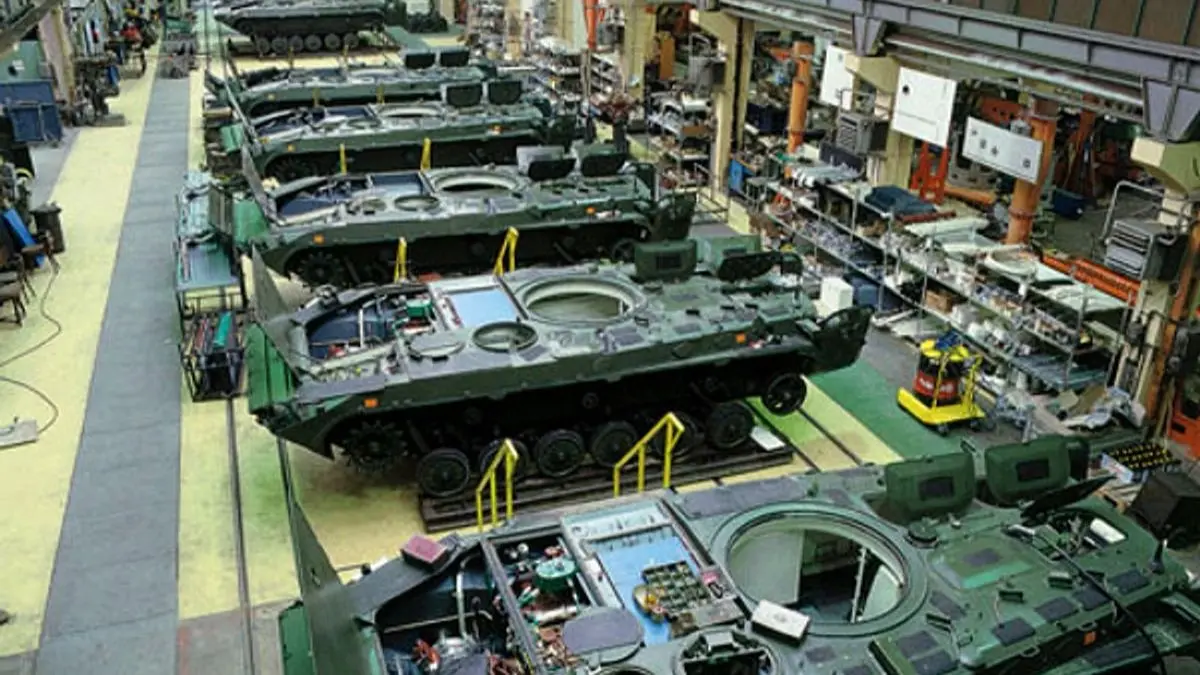
The country's indigenous defence production hit a record Rs 127,434 crore in 2023-24, a 174 per cent surge from Rs 46,429 crore in 2014-15 and is on track to achieve a target of Rs 1.75 lakh crore in the current fiscal year.
As many as 16,000 MSMEs have emerged as the game-changers, strengthening indigenous defence capabilities in India. India now exports to over 100 nations, including to the United States, France and Armenia.
Defence Public Sector Undertakings and other PSUs accounted for approximately 77 per cent of total production, while the private sector contributed 23 per cent.
The government aims to achieve defence manufacturing worth Rs 3 lakh crore and Rs 50,000 crore in defence exports by 2029.
|
|
|
|
|
|
|
|
|
The Government of India’s decision to establish the Research Development and Innovation Fund (RDIF) under the Anusandhan National Research Foundation (ANRF) marks a historic inflection point in India’s scientific journey, with a corpus of Rs 1 lakh crore to be deployed over six years.
The following stand out as deep-science frontiers where India can lead if the RDIF catalyses coordinated public-private investment:
(1) Semiconductors and Electronics Manufacturing,
(2) AI, Robotics, and Advanced Computing,
(3) Green Hydrogen and Sustainable Energy Materials,
(4) Life Sciences and Precision Health,
(5) Advanced Materials, Quantum Technologies, and Space Systems.
This is India’s deep science moment, which must become a movement where every rupee of research leads to innovation, every innovation leads to industry, and every industry contributes to national self-reliance.
|
|
|
|
|
|
|
|
|
The NIC 2025 introduces a six-digit code structure (replacing the previous five-digit format) with the aim of offering finer granularity and more flexible classification of economic activities. The update aligns with the United Nations’ International Standard Industrial Classification (ISIC) Revision 5.
One of the major changes is the explicit inclusion of segments such as cloud infrastructure, blockchain, platform-based services, renewable energy, waste-management and AYUSH-based health services, recognising the growth of digital, green and indigenous economy segments.
By introducing new classes in sectors such as intermediation services (retail, logistics, real estate, food services) and environmental remediation, MoSPI is attempting to mirror current structures of production and consumption more closely.
|
|
|
|
|
|
|
|
|
Development of an indigenous TnpB based gene editing platform marks a major step toward agricultural self-reliance. By overcoming global patent barriers and enabling faster, affordable crop improvement, this breakthrough strengthens national food security and positions India as a rising leader in biotechnology.
TnpB is an ancient transposon associated protein evolutionarily older and considerably smaller than the CRISPR-associated Cas enzymes. Its compact size increases its deliverability into plant cells and significantly enhances editing efficiency.
With no foreign licensing fees, technology deployment becomes more affordable. The public-sector breeders serve the needs of millions of small and marginal farmers and therefore can now develop GE varieties at a fraction of earlier costs.
|
|
|
|
|
|
|
|
|
The precision diode laser developed by Prenishq, a deep-tech startup incubated at IIT Delhi, is tailored for the demanding requirements of quantum experiments, higher-education laboratories, and advanced scientific applications. Its exceptional engineering delivers:
- High beam quality with ultra-narrow linewidths
- Superior long-term power and frequency stability
- Robust performance across varied environmental conditions
- Seamless integration with scientific instruments and industrial systems
With the ability to operate across a broad wavelength range—from ultraviolet to near-infrared—the laser becomes a versatile backbone for multiple quantum systems, from communication platforms to quantum processors.
Moreover, the system’s low cost of ownership and assured availability position India as a competitive global supplier of quantum-ready laser systems.
|
|
|
|
|
|
|
|
|
The scientists developed a simple 'activation process' for a common battery material, vanadium oxide, which could significantly boost the energy density and longevity of zinc‑ion batteries, resulting in more efficient batteries.
The activated material enables the zinc-ion battery (ZIB) to achieve a dramatically higher energy density and incredible longevity. It can store much more energy and be recharged thousands of times without significant degradation.
Led by Dr. Ashutosh Kumar Singh at the Centre for Nano and Soft Matter Sciences, an autonomous institute under the Department of Science & Technology, the team used a thermo‑electrochemical treatment to deliberately introduce useful defects into vanadium oxide, producing a zinc‑vanadium oxide, or Zn‑V2O5.
|
|
|
|
|
|
|
|
|
With this achievement, ISRO has successfully demonstrated bootstrap mode starting of a gas-generator cycle cryogenic engine without any auxiliary start-up system, perhaps for the first time in the world.
This is a significant milestone towards enhancing the restart capability and mission flexibility of future LVM3 flights.
Isro demonstrated this capability with the bootstrap mode start test on the CE20 Cryogenic engine conducted successfully for 10 seconds under vacuum conditions at the High-Altitude Test (HAT) facility at the Isro Propulsion Complex at Mahendragiri.
|
|
|
|
|
|
|
|
|
Developed by IIT Mandi’s Dr Kala Venkata Uday, and installed at over 60 sites across Himachal Pradesh, the system uses machine learning and ultra-sensitive sensors to monitor soil moisture, rainfall, temperature, humidity, and ground movement. Even a millimetre-level shift in the slope is detected and processed in real time.
When the risk level rises, the device triggers blinkers, sirens, and instant SMS alerts to residents and local authorities, warning them to evacuate. The alerts are fast, reliable, and localised — crucial in hilly areas where communication often breaks down during heavy rains.
|
|
|
|
|
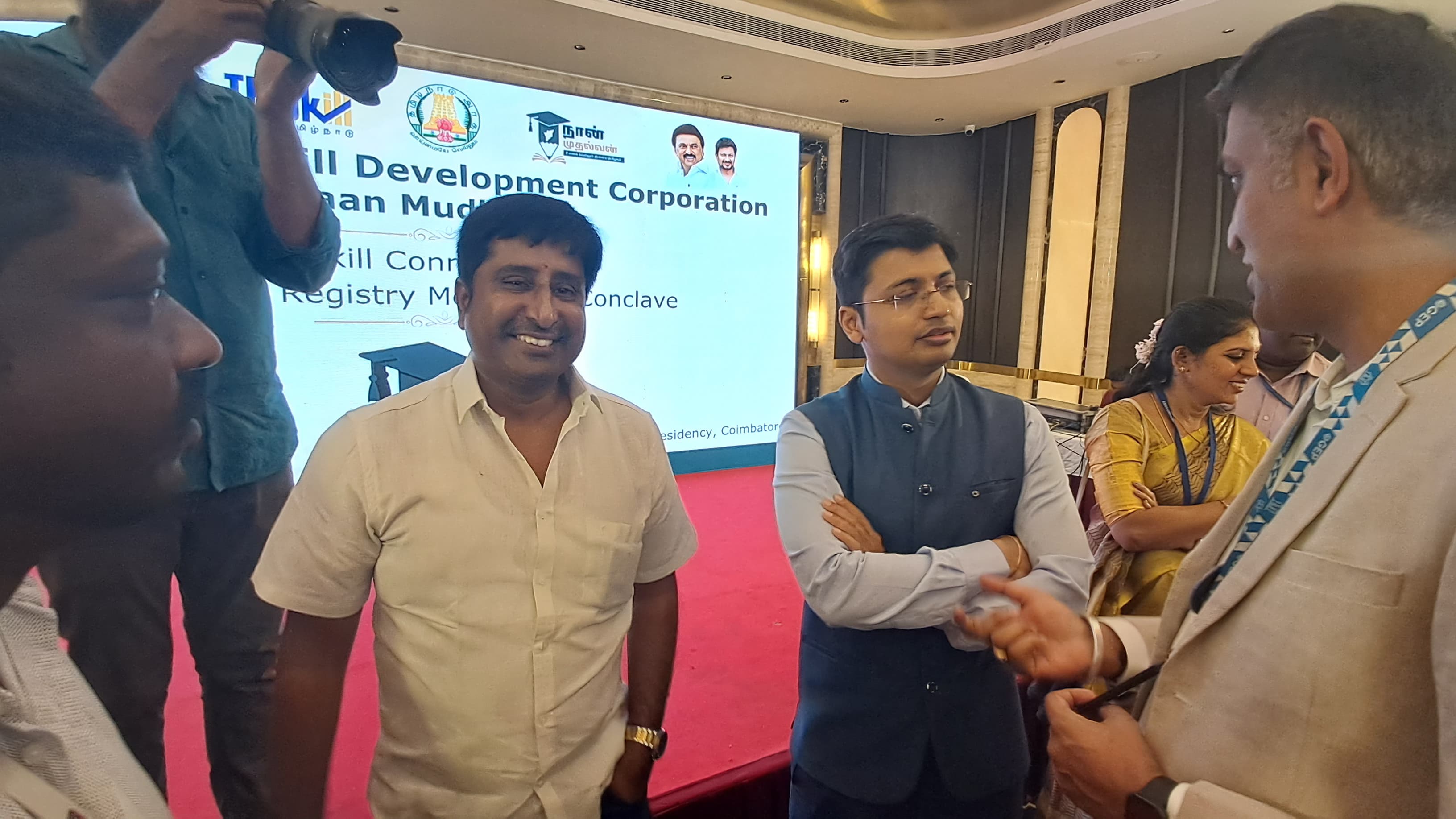
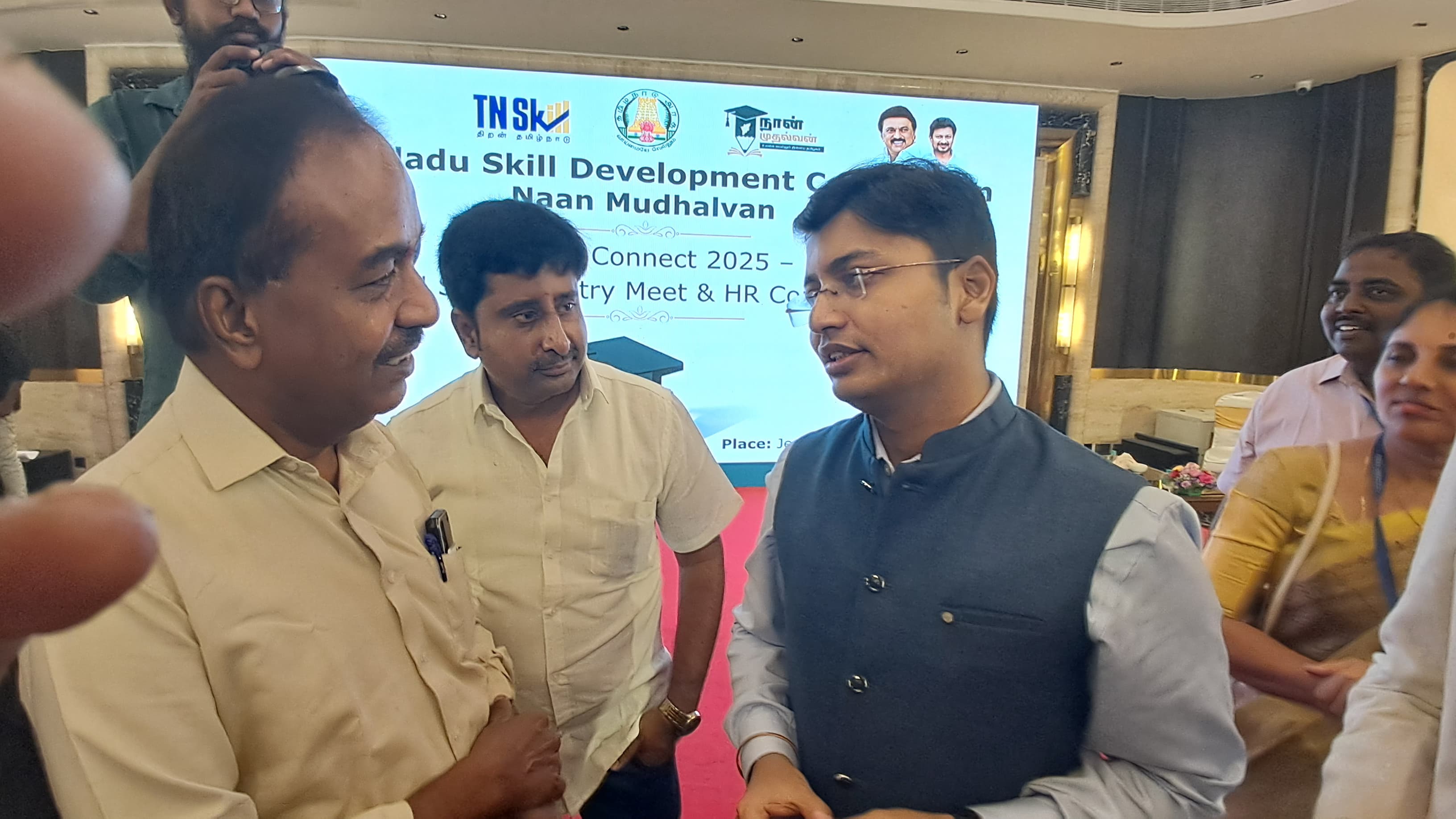
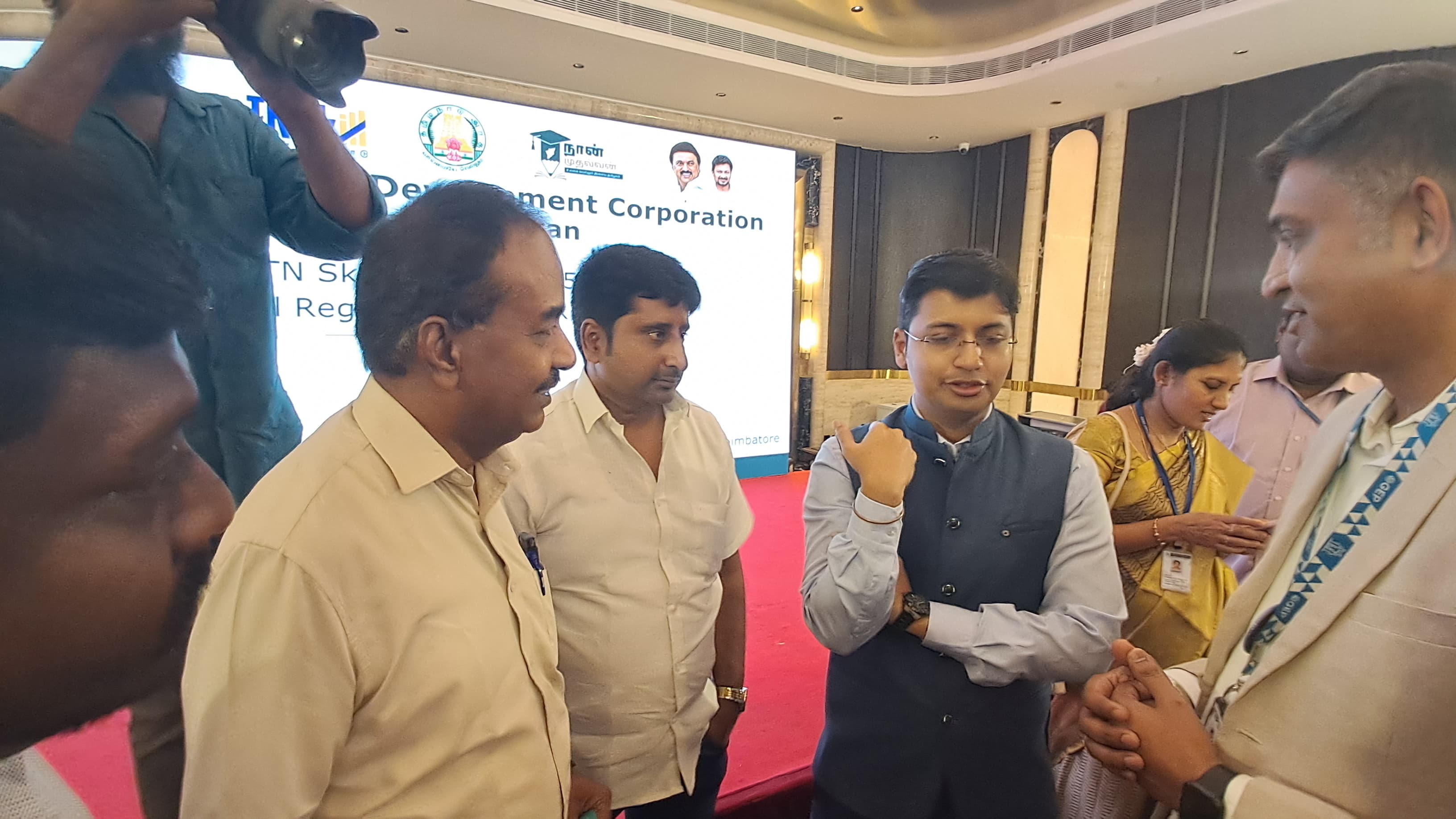
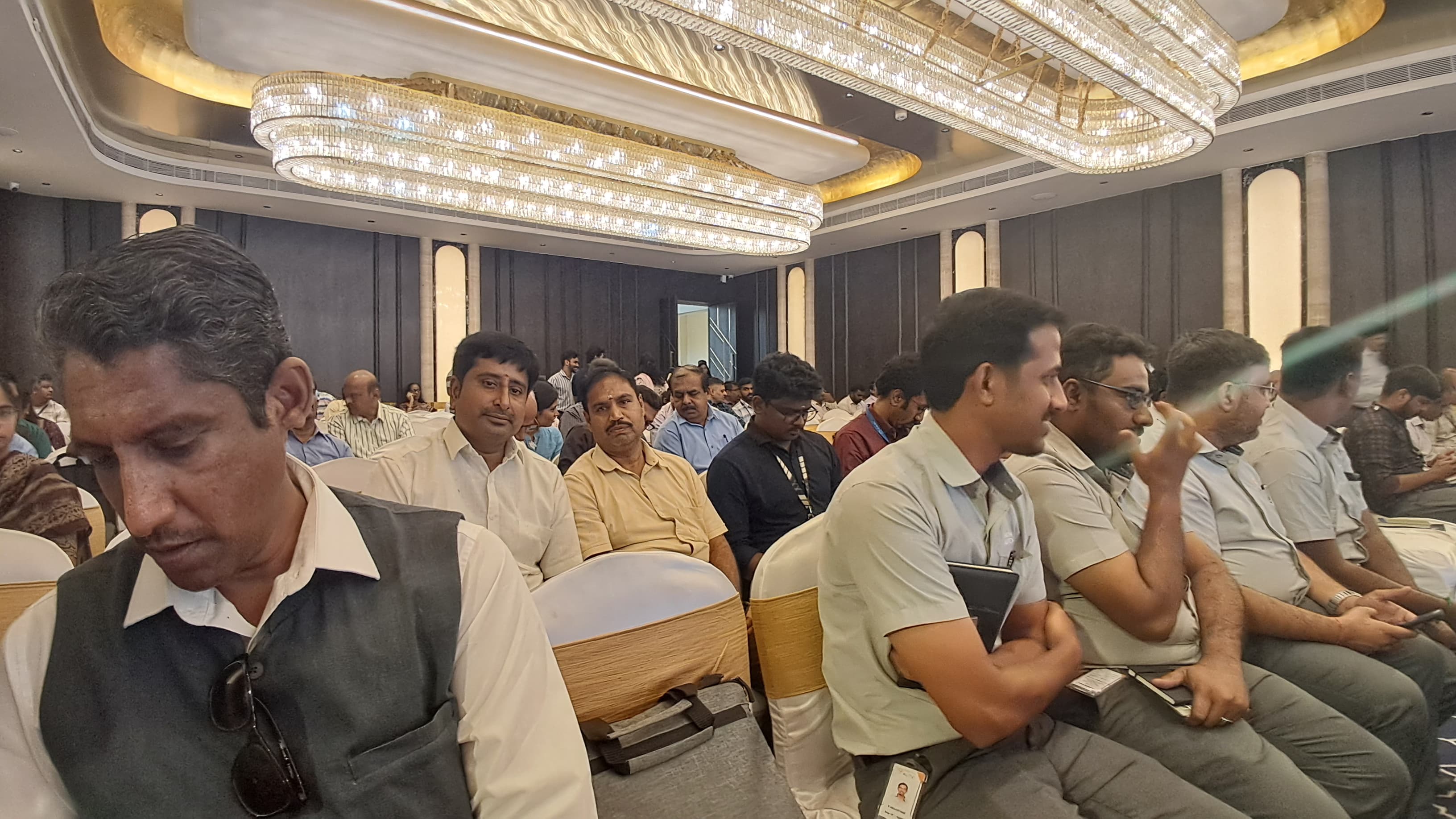
R. Kalyansundaram, Tamil Nadu State General Secretary, along with Sivasakthi, Coimbatore District President, had a meaningful interaction with Shri Kranthi Kumar Pati, I.A.S., Managing Director of the Tamil Nadu Skill Development Corporation (TNSDC) during the TN Skill Connect 2025 event. The meeting focused on exploring opportunities to strengthen skill development initiatives, enhance industry participation, and create impactful platforms for youth empowerment across Tamil Nadu. Their discussion highlighted the importance of collaborative efforts between industry leaders and government bodies to build a highly skilled workforce and support the state’s growing economic aspirations.
|
|
|
|
 |
|
|
|
|
|
|
|
|
|
|
- Kindly add the email address masscomm@lubindia.com to your contact list or whitelist it for the newsletter.
|
|
|
|
|
|
|
|
|
|
|
|






/english-betterindia/media/media_files/2025/11/20/iit-mandi-2025-11-20-14-15-25.jpg)